Eliminating Out-of-Square Frame Rejections: Ahmedabad Guide
Out-of-square frames are the silent profit killers for fabricators in Ahmedabad. When a 2500mm high window frame is out by even 1.5mm, the sash will not glide, weatherstripping fails to seal, and site architects issue immediate rejections. At Mechnovate, we have spent 15 years diagnosing why fabrication units fail to meet international standards like IS 1285. The answer rarely lies in the worker's skill alone; it is almost always a combination of blade deflection, insufficient clamping torque, and poor miter calibration.
The Engineering Root of Out-of-Square Rejections
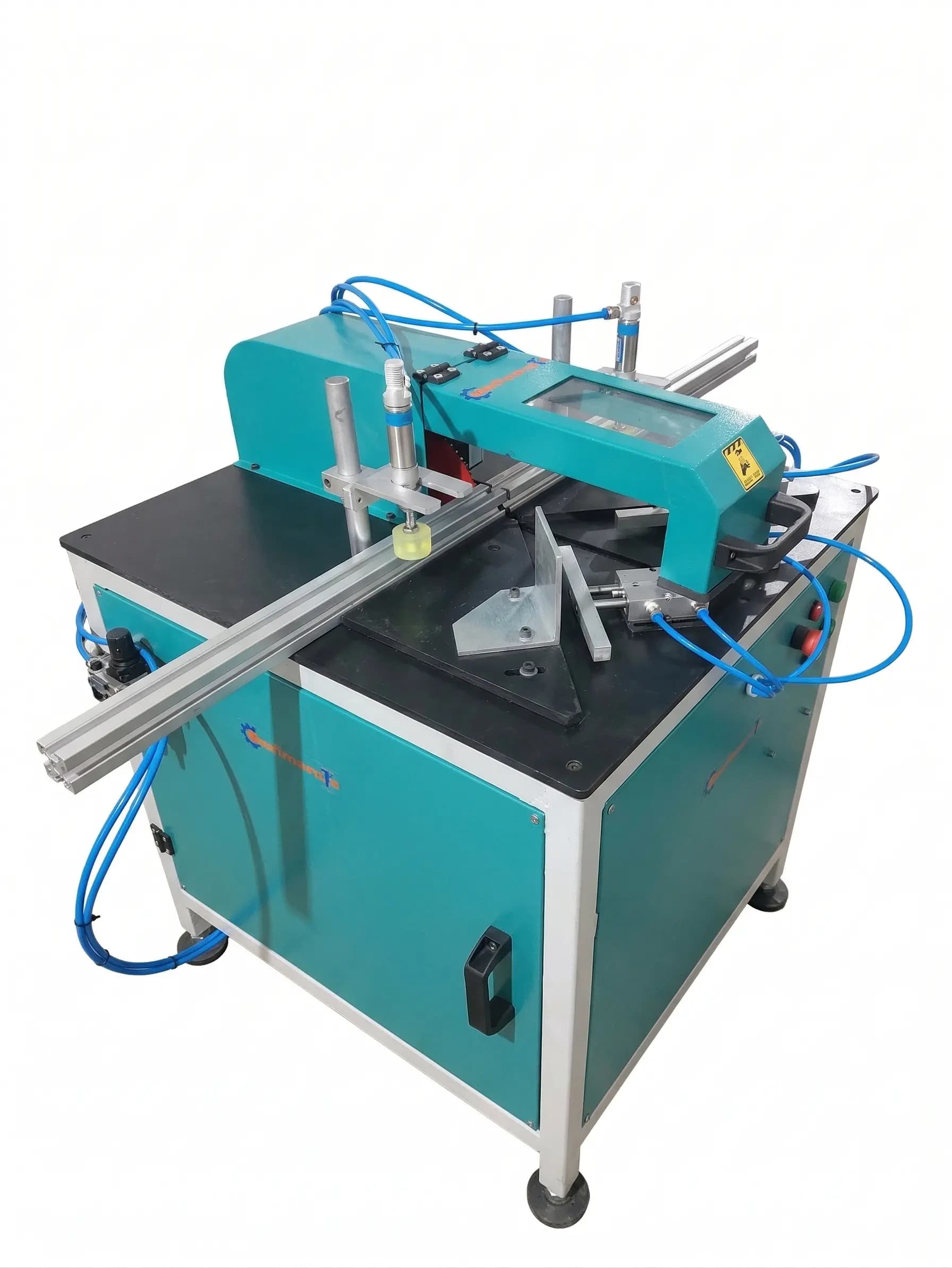
Precision in aluminium fabrication starts with the physics of the cut. If your aluminium cutter machine 12 inch setup is vibrating, that vibration translates into a micro-stepped edge rather than a mirror-smooth finish. This prevents the corner from seating perfectly during the crimping process. In our testing facility, we found that a blade run-out of just 0.05mm at the arbor results in a 0.3mm gap at the outer edge of a 100mm profile. This gap is the primary reason frames fail the squareness test.
To achieve zero-defect production, your automatic double head cutting saw for aluminium profiles must maintain a consistent 2800 to 3200 RPM. We recommend TCT (Tungsten Carbide Tipped) blades with a negative rake angle for architectural profiles. This specific configuration prevents the blade from 'grabbing' the thin-walled aluminium, ensuring the profile remains perfectly stationary against the back-fence during the entire cutting cycle.
Case Study: 42% Waste Reduction in Ahmedabad’s Vatva GIDC
In early 2023, we worked with a high-volume fabricator in Ahmedabad who was facing a 12% rejection rate on high-rise window orders. Their frames were consistently 'parallelograms' rather than rectangles.
The Audit Findings:
- Their aluminium cutting machine used manual clamping that deformed the profile wall (2.0mm thickness).
- The 45-degree miter stop had worn down by 0.4mm due to repetitive impact.
- Inconsistent pneumatic pressure (fluctuating between 4 and 6 bar) caused the profile to shift mid-cut.
The Solution: We implemented a CNC aluminium profile cutting machine suppliers India trust—a high-precision double-head saw with hydro-pneumatic feed. We synchronized this with a dedicated 8-bar screw compressor to ensure clamping force remained constant.
The Results: Over a 6-week period, the rejection rate dropped from 12% to less than 0.5%. They increased output from 60 frames to 105 frames per day because they no longer spent hours 're-adjusting' corners with hammers and shims. This is the difference that professional aluminum window machine manufacturers in Ahmedabad bring to a workshop.
Why Your Corner Crimping is Failing
Cutting is only half the battle. Even a perfect 45-degree cut will fail if the joining process is flawed. Many shops in Gujarat still rely on manual joining, but for architectural projects, an automatic aluminium window production line price is an investment that pays for itself in six months.
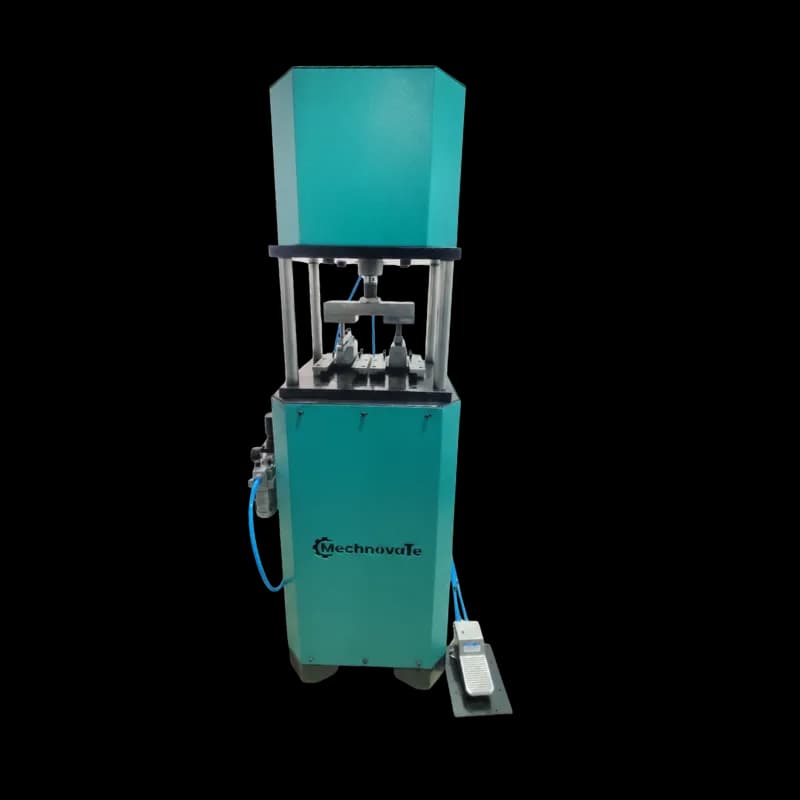
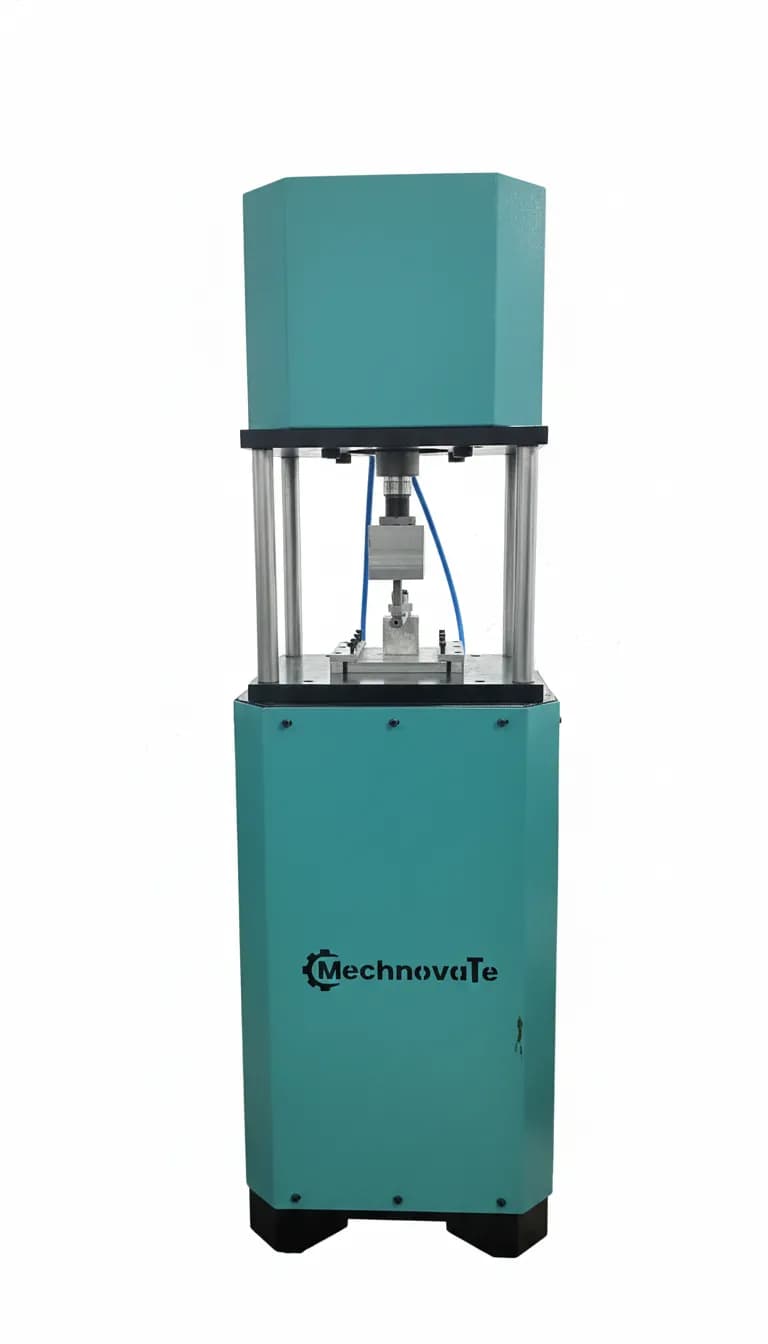
When using an automatic aluminium corner crimping machine price Gujarat fabricators often ask about, you must ensure the internal 'knives' are set to the exact thickness of the profile's inner chamber.
- Tooling Precision: Use knives hardened to HRC 55-60.
- Hydraulic Pressure: 30-50 kN of force is required to move the aluminium beyond its elastic limit into permanent deformation.
- Support: Use adjustable support arms to prevent the weight of the profile from pulling the joint out of square while the hydraulic rams are engaging.
Essential Machinery for Ahmedabad Fabricators
To compete with national brands, your workshop needs a specific set of industrial aluminum door manufacturing equipment. Here is the hierarchy of precision we recommend:
- Double Head Miter Saw: For simultaneous 45/90 degree cuts. This eliminates the 'cumulative error' found when cutting one side at a time on a single cutting machine.
- Heavy Duty End Milling: Essential for transom and mullion joins. Look for a heavy duty aluminium profile end milling machine that allows for multiple profile stacking to ensure batch consistency.
- Copy Router: For hardware slots. A high speed copy router for aluminium windows prevents the profile from overheating and warping during the slotting process.
Common Mistakes in Machine Calibration
- Ignoring the 'Dead Zone': Every aluminium profile cutting machine has a minimum and maximum cutting length. Forcing a machine to cut below its minimum limit often means bypassing safety guards and losing clamping stability.
- Using Wood-Cutting Blades: Never use blades designed for timber. The tooth geometry (ATB vs. TCG) is fundamentally different. Using the wrong blade will result in burrs that prevent the aluminium punching machine from seating correctly.
- Neglecting the Air Filter-Regulator-Lubricator (FRL) Unit: Ahmedabad’s dust can clog pneumatic valves. If your upvc window manufacturing machine or aluminium saw doesn't have a clean FRL unit, the cylinders will 'stutter,' leading to inaccurate cuts.
FAQ: Precision Aluminium Fabrication
Q1: Can I use the same machine for both uPVC and Aluminium? While some upvc window making machine units look similar, the RPM and blade types differ. Aluminium requires higher torque and lower RPM than uPVC to prevent melting and ensure clean chips. Using a upvc windows manufacturing machine for heavy aluminium profiles will likely damage the motor and lead to poor finish quality.
Q2: How often should I calibrate my 45-degree stops? In a high-production Ahmedabad workshop, check your angles every Monday morning using a precision digital protractor. A deviation of just 0.1 degrees across a 100mm profile width creates a gap that no amount of sealant can fix.
Q3: What is the ideal blade diameter for residential window profiles? A 450mm or 500mm blade is the industry standard. While an aluminium cutting machine 12 inch is portable and cheap, it lacks the depth of cut needed for modern, wide-chamber thermal break profiles. For architectural work, always opt for the larger diameter to ensure the blade is cutting at its most stable point.
Get more articles like this
Follow Mechnovate on Google to see our guides in Google Discover & News