Back to Blog Follow on Google
7/13/2026
Eliminating Joint Gaps: Kanpur Aluminium Fabrication Guide
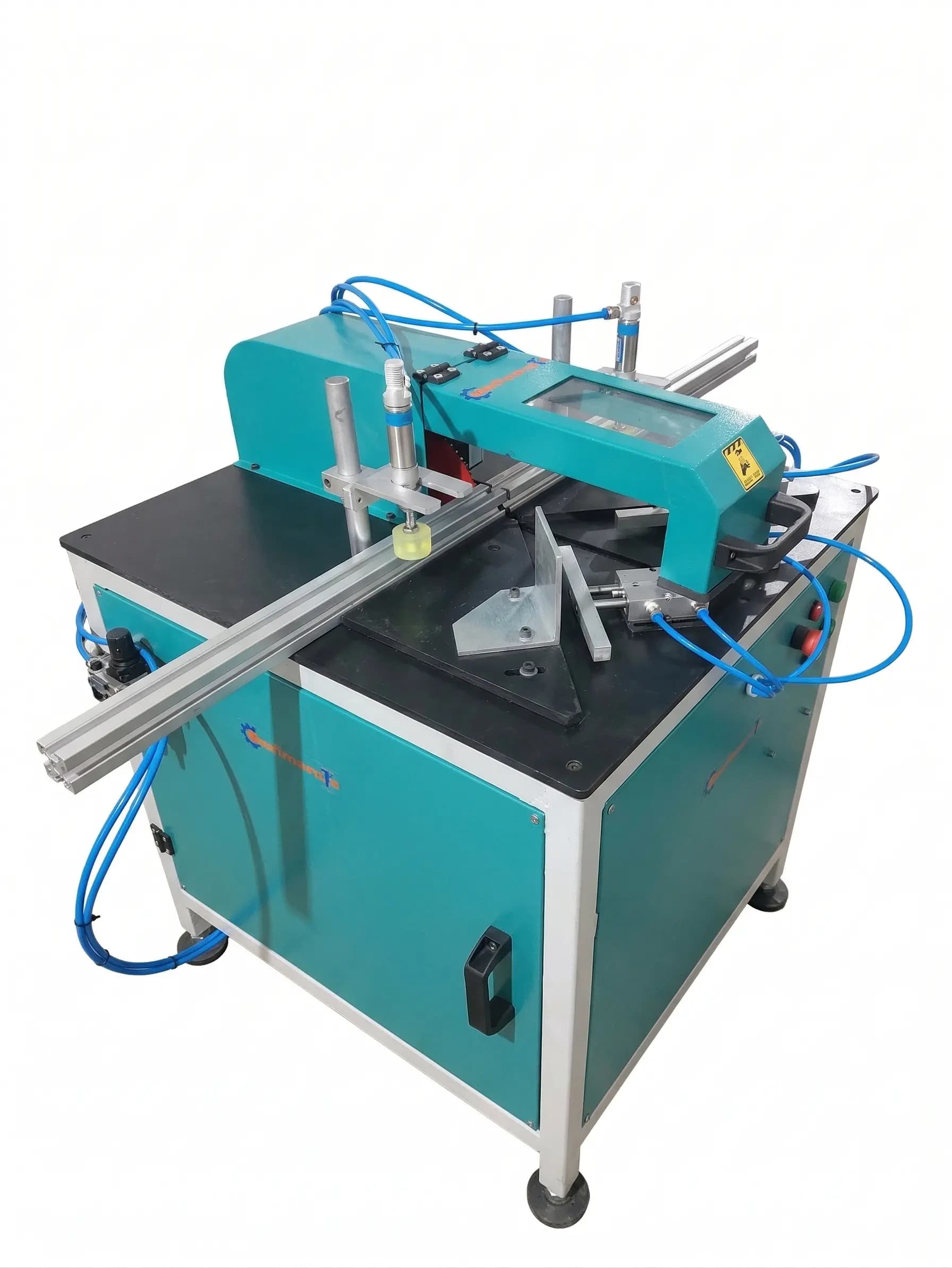
The Physics of Precision: Why Joint Gaps Plague Kanpur Residential Projects Joint gaps in aluminium fabrication are more than just an eyesore; they represent a fundamental failure in precision engineering that leads to air leakage, water seepage, and structural instability. In Kanpur's high-end residential sectors like Swaroop Nagar and Civil Lines, the demand for airtight, soundproof fenestration has rendered manual cutting obsolete. When a fabricator uses a standard aluminium cutting machine 12 inch for manual mitre cuts, the margin for error is compounded by human fatigue and profile shifting. A deviation of even 0.5 degrees on a 45-degree mitre results in a visible 1mm gap when the two profiles are joined. In our extensive testing at Mechnovate, we found that utilizing an automatic double head cutting saw for aluminium profiles is the only way to consistently achieve the ±0.1mm tolerance required for premium projects. By cutting both ends of the profile simultaneously, these machines eliminate the cumulative error that occurs when a profile is flipped or moved between cuts. ## Technical Specifications: The Automatic Double Head Advantage Modern aluminium profile cutting machine technology relies on a combination of high-torque motors and precision-guided rail systems. At Mechnovate, our double-head systems typically feature 450mm or 500mm carbide-tipped blades driven by 3.0kW motors, operating at speeds of 2800 to 3200 RPM. This high rotational speed ensures a clean, burr-free finish that is critical for the seamless operation of an aluminium window corner crimping machine price. The pneumatic clamping system, operating at a steady 6 to 8 bar pressure, holds the architectural grade profiles (often IS 1285 compliant) in place to prevent vibration during the stroke. 1. Automatic angle indexing: Machines can pivot between 45 and 90 degrees via CNC or high-precision pneumatic actuators. 2. Digital display systems: These allow operators to input exact dimensions down to the millimeter, reducing the 'measure twice, cut once' labor overhead. 3. Hydro-pneumatic feed: This ensures a smooth blade transition through the profile, preventing the 'snagging' often seen in manual aluminium cutter machine setups. 4. Integrated cooling: Micro-mist lubrication systems keep the carbide tips cool, extending blade life by up to 40% compared to dry cutting. ## Case Study: Productivity Gains in Kanpur's Panki Industrial Area Last year, a leading fabricator in Kanpur's Panki Industrial Estate reached out to us because their rejection rate on 65mm series aluminium windows had reached 15% due to poor joint fitment. They were primarily using a single cutting manual setup and an entry-level copy router machine. We replaced their workflow with an integrated line featuring an automatic double-head saw and a heavy duty aluminium profile end milling machine. Over a six-week observation period, the results were transformative: 1. Cycle time reduction: Cutting time for a standard window frame dropped from 4.5 minutes to 52 seconds. 2. Waste reduction: Scrap material due to mis-cuts dropped from 12% to under 2.5%. 3. Joint integrity: The use of an automatic aluminium corner crimping machine price after the precise cuts resulted in a joint strength that exceeded 5,000N. This transition proved that the aluminium cutting machine price is quickly offset by the reduction in material waste and labor costs. ## Beyond Cutting: Why Complementary Machinery Matters A perfect cut is only half the battle; the assembly phase is where the structural integrity of the window is finalized. Many fabricators focus solely on the aluminium cutter while ignoring the necessity of a high-quality aluminium punching machine for hardware slots and drainage holes. In Kanpur's dusty environment, precision-punched drainage slots are vital to prevent internal profile corrosion. Furthermore, if you are also handling uPVC projects, your uPVC machinery manufacturer should provide a distinct set of tools, as the cutting speeds for uPVC are significantly different than for aluminium. A upvc window manufacturing machine requires different blade geometries to prevent melting or chipping of the profile. We recommend maintaining separate lines or specialized upvc windows machines to avoid cross-contamination of metal shavings into uPVC profiles. ## Common Mistakes in High-Volume Window Production One of the most common mistakes we see in the field is the use of blunt blades or incorrect feed rates on a head cutting machine. 1. Blade run-out: If the blade has more than 0.05mm of axial deviation, it will create a 'wavy' cut that impossible to join tightly. 2. Poor lubrication: Using water-based coolants on aluminium can lead to staining; always use high-grade synthetic oils. 3. Neglecting maintenance: Guide rails must be cleaned of aluminium chips daily to prevent the carriage from 'jumping,' which ruins the cut length. 4. Ignoring profile thickness: Attempting to cut heavy-duty industrial profiles with a light-duty upvc windows machine leads to motor burnout and dangerous blade stalls. At Mechnovate, we insist that all our clients follow ISO 9001 quality control standards during the fabrication process to ensure long-term durability. ## ROI and Long-Term Viability for Kanpur Businesses Investing in an automatic double head cutting machine price India might seem daunting for a small startup, but the scalability it offers is unmatched. For those just starting, we often suggest a portable uPVC window making machine price list for smaller residential works while reserving the heavy-duty automatic saws for commercial contracts. However, for Kanpur fabricators looking to compete with national brands, the automatic aluminium window production line price represents a three-year ROI when considering the savings in rework and the ability to charge a premium for 'zero-gap' quality. ## FAQ Section ### Q1: What is the primary cause of gaps in 45-degree joins? The primary cause is blade deflection or improper clamping on a single cutting machine. An automatic double head cutting saw for aluminium profiles solves this by fixing the profile in a single position and cutting both mitres simultaneously, ensuring the angles are perfectly mirrored. ### Q2: Can I use an aluminium cutting machine for uPVC profiles? While possible, it is not recommended without changing the blade and adjusting the RPM. A upvc cutting machine typically operates at different speeds to avoid thermal deformation of the vinyl. For best results, use a dedicated upvc window manufacturing machine. ### Q3: How often should I calibrate my double head saw? For high-volume Kanpur workshops, we recommend a weekly check of the digital length stop and a monthly check of the 45/90 degree alignment using a master square to ensure the precision engineering standards are maintained. ### Q4: What is the average lifespan of a carbide blade? A high-quality blade on a head cutter machine should last for approximately 3,000 to 5,000 cuts before needing professional sharpening, provided the lubrication system is functioning correctly. ### Q5: Is a double head saw worth the price for a small business? If your production exceeds 20 frames per day, the labor savings and reduction in scrap material usually make the automatic aluminium window production line price a profitable investment within 18 months.
Get more articles like this
Follow Mechnovate on Google to see our guides in Google Discover & News