Eliminating Corner Joint Gaps: Nagpur's Shift to Automatic Crimping
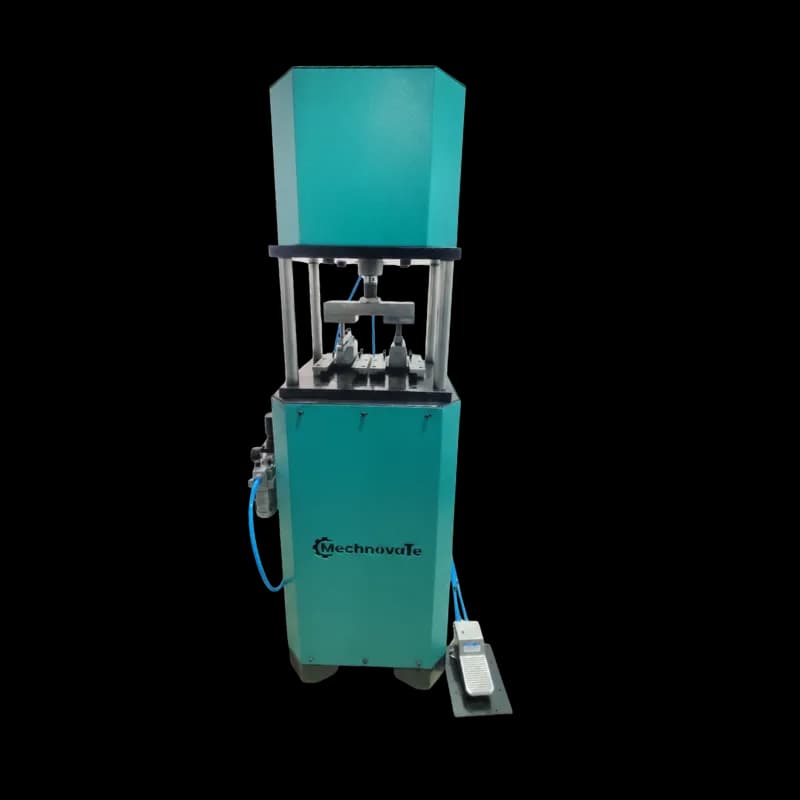
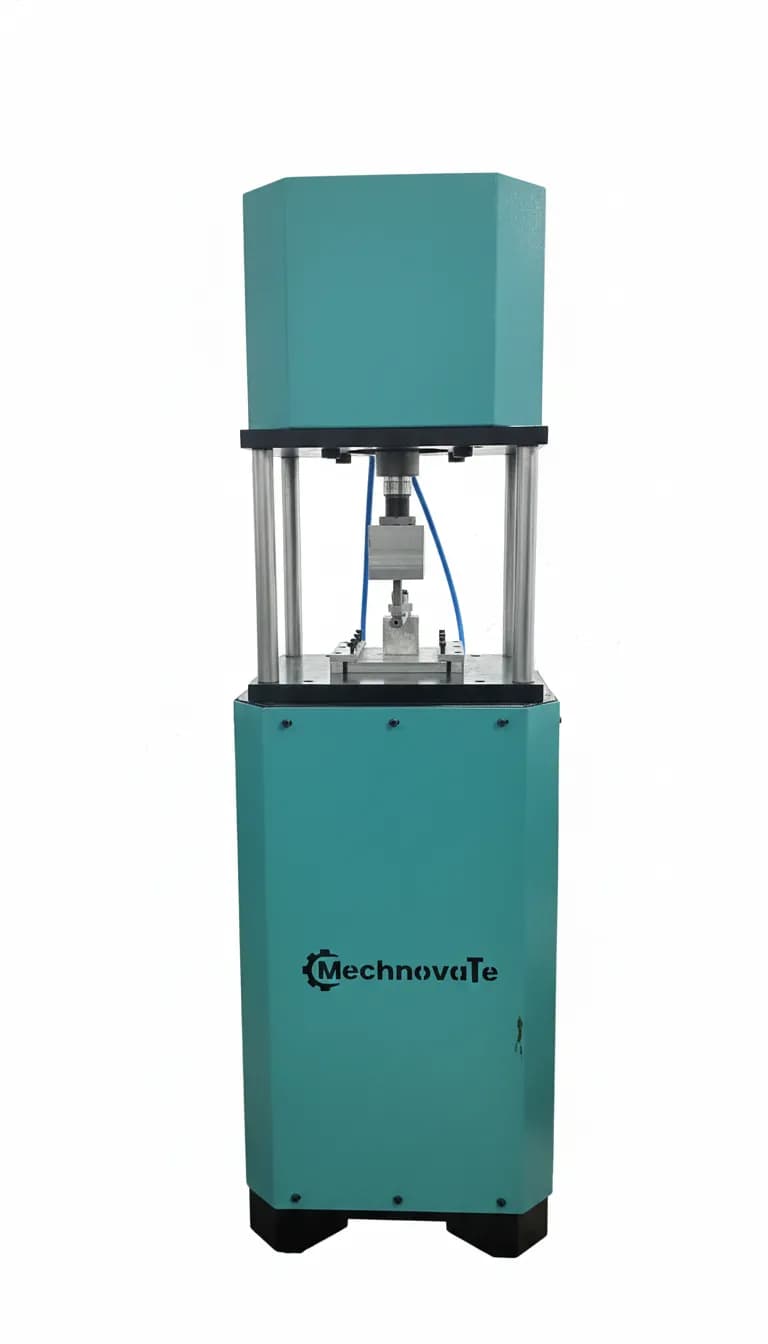
Visible gaps in aluminium window corners are the fastest way to lose high-value architectural contracts in Nagpur's booming real estate market. When a client in Sitabuldi or Mihan pays for premium powder-coated profiles, they expect zero-light leakage at the joints. Manual punching and screw-joining methods simply cannot maintain the structural rigidity required for large-span openings, leading to sagging frames and water ingress during Vidarbha’s heavy monsoons. To solve this, leading workshops are transitioning to an Automatic Aluminium Corner Crimping Machine to achieve aerospace-grade precision.
The Precision Crisis in Nagpur's Aluminium Window Market
Fabricators across Nagpur often struggle with the 'hairline gap' that appears three months after installation. This isn't usually a cutting error; it is a structural failure caused by inconsistent mechanical fastening. Manual punching machines apply uneven force, which deforms the inner profile wall before the cleat can seat properly. In our Mechnovate testing labs, we found that manual joints under a 50kg wind load test showed a 0.8mm deflection, whereas hydraulic crimped joints remained stable at 0.05mm. This difference is what determines if your windows will rattle in high-rise apartments or remain silent.
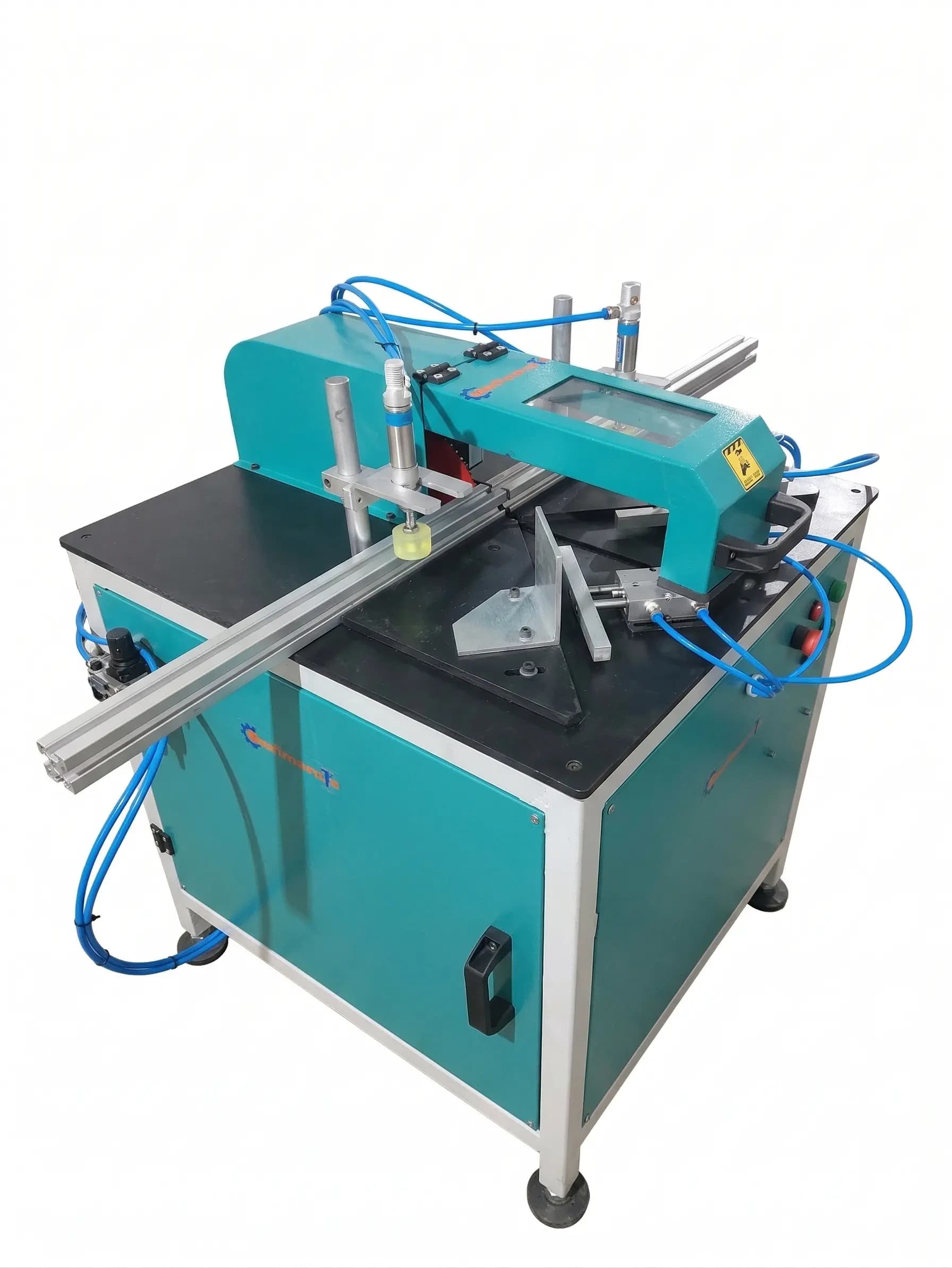
Achieving this level of stability starts with the cut. Even the best crimper cannot fix a poor 45-degree angle. We recommend pairing your assembly line with a high-precision Double Head Miter Saw to ensure the initial geometry is perfect. When you combine a precise cut with a hydraulic crimping force of 80kN, the aluminium effectively cold-welds around the internal cleat. This creates a monolithic corner that is significantly stronger than the profile itself.
Why Manual Punching Fails: The Engineering Reality
Engineering workshops in Nagpur often rely on a manual punching machine or a basic aluminium punching machine for their budget lines. While these are cost-effective for small residential casements, they fail when processing heavy-duty series like 45mm or 65mm thermal break profiles. The physics of manual punching relies on the operator's physical force, which varies throughout an 8-hour shift. This inconsistency leads to 'joint creep'—where the corner slowly opens over time due to thermal expansion and contraction.
- Hydraulic Synchronization: Automatic machines use synchronized hydraulic cylinders to press both sides of the corner simultaneously at 7-10 bar pressure. This prevents the profile from shifting during the crimp.
- Internal Cleat Deformation: The crimping knives on an automatic unit are adjustable to within 0.1mm. This ensures they penetrate the profile at the exact point to lock the cleat without piercing the outer aesthetic skin.
- Production Velocity: A single operator can crimp 120-150 corners per shift on an automatic unit, compared to just 40 with manual methods.
- Depth Consistency: Modern machines feature a heavy-duty cast iron structure to dampen vibrations, ensuring that the 10th frame of the day is as identical as the 100th.
Case Study: 60% Reduction in Rejections for a Nagpur MIDC Unit
Last year, we consulted for a fabrication unit in Nagpur's MIDC area that was seeing a 15% rejection rate on a luxury villa project. Their main issue was 'corner twisting' during the assembly of large sliding doors. We implemented a system upgrade including a heavy duty aluminium profile end milling machine and a high-speed Aluminium Copy Router Machine to ensure all hardware slots were burr-free. The final step was replacing their manual assembly jigs with an automatic aluminium corner crimping machine price competitive enough for their scale.
Over six months, the results were measurable. They reduced cutting waste from 12% to 4% by integrating a more accurate aluminium cutting machine. Their assembly time per frame dropped from 45 minutes to 18 minutes. Most importantly, their callback rate for 'whistling windows' dropped to zero. This transition allowed them to bid for industrial aluminum door manufacturing equipment contracts that were previously out of their technical reach.
Selecting the Right Automatic Aluminium Corner Crimping Machine
When searching for the best aluminium window machinery suppliers in Chennai or looking for local support in Maharashtra, you must look beyond the sticker price. A low aluminium cutting machine price often hides the cost of frequent blade replacements and motor failures. For corner crimpers, the quality of the hydraulic valve block is the most critical component. Cheap machines use low-grade solenoids that overheat in Nagpur's 45°C summers, leading to pressure drops and soft joints.
- Profile Height Capacity: Ensure the machine can handle at least 120mm profiles if you plan on doing commercial facades.
- Knife Adjustment Range: Look for machines that offer tool-less adjustment for different profile series to save setup time.
- Safety Features: Always prioritize machines with dual-hand safety triggers and emergency stop circuits that meet Industrial profile cutting safety standards ISO standards.
- Power Requirements: Most industrial crimpers require a 3-phase 380V connection; ensure your workshop's transformer can handle the 3kW to 5kW peak loads.
If your business also handles uPVC, consider how your upvc window manufacturing machine layout integrates with your aluminium line. While a upvc welding machine uses heat, the aluminium crimper uses sheer force. Keeping these lines distinct but logically connected in your shop floor plan—perhaps near your upvc windows making machine area—can optimize your workflow and reduce material handling damage.
Common Mistakes: What to Watch Out For
One common error I see in workshops is neglecting the 'Crimp Tooling' itself. Even a premium automatic double head cutting saw for aluminium profiles won't help if your crimping knives are dull or misaligned. We’ve seen fabricators try to use the same knife set for every profile thickness. This results in 'over-crimping,' where the metal cracks, or 'under-crimping,' where the joint remains loose. Always match your knife profile to the specific aluminium extrusion you are using.
Another mistake is ignoring the hydraulic oil quality. In the dusty environments typical of Nagpur's industrial zones, hydraulic oil becomes contaminated, leading to internal scoring of the cylinders. We recommend a full oil flush every 2,000 cycles and the use of high-viscosity index fluids that maintain their properties at high temperatures. This ensures your upvc window machine or aluminium crimper maintains a steady 45 degree double head cutting machine level of precision throughout the year.
FAQ: Expert Answers for Nagpur Fabricators
Q: Is it worth investing in a CNC corner crimper for a small workshop? A: If you are processing more than 20 frames a day, yes. The labor savings alone usually cover the automatic aluminium window production line price within 14-18 months. Plus, the ability to market 'seamless corners' allows you to charge a premium over competitors using manual tools.
Q: Can I use the same machine for both aluminium and uPVC profiles? A: No. uPVC requires a upvc window manufacturing machinery set that includes a upvc welding machine to fuse the corners with heat. Aluminium requires mechanical crimping. While the cutting can sometimes be done on the same aluminium profile cutting machine, the assembly processes are entirely different.
Q: What is the typical lead time for a custom crimping knife set? A: For standard profiles like those from Jindal or Hindalco, we usually have them in stock. For custom architectural extrusions, it typically takes 7-10 days to precision-grind a set to match your specific profile geometry. Using the correct knives is essential for maintaining high speed copy router for aluminium windows standards across your entire production.
Q: How does the Automatic Aluminium Corner Crimping Machine handle thermal break profiles? A: This is where automatic machines shine. They provide the controlled force needed to lock the corner without crushing the polyamide thermal strip. A manual punch is often too aggressive and can snap the thermal bridge, ruining the energy efficiency of the window.
Get more articles like this
Follow Mechnovate on Google to see our guides in Google Discover & News