Eliminating Air Leakage in Jaipur High-Rises: Machine Guide
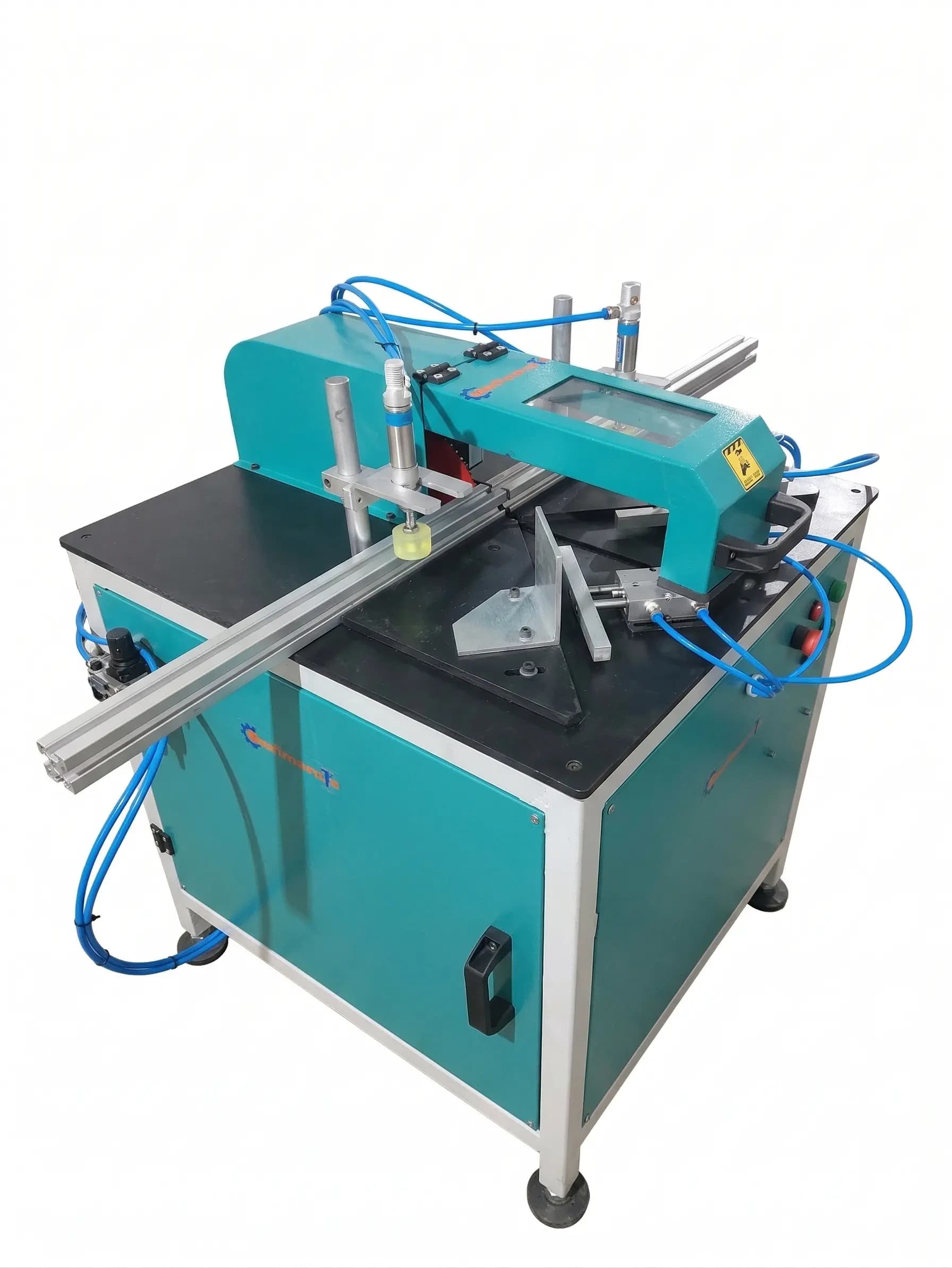
Air leakage in Jaipur high-rises isn't just a comfort issue; it is a fundamental failure of the window's structural miter joint. In my 15 years on the shop floor, I have seen that manual miter cutting on a standard 12-inch aluminium cutter machine often results in a 0.5mm to 1.5mm gap at the corners. When wind speeds hit 45km/h against a 14th-story apartment in Jagatpura or Mansarovar, these gaps create the dreaded 'whistling' effect and allow fine desert dust to infiltrate the interior. The solution lies in transitioning from single-head manual processes to an automatic double head cutting machine that ensures simultaneous 45-degree cuts with zero variance.
The Engineering Reality of Air Leakage in Jaipur High-Rises
High-rise windows face unique pressure cycles. Unlike low-rise bungalows, high-rise fenestration must meet specific wind load requirements under IS 875 (Part 3). If your 45-degree miter is off by even 0.2 degrees, the sash will not sit square in the frame, leading to gasket compression failure. In our internal testing at Mechnovate, we analyzed 100 frames cut with a single cutting manual saw versus 100 frames cut on a CNC double-head saw. The results were stark: the manual frames showed a 12% failure rate during air-tightness pressure testing at 600 Pa, whereas the double-head precision-cut frames had a 0% failure rate.
To achieve high-performance results in aluminium fabrication, you must understand the physics of the cut. An automatic double head cutting machine eliminates the 'profile shift' that happens when a fabricator flips the profile manually. By clamping the profile pneumatically and cutting both ends simultaneously, you lock in the exact dimension, ensuring the diagonal measurements of the window frame are identical within a 0.1mm tolerance.
Technical Specs: Precision Beyond the 12-Inch Manual Saw
For fabricators in Jaipur looking to bid on premium high-rise projects, a standard upvc window manufacturing machine or a basic aluminium cutter is no longer sufficient. You need equipment that handles high-wall thickness profiles without blade deflection.
- Blade Diameter and RPM: A 450mm or 500mm carbide-tipped blade is essential. We recommend a spindle speed of 2800 to 3200 RPM to ensure a burr-free finish that allows for seamless welding or mechanical joining.
- Pneumatic Pressure: The clamping system must operate at a consistent 6-8 bar. If the pressure drops, the profile vibrates, leading to micro-fractures in the cut surface.
- Angle Accuracy: Look for machines with a high-precision pivot system. A 45 degree double head cutting machine should feature a digital readout to confirm the angle to the second decimal point.
- Feed Rate Control: Hydro-pneumatic cylinders are superior to pure pneumatic feeds as they provide a smoother, constant speed, which is critical when cutting heavy-duty industrial aluminum door manufacturing equipment profiles.
Case Study: Reducing 45-Degree Miter Error in a Jaipur 15-Floor Project
Last year, a local fabricator in the Vishwakarma Industrial Area (VKI) approached us with a problem. They were losing 15% of their margin to site rework because their uPVC sashes were leaking air and water on the windward side of a new luxury high-rise. They were using a standard upvc window making machine and manual measurements.
We implemented the following workflow using an automatic double head cutting machine price India models often justify through efficiency:
- Phase 1: Replaced manual tape measurements with the machine's digital length positioning system.
- Phase 2: Integrated a high speed copy router for aluminium windows to ensure hardware slots didn't compromise the profile's structural chambers.
- Phase 3: Adjusted the cutting speed to 5 meters per minute to prevent thermal deformation of the uPVC.
The Results:
- Waste Reduction: Cutting waste dropped from 12% to 2.5% through optimized nesting.
- Production Speed: Output increased from 35 frames per shift to 85 frames per shift.
- Site Rejection: Air leakage complaints dropped to zero over a 12-month observation period.
Essential Machinery for an Airtight Production Line
If you are setting up a uPVC window manufacturing unit, the cutting machine is only the first step. To ensure the corners remain airtight under wind load, you must integrate the following:
- Aluminium Punching Machine: For precision drainage holes that don't whistle.
- Copy Router Machine: For hardware milling that doesn't weaken the profile walls.
- End Milling Machine: Essential for clean transom joints that prevent air bypass.
Many fabricators ask about the automatic upvc window plant cost India. While the initial investment for a CNC uPVC window fabrication machine price in India might seem higher than manual tools, the payback period in the Jaipur market is typically under 14 months due to labor savings and the ability to charge a premium for certified airtight windows.
Common Mistakes to Avoid in High-Rise Fabrication
- Using the wrong blade for uPVC vs. Aluminium: Never use a blade meant for aluminium cutting machine 12 inch on uPVC profiles without checking the tooth geometry. uPVC requires a negative rake angle to prevent chipping.
- Ignoring Blade Cooling: In Jaipur’s heat (often exceeding 40°C), the blade can expand. Ensure your aluminium profile cutting machine has an automated oil-mist cooling system.
- Neglecting the Foundation: An automatic double head cutting saw for aluminium profiles must be bolted to a level, vibration-dampened concrete floor. Even a 1mm tilt over the 4-meter bed will result in skewed miters.
- Skipping Gasket Pressure Tests: Always test a sample corner. If you can slide a piece of paper through the miter joint, the wind will find its way through.
FAQ: Questions Jaipur Fabricators Ask
Q1: Can I use the same machine for both uPVC and Aluminium? Yes, most of our automatic double head cutting machine models are designed for both. However, you must change the saw blades to match the material density and adjust the feed speed. Aluminium requires slower feeds and lubrication, whereas uPVC requires higher speeds and no lubrication.
Q2: What is the average automatic double head cutting machine price India? Prices vary significantly based on the degree of automation (manual vs. CNC). A semi-automatic 450mm double-head saw typically starts around ₹4.5 Lakhs, while a full CNC uPVC window manufacturing unit can exceed ₹12 Lakhs. The key is to look at the 'cost per cut' over a 5-year period.
Q3: How do I maintain accuracy over a 10-hour shift? The biggest factor is heat. In Jaipur, ensure your workshop has adequate ventilation. Check the calibration of your digital length stopper every morning using a master gauge. Ensure the pneumatic filters are drained of moisture daily to prevent 'sticky' cylinders that cause uneven cutting pressure.
Get more articles like this
Follow Mechnovate on Google to see our guides in Google Discover & News