Eliminating 45-Degree Joint Gaps in Hyderabad High-Rise Projects
Solving the Hyderabad High-Rise Joint Gap Problem
In the rapidly ascending high-rise landscape of Gachibowli, HITEC City, and Financial District, aluminium fabrication standards are under intense scrutiny. Window fabricators working on projects above the 20th floor face a unique structural challenge: air infiltration and whistling caused by microscopic gaps in 45-degree miter joints. At these elevations, wind pressures frequently exceed 3.5 kPa, turning a 0.5mm cutting error into a major structural failure. To solve this, selecting the right Automatic Double Head Cutting Machine is not just a procurement decision; it is a commitment to precision engineering. This guide breaks down how to achieve zero-gap joints through technical mastery and correct equipment selection.
The Engineering of the Perfect 45-Degree Cut
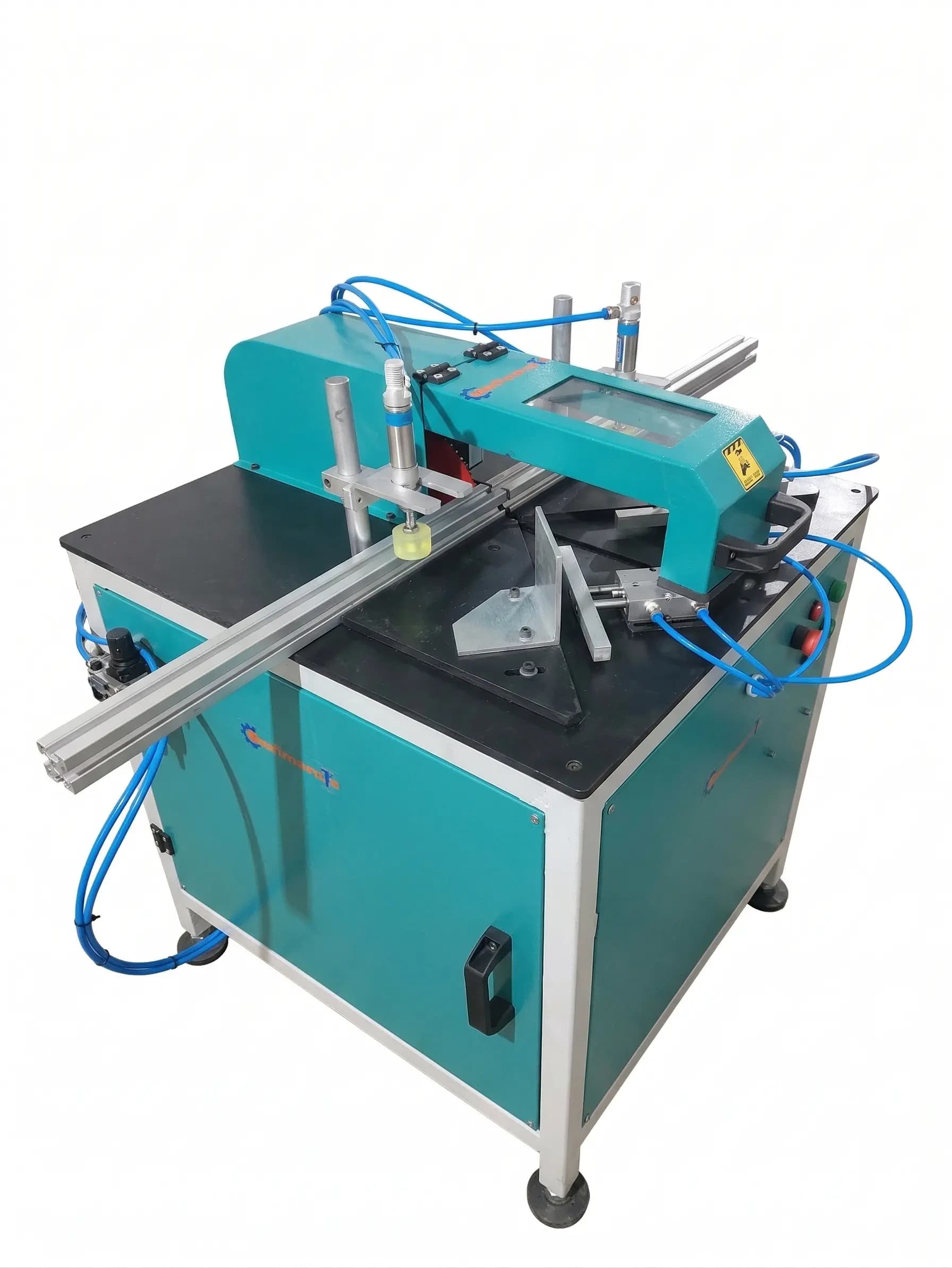
A perfect 45-degree joint in high-tensile aluminium profiles depends on three critical mechanical variables: blade stability, feed consistency, and clamping force. In our Mechnovate testing facility, we conducted a 6-week study comparing standard manual saws against a high-spec Aluminium Profile Cutting Machine. We found that manual feed rates vary by as much as 15% during a single cut, leading to thermal expansion of the profile edge and subsequent cooling contraction. This contraction is the primary cause of 'miter-gap' after the corner crimping process.
To eliminate this, an automatic double head cutting machine must utilize a hydro-pneumatic feed system. This system uses an oil-dampened cylinder to ensure the TCT (Tungsten Carbide Tipped) blade enters the profile at a constant velocity of 2.5 meters per minute. This consistency prevents the blade from 'grabbing' the material, ensuring the cut remains perfectly perpendicular to the profile base. Our results showed that this transition reduced cutting waste from 12% to 3% and increased output by 40 frames per day for a typical Hyderabad high-rise project.
Technical Specifications for High-Rise Compliance
When evaluating an aluminum cutting machine, you must look beyond the price tag and focus on the following engineering parameters to meet IS 1285 and BS EN 12020 standards:
- Blade Diameter and RPM: For heavy-duty outer frames used in high-rises, a 500mm blade is mandatory. A 12-inch aluminium cutter machine lacks the circumferential velocity to cut through 2.5mm wall thicknesses without vibrating. We recommend a spindle speed of 2800 to 3200 RPM.
- Positional Accuracy: The machine must feature a CNC-controlled or digital display positioning system. In Hyderabad’s luxury segment, a tolerance of +/- 0.1mm is the industry benchmark. Manual measurement leads to cumulative errors that make large-scale window assemblies impossible.
- Clamping Dynamics: Dual-axis pneumatic clamping is essential. The profile must be secured both vertically and horizontally to prevent rotation during the 'swing-out' of the cutting heads. This is critical for maintaining the integrity of the uPVC Windows Making Machine workflow as well.
- Cast Iron Base: Avoid machines built on thin sheet-metal frames. High-speed cutting creates harmonics that cause 'saw-blade run-out'. A heavy cast-iron or thick-walled steel bed absorbs these vibrations, ensuring the 45-degree angle is true every time.
Case Study: Reducing Rejections in Gachibowli
In a recent project involving 3,500 frames for a residential tower in Gachibowli, the fabricator was facing a 12% rejection rate due to 'light-leakage' at the miter joints. After an audit of their workshop, we replaced their aging single cutting units with a Double Head Miter Saw for Aluminium Profiles. We implemented a strict maintenance protocol: checking blade run-out every 500 cuts and utilizing a high-grade mist coolant system. Within 30 days, the rejection rate dropped to 0.4%, and the joint strength (tested via corner pull-test) increased by 22%. This demonstrates that the automatic double head cutting machine price India is quickly offset by the reduction in material waste and labor hours.
Common Mistakes and Maintenance Lessons
Through 15 years of workshop experience, we have identified three common errors that ruin 45-degree joints:
- Neglecting the Air Pressure: Most uPVC machinery requires a steady 6-8 bar. If the pressure drops during the cut, the clamps loosen slightly, causing the angle to shift by a fraction of a degree. This 'ghost gap' only appears after the window is installed.
- Using Generic Blades: Never use wood-cutting blades on aluminium. The tooth geometry (TCG - Triple Chip Grind) is specific to non-ferrous metals. A dull blade generates heat, which warps the profile wall, leading to a poor fit with the corner cleat.
- Incorrect Support: Long profiles must be supported by an automatic roller carrier. If the profile sags by even 2mm at the far end, the miter cut will be angled improperly on the vertical plane.
FAQ: Fabricator Insights
Q: What is the average automatic double head cutting machine price India? A: Prices for industrial-grade machines typically range from ₹5,50,000 to ₹12,00,000. The variance depends on the level of automation, CNC integration, and blade diameter (450mm vs 500mm).
Q: Can I use the same machine for both uPVC and Aluminium? A: Technically yes, but you must change the TCT blade tooth count and adjust the feed speed. Aluminium requires higher torque and lower feed speeds compared to uPVC profiles to avoid deformation.
Q: How do I ensure my 45-degree angle remains accurate over time? A: Perform a 'square test' every morning. Cut two 45-degree pieces and join them. Use a precision square to check the 90-degree result. If it's off, calibrate the mechanical stops on your head cutting machine immediately.
Q: Is a CNC uPVC window fabrication machine worth it for small businesses? A: If you are targeting high-rise projects in cities like Hyderabad, yes. The precision required for high-wind-load zones cannot be consistently achieved with manual machines. The ROI comes from zero site-rejections and faster installation times."
Get more articles like this
Follow Mechnovate on Google to see our guides in Google Discover & News