Eliminate Handle Hole Misalignment: Bangalore Copy Router Guide
Handle hole misalignment is the single most expensive rework factor in Bangalore aluminium workshops, often leading to wasted profiles and delayed site installations. When your hardware doesn't line up, it is rarely a hardware fault; it is almost always a failure of the milling process. Transitioning from manual drilling to a high speed copy router for aluminium windows is the industry-standard solution to achieve sub-millimeter precision. At Mechnovate, we have observed that workshops switching to dedicated routing machinery reduce profile wastage from 15% to less than 2% within the first month of implementation.
The Engineering Reality Behind Handle Misalignment
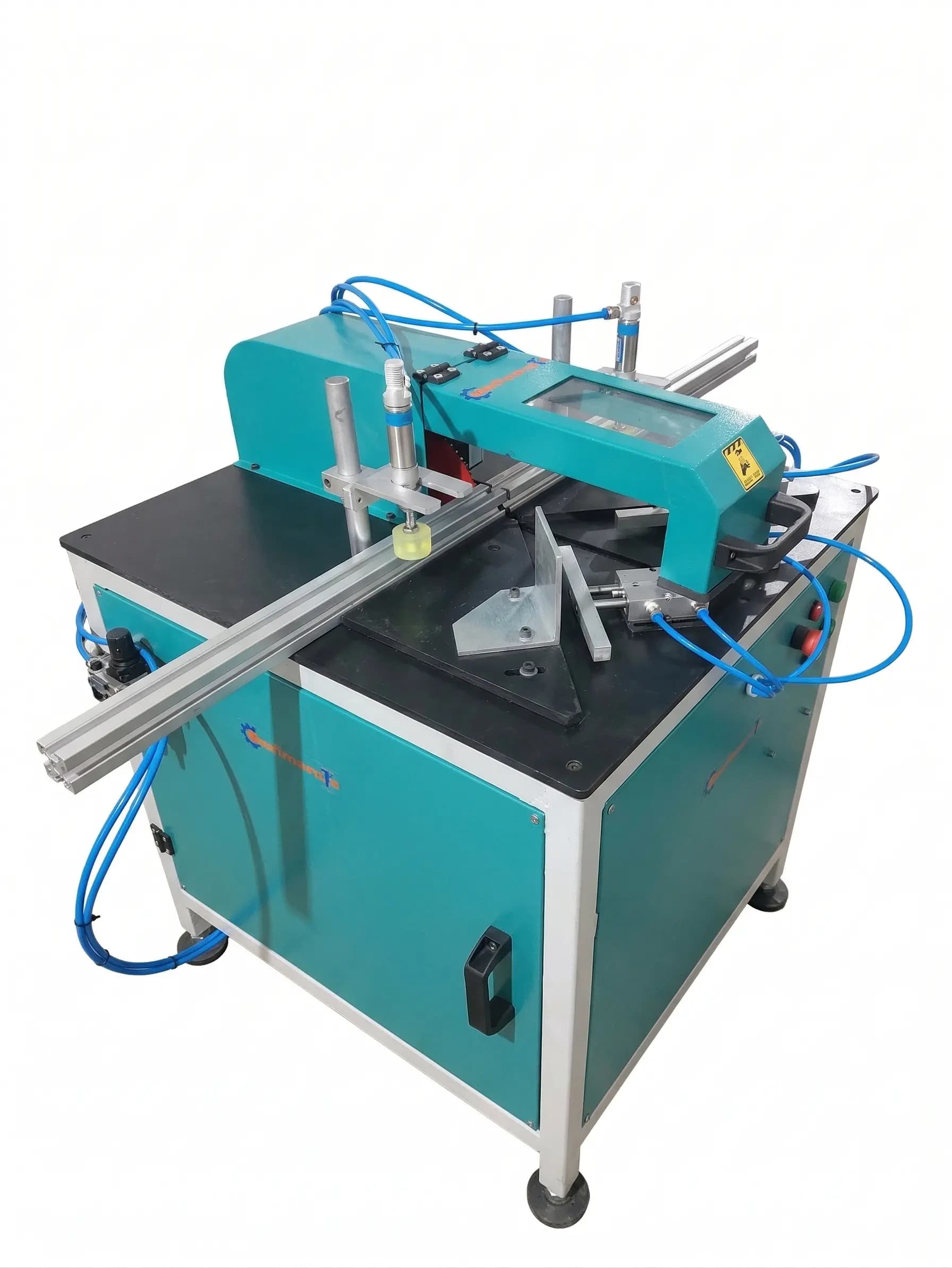
In typical aluminium fabrication, misalignment occurs when manual templates shift or when drill bits 'walk' across the curved surface of the profile. Standard aluminium cutting machine 12 inch units provide the length, but they cannot handle the intricate milling required for multi-point locks or espagnolette handles. High-speed routing at 12,000 RPM ensures the carbide bit slices through the aluminium wall without creating the thermal expansion or burrs that cause fitment issues. Proper aluminium fabrication requires a stable platform where the profile is pneumatically clamped to prevent any lateral movement during the 3-axis milling cycle.
We recently consulted for a facility in Peenya, Bangalore, that was struggling with a 12% rejection rate on their premium thermal-break window line. By replacing their manual templates with an automatic copy router machine, they stabilized their output to 60 frames per day with zero hardware fitment failures. The mechanical advantage lies in the 1:1 ratio pantograph system, which replicates the master template precisely onto the profile. This eliminates the 'human variable' that plagues manual punching and drilling operations in high-volume settings.
Implementation Guide: Setting Up Your High Speed Copy Router
To successfully implement a high speed copy router for aluminium windows, you must follow a structured calibration and installation protocol. This ensures that the precision engineering of the machine translates into perfect window frames. Follow these five technical steps to optimize your setup:
- Pneumatic Calibration: Ensure your workshop air compressor provides a consistent 8-bar pressure. Fluctuations in pressure lead to weak clamping, which is the primary cause of bit breakage and hole distortion during high-speed milling.
- Template Synchronization: Align the stylus and the milling bit using a calibration block. Even a 0.5mm offset at the stylus will result in a misaligned handle on the final aluminium profile cutting machine output.
- Lubrication System Check: High-speed routing generates significant heat. Your mist spray cooling system must be aimed precisely at the bit entry point to prevent the aluminium from melting and clogging the flutes of the router bit.
- RPM Optimization: For standard 2mm wall thickness profiles, maintain a spindle speed of 12,000 to 15,000 RPM. Lower speeds cause vibration, while excessive speeds can prematurely wear out the bearings of your aluminum cutting machine.
- Depth Stop Configuration: Set your mechanical depth stops to prevent the bit from hitting the inner webbing of the profile. This is crucial when working with multi-chambered thermal break sections used in high-end Bangalore residential projects.
ROI Analysis: Manual vs. Automatic Routing in Bangalore
Many small-scale fabricators hesitate at the aluminium cutter machine price, but the long-term ROI is undeniable when calculating labor and wastage. A manual worker takes approximately 8 to 12 minutes to measure, mark, and drill a single handle set with inconsistent results. In contrast, a high-speed copy router completes the same task in 45 seconds with 100% repeatability. In the Bangalore market, where labor costs are rising and site deadlines are aggressive, this speed is a competitive necessity.
| Feature | Manual Drilling/Punching | High Speed Copy Router |
|---|---|---|
| Precision | ± 1.5mm | ± 0.1mm |
| Processing Time | 10 Minutes | 45 Seconds |
| Skill Requirement | High (Master Fabricator) | Low (Operator Level) |
| Tool Life | Low (Drill bits snap) | High (Carbide bits) |
| Rejection Rate | 8-12% | < 0.5% |
By integrating a heavy duty aluminium profile end milling machine alongside your router, you create a synchronized production line. This level of automation allows you to bid for larger commercial projects in areas like Manyata Tech Park or Electronic City, where industrial profile cutting safety standards ISO standards are often a tender requirement. A single cutting setup simply cannot compete with the throughput of a dedicated routing station.
Common Pitfalls in High Speed Routing
One of the most frequent mistakes we see in Bangalore workshops is the use of blunt or incorrect milling bits. Using a bit designed for wood or uPVC on an aluminum cutting machine will lead to chatter marks and oversized holes. Always use single-flute carbide bits specifically engineered for non-ferrous metals. Furthermore, neglecting the daily cleaning of the copy templates will lead to 'creep' in the hole dimensions as aluminium chips build up inside the template slots.
Another critical factor is the lack of a manual punching machine for secondary operations like water drainage slots. While the copy router can handle these, using a dedicated aluminium punching machine for standard slots frees up the router for complex hardware milling. This balanced approach prevents bottlenecks in your production line. We also recommend regular checks on the belt tension of the spindle; a loose belt causes RPM drops under load, leading to poor surface finish on the milled edges.
Scaling Your Workshop: From Manual to CNC
As your volume grows beyond 100 windows per month, you may consider an automatic double head cutting machine price India search to upgrade your cutting department. However, your routing capacity must scale in tandem. Many fabricators invest heavily in a degree cutting machine but forget that the 'hardware bottleneck' still exists at the manual drilling station. An automatic upvc window manufacturing plant cost India study reveals that the most efficient shops allocate 25% of their machinery budget specifically to routing and punching equipment.
Whether you are a startup looking for the best uPVC window making machine for small business or an established player searching for CNC aluminium profile cutting machine suppliers India, the copy router remains the heartbeat of the assembly line. It is the bridge between a raw profile and a functional window. Ensuring this machine is high-quality, like the models produced by master machines experts, is the most effective way to eliminate hardware misalignment forever.
Frequently Asked Questions (FAQ)
Q1: Can I use the same copy router for both aluminium and uPVC profiles? Yes, most high-speed copy routers are compatible with both materials. However, you must adjust the spindle speed and the type of lubricant. For uPVC window manufacturing machinery, you typically run at lower RPMs to avoid melting the plastic, whereas aluminium requires higher speeds and mist cooling.
Q2: What is the average lifespan of a router bit on a high-speed machine? With a proper upvc window welding machine maintenance guide approach applied to your routing bits, a single carbide bit should last for approximately 500 to 800 milling cycles. This depends heavily on the wall thickness of the profiles and the consistent use of cooling lubricants.
Q3: Is a 3-axis router necessary for basic sliding windows? While a 2-axis router can handle basic handle holes, a 3-axis copy router machine is highly recommended. It allows you to process lock cylinders, handle holes, and drainage slots without re-clamping the profile, which is the primary way to ensure all holes are perfectly aligned relative to each other.
Q4: How do I choose the right template for my copy router? Most aluminium window machinery manufacturers in Ahmedabad Gujarat or Bangalore provide standard templates. However, if you are using specialized European hardware, you should have a custom template laser-cut from 5mm hardened steel to ensure long-term accuracy and prevent the stylus from wearing down the template edges.
Get more articles like this
Follow Mechnovate on Google to see our guides in Google Discover & News