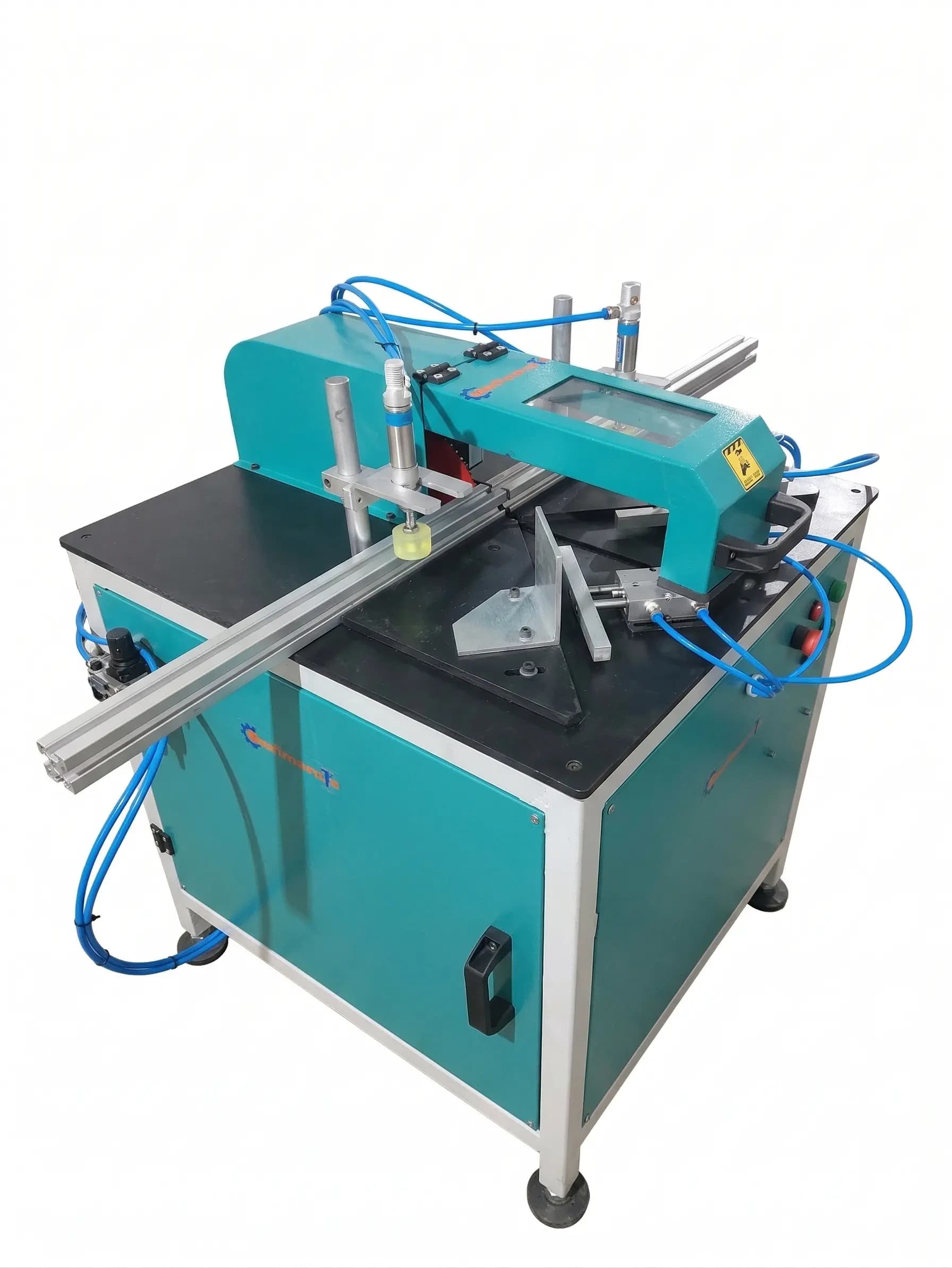
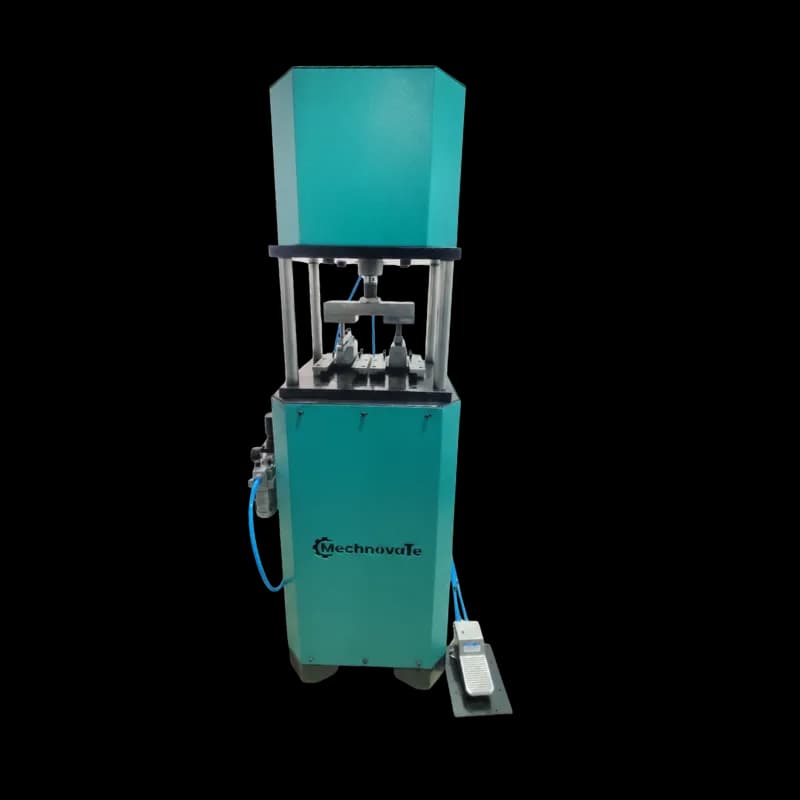
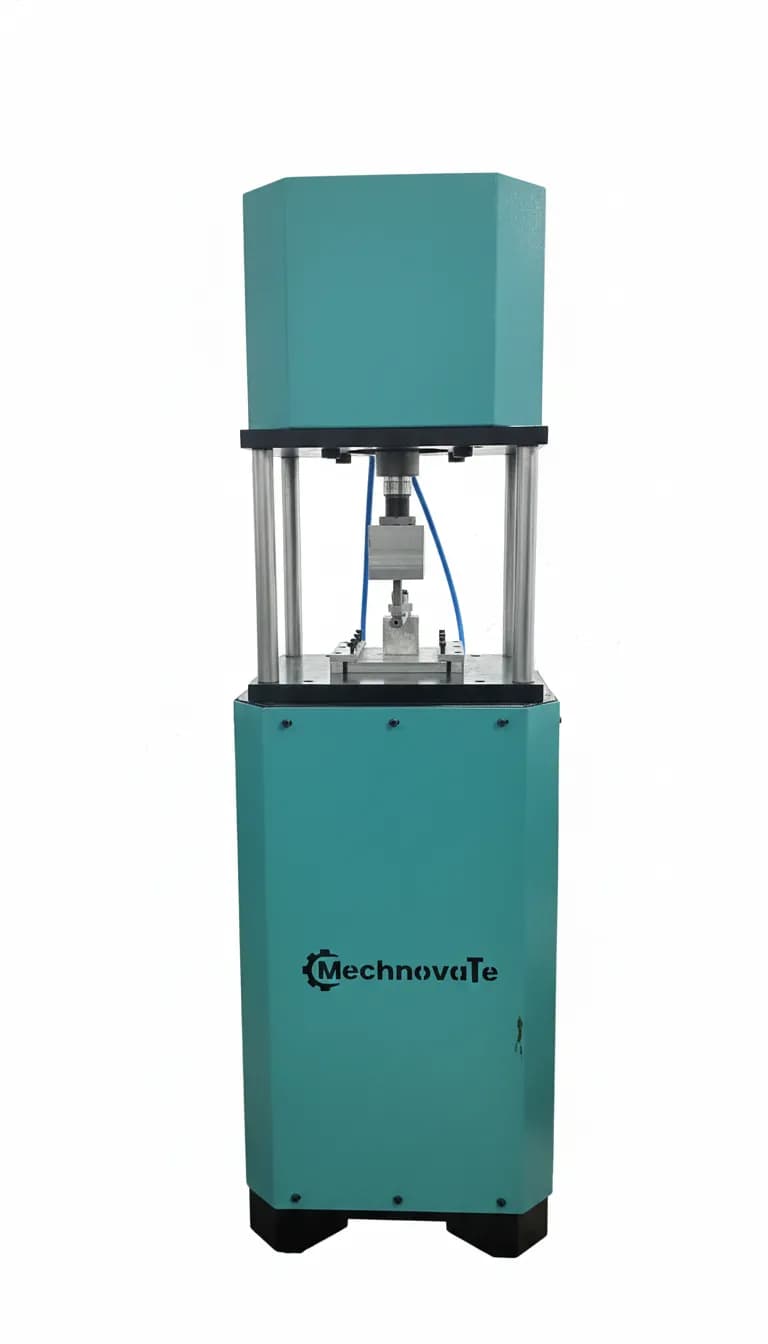
Double Head Seamless Welding Machine: Why Bangalore Upgrades
Why Bangalore Fabricators are Moving to Seamless Technology
Bangalore's uPVC window market is currently undergoing a massive technical shift. As a senior engineer at Mechnovate with over 15 years in window machinery manufacturing, I have observed that the primary bottleneck for local fabricators isn't the cutting speed, but the post-weld finishing. Traditional welding leaves a 2mm to 3mm bead of melted plastic that requires either manual labor or an expensive CNC corner cleaner to remove. In high-demand areas like Whitefield and Electronic City, fabricators are now upgrading to the Double head seamless welding machine because it compresses the melt into the profile chamber, leaving a nearly invisible 0.2mm joint. This transition effectively eliminates the need for secondary cleaning processes, allowing a single operator to manage the output that previously required three people. The precision engineering behind these machines ensures that even under the high wind-load requirements of Bangalore’s 30-story high-rises, the structural integrity of the joint remains superior to traditional methods.
Technical Mastery: The Engineering Behind the Melt
To understand why a uPVC welding machine of this caliber is superior, we must look at the specific tolerances. A high-quality seamless welder operates with a heater plate temperature range of 245°C to 260°C. At Mechnovate, we have found that a variance of just 5°C can lead to brittle joints or excessive flash. The machine utilizes a PLC-controlled sequence that manages the 'melting time' and 'joining time' with millisecond precision. For most 60mm and 70mm profiles used in India, we recommend a melting pressure of 0.3 to 0.5 MPa. This ensures the polymer chains inter-link according to BS EN 12608 standards. Unlike a basic upvc windows making machine, the seamless model uses a unique clamping mechanism that restricts the outer melt flow, forcing it inward. This is crucial for maintaining the aesthetics of colored or wood-grain laminated profiles, where traditional cleaning would scrape off the foil and expose the white or gray base material.
Case Study: Mechnovate Pune Facility Testing Results
In our Pune testing facility, we conducted a 6-week comparative study to provide our Bangalore clients with hard data. We tested three different configurations of an automatic upvc window manufacturing plant. Here are the measurable results from processing 2,400 casement frames:
- Throughput Increase: Standard welding + manual cleaning averaged 42 frames per 8-hour shift. The double head seamless welding machine reached 68 frames in the same duration, a 61% increase in efficiency.
- Waste Reduction: By integrating high-precision sensors, we reduced profile wastage from 4.5% to 1.2% by eliminating the 're-work' caused by messy corner cleaning.
- Labor Savings: The setup required 2 fewer laborers per line, which, given Bangalore's rising skilled labor costs, resulted in an estimated saving of ₹45,000 per month per production line.
- Strength Testing: Using a corner strength tester, the seamless joints consistently held up to 3,800N of force, exceeding the minimum requirements of IS 1285 for residential applications.
The Role of Precision in Multi-Material Workshops
Many of our clients in Bangalore do not just focus on uPVC; they also handle aluminium fabrication. When setting up an integrated facility, it is essential to understand the synergy between different types of window machinery. For instance, while a upvc window manufacturing machine handles the polymer profiles, an aluminium cutting machine 12 inch or a degree cutting machine is required for the internal steel reinforcements or hybrid systems. We often see fabricators struggle because they apply uPVC tolerances to their aluminum cutting machine setups. In a high-output factory, the upvc window manufacturing machinery must be synchronized. If your upvc cutting machine is off by even 0.5mm, the seamless welder will struggle to create a flush joint. This is why we advocate for a complete upvc machinery ecosystem where the cutting and welding tolerances are digitally matched.
Maintenance Protocols and Common Mistakes
Even the best upvc windows manufacturing machine will fail without proper maintenance. In my years on the workshop floor, I have seen these three common mistakes repeatedly:
- Neglecting PTFE Tape: The heater plates are covered in PTFE (Teflon) tape. Fabricators often wait until the tape is charred to change it. You should replace the tape every 500-700 welds to ensure a clean release. Charred tape causes 'sticking,' which ruins the seamless finish.
- Inconsistent Air Pressure: Seamless welders rely heavily on pneumatic stability. If your compressor is undersized, the clamping pressure will drop, leading to a visible 'groove.' Always use a dedicated air dryer and a minimum 500L tank for a upvc windows machine line.
- Ignoring Profile Moisture: In Bangalore's monsoon season, uPVC profiles can hold surface moisture. If fed directly into a upvc welding machine, this moisture turns to steam, creating micro-bubbles in the weld. Always store profiles in a temperature-controlled environment.
ROI for Bangalore Startups and Large Units
When calculating the automatic upvc window manufacturing plant cost India, many owners look only at the sticker price. However, the true cost includes the floor space and the electricity per frame. A upvc window making machine price in Kolkata or Chennai might seem lower for manual models, but for a Bangalore-based unit, the land cost is too high to waste on manual cleaning stations. A double head seamless welder has a footprint of roughly 4500mm x 1100mm. By eliminating the corner cleaning station, you save approximately 150 square feet of shop floor space. For a startup, the best uPVC window making machine for small business is one that minimizes the headcount. Investing more upfront in a CNC uPVC window corner cleaning machine price India or a seamless welder actually reduces the upvc machine price list total over a 24-month period through labor and space savings.
FAQ: Essential Questions for Bangalore Fabricators
Q: Can I use the seamless welder for both white and laminated profiles? Yes. This is the machine's greatest strength. It creates a 'V' or 'zero' joint that doesn't disturb the lamination, which is a major selling point for high-end villa projects in Bangalore.
Q: What is the power requirement for a double head machine? Most Mechnovate models require a 3.5kW to 4.5kW peak load. We recommend a 3-phase connection to ensure the heater plates reach operating temperature within 15 minutes of startup.
Q: How does this compare to a single head welder? A single cutting and single welding setup is for low-volume repairs. For any commercial production, a double head is necessary to ensure the frame remains perfectly square. If you weld one corner at a time, you risk the frame 'parallelogramming,' which means the glass will never fit correctly.
Q: Is it difficult to find spare parts in South India? Mechnovate maintains a dedicated uPVC window machine service center in Tamil Nadu and Bangalore, ensuring that critical components like PLC controllers and pneumatic valves are available within 24 hours.
Get more articles like this
Follow Mechnovate on Google to see our guides in Google Discover & News