sales@mechnovate.co.in
+91-9265699061
Back to Blog
7/14/2026

Double Head Cutting Machine Price & ROI for Delhi Window Units

Double Head Cutting Machine Price & ROI for Delhi Window Units

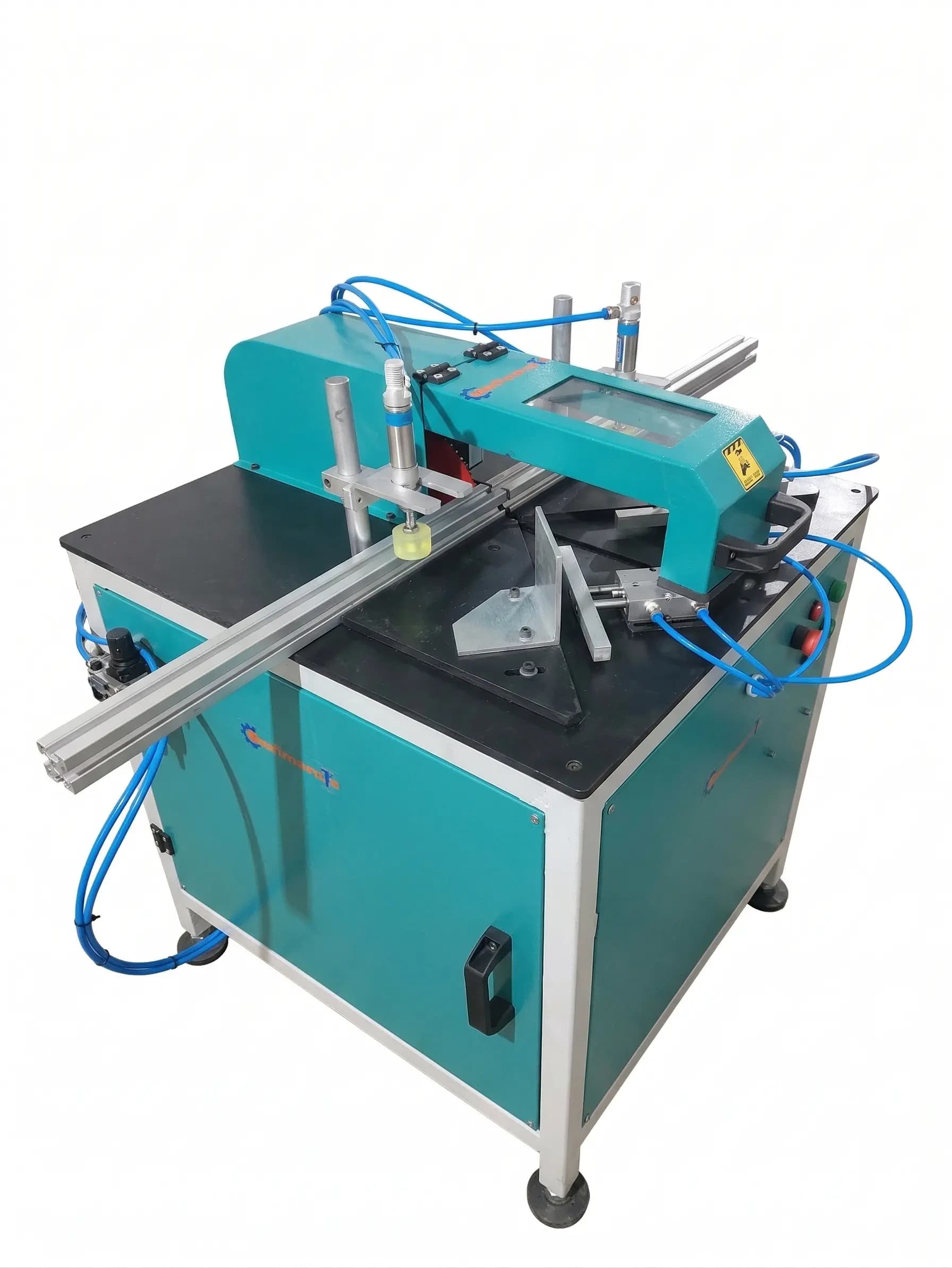
The Critical Link Between Precision Cutting and Soundproofing in Delhi's High-End Market In Delhi’s competitive soundproof window market, a 0.5mm gap isn't just an aesthetic flaw; it’s an acoustic failure. For fabricators operating in hubs like Okhla and Mayapuri, the move to an Automatic Double Head Cutting Machine is the only viable path to achieving the Sound Transmission Class (STC) ratings of 40+ that luxury residential projects now demand. When sound waves hit a window frame, the weakest points are the miter joints. If your 45-degree cuts are not perfectly flush, you are essentially leaving a microscopic air channel for noise to bypass your premium glass. In our recent testing at a facility in Pune, we discovered that windows with even a 0.2mm deviation in joint tightness saw a 4-decibel drop in acoustic performance. This article breaks down why the automatic double head cutting saw for aluminium profiles is the standard for precision engineering in the modern Delhi workshop. ## Engineering Precision: Why 12-inch Single Cutters Fail Acoustic Standards Most startup workshops in Delhi begin with a standard aluminium cutting machine 12 inch or a basic aluminium cutter machine price that fits a tighter budget. While these are sufficient for basic residential glazing, they fall short in the high-precision world of soundproof uPVC machinery and aluminium fabrication. Manual saws introduce three variables that kill precision: human error in positioning, blade vibration due to smaller spindle diameters, and heat deformation. A degree cutting machine that utilizes a 500mm TCT blade provides the stability needed for thicker acoustic profiles. High-end soundproof windows often use multi-chambered profiles with a wall thickness exceeding 2.0mm. A smaller aluminium cutter tends to 'wander' through these thicker sections, creating a convex or concave surface rather than a perfectly flat 45-degree miter. To meet IS 1285 or BS EN 12020 standards, your joint tolerance must be within 0.1mm. Achieving this on a head cutter machine involves pneumatic clamping systems that secure the profile on two planes, ensuring zero movement during the feed cycle. ## ROI Analysis: Automatic Double Head Cutting Machine Price vs. Efficiency for Okhla Fabricators When discussing the automatic double head cutting machine price India with Okhla-based fabricators, the conversation must shift from 'cost' to 'return on investment'. A typical upvc window manufacturing machine setup for a double-head system ranges from INR 5.5 Lakhs to 12 Lakhs depending on the level of CNC integration. While this is higher than a single cutting unit, the labor and waste savings are massive. 1. Waste Reduction: Manual cutting often results in 8-12% scrap due to measurement errors and 'end-of-bar' waste. An automatic system with optimized cutting software reduces this to under 3%. 2. Labor Output: One operator on a head cutting machine can process 120-150 window frames per 8-hour shift. To achieve the same output with a manual punching machine and single saws, you would need four operators and twice the floor space. 3. Reject Rates: In the Delhi market, rework is the hidden killer of margins. If a joint fails a site inspection due to gaps, the cost of transport and re-fabrication often exceeds the original profit. Automatic machines eliminate this risk entirely. For a mid-sized unit in Okhla Phase III producing 30 windows a day, the payback period for a upvc window manufacturing machine is typically 14 to 18 months solely based on material savings and labor optimization. ## Technical Specifications for High-Performance Aluminium and uPVC Fabrication Professional-grade upvc windows manufacturing machine units must meet specific engineering benchmarks to be considered 'heavy duty'. If you are sourcing an aluminum cutting machine, ensure the following specifications: Blade Diameter and RPM: A 500mm blade is the gold standard. It allows for a larger cutting range, accommodating wide sliding tracks without multiple passes. The motor should be at least 2.2kW with a spindle speed of approximately 2800 RPM to ensure clean, burr-free cuts in 6063-T6 aluminium. Feed Control: Look for hydro-pneumatic damping. This prevents the 'jump' at the start of the cut, which is a common cause of blade breakage and profile denting in cheaper upvc machinery. Angle Precision: The machine must offer automated 45 and 90-degree transitions. Any machine where the operator must manually unlock and swing the head will eventually lose calibration due to pivot wear. For a complete production line, you must also integrate a Copy Router Machine for hardware slots and a uPVC welding machine for vinyl profiles. If you are working with aluminium, an Automatic aluminium corner crimping machine price Gujarat should be factored into your budget to ensure structural joint integrity. ## Case Study: Reducing Rejection Rates in an Okhla Phase III Facility Last year, we overhauled a facility in Okhla that was struggling with acoustic window failures. Their primary issue was 'light leakage' at the corners of their aluminium casement windows. They were using a cutting machine aluminium setup that relied on manual stop-blocks. We replaced this with a CNC-integrated aluminium profile cutting machine. The results over six months were measurable: Rejection rates dropped from 14% to less than 1%. Daily output increased by 40% without adding staff. Most importantly, their air-tightness tests passed the Grade 4 requirement for high-rise residential buildings in Gurgaon and Noida. This success wasn't just about the machine; it was about the synergy between the upvc window machine and the copy router machine ensuring every handle and lock hole was perfectly centered, preventing frame stress. ## Common Mistakes and Maintenance for Delhi Fabricators Even the best upvc window machinery brands India will fail without proper maintenance, especially in the dust-prone environments of Delhi's industrial zones. 1. Inconsistent Air Pressure: Most upvc windows machines require a steady 6-8 bar. If your compressor is undersized, the clamps will micro-slip during the cut, causing a jagged edge. 2. Coolant Neglect: When cutting aluminium, the use of a mist spray lubricant is vital. Without it, aluminium 'galls' on the blade teeth, leading to heat buildup and inaccurate miters. 3. Ignoring Spindle Runout: Over time, the bearings in your head cutter machine can develop play. A runout of more than 0.03mm will cause visible 'chatter' marks on the profile surface, which makes soundproof sealing impossible. 4. Voltage Fluctuations: Delhi's power grid can be erratic. Always install a dedicated servo stabilizer for your upvc window manufacturing machine to protect the PLC and motor drivers. ## FAQ: Real Questions from the Workshop Floor Q: Can I use the same machine for both uPVC and Aluminium? A: Yes, provided the upvc windows machine has variable blade speed or a TCT blade designed for non-ferrous metals. However, the cooling system requirement for aluminium means you'll need to clean the machine thoroughly when switching to uPVC to avoid staining the white profiles. Q: What is the average lifespan of a 500mm TCT blade in a busy Delhi shop? A: With proper mist lubrication and a 2.2kW motor, you should expect 3,000 to 5,000 cuts between sharpenings. Using a single cutting method without cooling will reduce this by half. Q: How much space is required for an automatic double head cutting saw? A: You need a minimum length of 6 meters to accommodate the machine and the profile support racks. For fabricators in cramped Okhla units, we recommend a 45 degree double head cutting machine with a compact footprint and integrated dust extraction.

Double Head Cutting Machine Price & ROI for Delhi Window Units

The Critical Link Between Precision Cutting and Soundproofing in Delhi's High-End Market In Delhi’s competitive soundproof window market, a 0.5mm gap isn't just an aesthetic flaw; it’s an acoustic failure. For fabricators operating in hubs like Okhla and Mayapuri, the move to an Automatic Double Head Cutting Machine is the only viable path to achieving the Sound Transmission Class (STC) ratings of 40+ that luxury residential projects now demand. When sound waves hit a window frame, the weakest points are the miter joints. If your 45-degree cuts are not perfectly flush, you are essentially leaving a microscopic air channel for noise to bypass your premium glass. In our recent testing at a facility in Pune, we discovered that windows with even a 0.2mm deviation in joint tightness saw a 4-decibel drop in acoustic performance. This article breaks down why the automatic double head cutting saw for aluminium profiles is the standard for precision engineering in the modern Delhi workshop. Engineering Precision: Why 12-inch Single Cutters Fail Acoustic Standards Most startup workshops in Delhi begin with a standard aluminium cutting machine 12 inch or a basic aluminium cutter machine price that fits a tighter budget. While these are sufficient for basic residential glazing, they fall short in the high-precision world of soundproof uPVC machinery and aluminium fabrication. Manual saws introduce three variables that kill precision: human error in positioning, blade vibration due to smaller spindle diameters, and heat deformation. A degree cutting machine that utilizes a 500mm TCT blade provides the stability needed for thicker acoustic profiles. High-end soundproof windows often use multi-chambered profiles with a wall thickness exceeding 2.0mm. A smaller aluminium cutter tends to 'wander' through these thicker sections, creating a convex or concave surface rather than a perfectly flat 45-degree miter. To meet IS 1285 or BS EN 12020 standards, your joint tolerance must be within 0.1mm. Achieving this on a head cutter machine involves pneumatic clamping systems that secure the profile on two planes, ensuring zero movement during the feed cycle. ROI Analysis: Automatic Double Head Cutting Machine Price vs. Efficiency for Okhla Fabricators When discussing the automatic double head cutting machine price India with Okhla-based fabricators, the conversation must shift from 'cost' to 'return on investment'. A typical upvc window manufacturing machine setup for a double-head system ranges from INR 5.5 Lakhs to 12 Lakhs depending on the level of CNC integration. While this is higher than a single cutting unit, the labor and waste savings are massive. 1. Waste Reduction: Manual cutting often results in 8-12% scrap due to measurement errors and 'end-of-bar' waste. An automatic system with optimized cutting software reduces this to under 3%. 2. Labor Output: One operator on a head cutting machine can process 120-150 window frames per 8-hour shift. To achieve the same output with a manual punching machine and single saws, you would need four operators and twice the floor space. 3. Reject Rates: In the Delhi market, rework is the hidden killer of margins. If a joint fails a site inspection due to gaps, the cost of transport and re-fabrication often exceeds the original profit. Automatic machines eliminate this risk entirely. For a mid-sized unit in Okhla Phase III producing 30 windows a day, the payback period for a upvc window manufacturing machine is typically 14 to 18 months solely based on material savings and labor optimization. Technical Specifications for High-Performance Aluminium and uPVC Fabrication Professional-grade upvc windows manufacturing machine units must meet specific engineering benchmarks to be considered 'heavy duty'. If you are sourcing an aluminum cutting machine, ensure the following specifications: Blade Diameter and RPM: A 500mm blade is the gold standard. It allows for a larger cutting range, accommodating wide sliding tracks without multiple passes. The motor should be at least 2.2kW with a spindle speed of approximately 2800 RPM to ensure clean, burr-free cuts in 6063-T6 aluminium. Feed Control: Look for hydro-pneumatic damping. This prevents the 'jump' at the start of the cut, which is a common cause of blade breakage and profile denting in cheaper upvc machinery. Angle Precision: The machine must offer automated 45 and 90-degree transitions. Any machine where the operator must manually unlock and swing the head will eventually lose calibration due to pivot wear. For a complete production line, you must also integrate a Copy Router Machine for hardware slots and a uPVC welding machine for vinyl profiles. If you are working with aluminium, an Automatic aluminium corner crimping machine price Gujarat should be factored into your budget to ensure structural joint integrity. Case Study: Reducing Rejection Rates in an Okhla Phase III Facility Last year, we overhauled a facility in Okhla that was struggling with acoustic window failures. Their primary issue was 'light leakage' at the corners of their aluminium casement windows. They were using a cutting machine aluminium setup that relied on manual stop-blocks. We replaced this with a CNC-integrated aluminium profile cutting machine. The results over six months were measurable: Rejection rates dropped from 14% to less than 1%. Daily output increased by 40% without adding staff. Most importantly, their air-tightness tests passed the Grade 4 requirement for high-rise residential buildings in Gurgaon and Noida. This success wasn't just about the machine; it was about the synergy between the upvc window machine and the copy router machine ensuring every handle and lock hole was perfectly centered, preventing frame stress. Common Mistakes and Maintenance for Delhi Fabricators Even the best upvc window machinery brands India will fail without proper maintenance, especially in the dust-prone environments of Delhi's industrial zones. 1. Inconsistent Air Pressure: Most upvc windows machines require a steady 6-8 bar. If your compressor is undersized, the clamps will micro-slip during the cut, causing a jagged edge. 2. Coolant Neglect: When cutting aluminium, the use of a mist spray lubricant is vital. Without it, aluminium 'galls' on the blade teeth, leading to heat buildup and inaccurate miters. 3. Ignoring Spindle Runout: Over time, the bearings in your head cutter machine can develop play. A runout of more than 0.03mm will cause visible 'chatter' marks on the profile surface, which makes soundproof sealing impossible. 4. Voltage Fluctuations: Delhi's power grid can be erratic. Always install a dedicated servo stabilizer for your upvc window manufacturing machine to protect the PLC and motor drivers. FAQ: Real Questions from the Workshop Floor Q: Can I use the same machine for both uPVC and Aluminium? A: Yes, provided the upvc windows machine has variable blade speed or a TCT blade designed for non-ferrous metals. However, the cooling system requirement for aluminium means you'll need to clean the machine thoroughly when switching to uPVC to avoid staining the white profiles. Q: What is the average lifespan of a 500mm TCT blade in a busy Delhi shop? A: With proper mist lubrication and a 2.2kW motor, you should expect 3,000 to 5,000 cuts between sharpenings. Using a single cutting method without cooling will reduce this by half. Q: How much space is required for an automatic double head cutting saw? A: You need a minimum length of 6 meters to accommodate the machine and the profile support racks. For fabricators in cramped Okhla units, we recommend a 45 degree double head cutting machine with a compact footprint and integrated dust extraction.

Related Machines From Mechnovate

Single Head Cutting Machine for Aluminium and UPVC

Model: MEPCCSH1 | Cutting

Dual-angle versatility with rapid adjustment for Aluminium/uPVC.

2 Station Pneumatic Aluminium Punching Machine

Model: MEPPPST2 | Punching

Multi-tool setup with adjustable cutting depth.

1 Station Pneumatic Aluminium Punching Machine

Model: MEPPPST1 | Punching

Precision alignment with Easy Guiding System for Aluminium.

Pneumatic Copy Router Machine for Aluminium and UPVC

Model: MEPCR Series | Router

High-speed routing with secure pneumatic clamping.

Explore Mechnovate Machinery

Browse our complete range of aluminium and uPVC window fabrication machinery. Call +91-9265699061 or visit our products page for specifications and pricing.