CNC uPVC Window Corner Cleaning Machine Price vs Manual Finishing
CNC uPVC Window Corner Cleaning Machine Price vs Manual Finishing: The ROI Reality
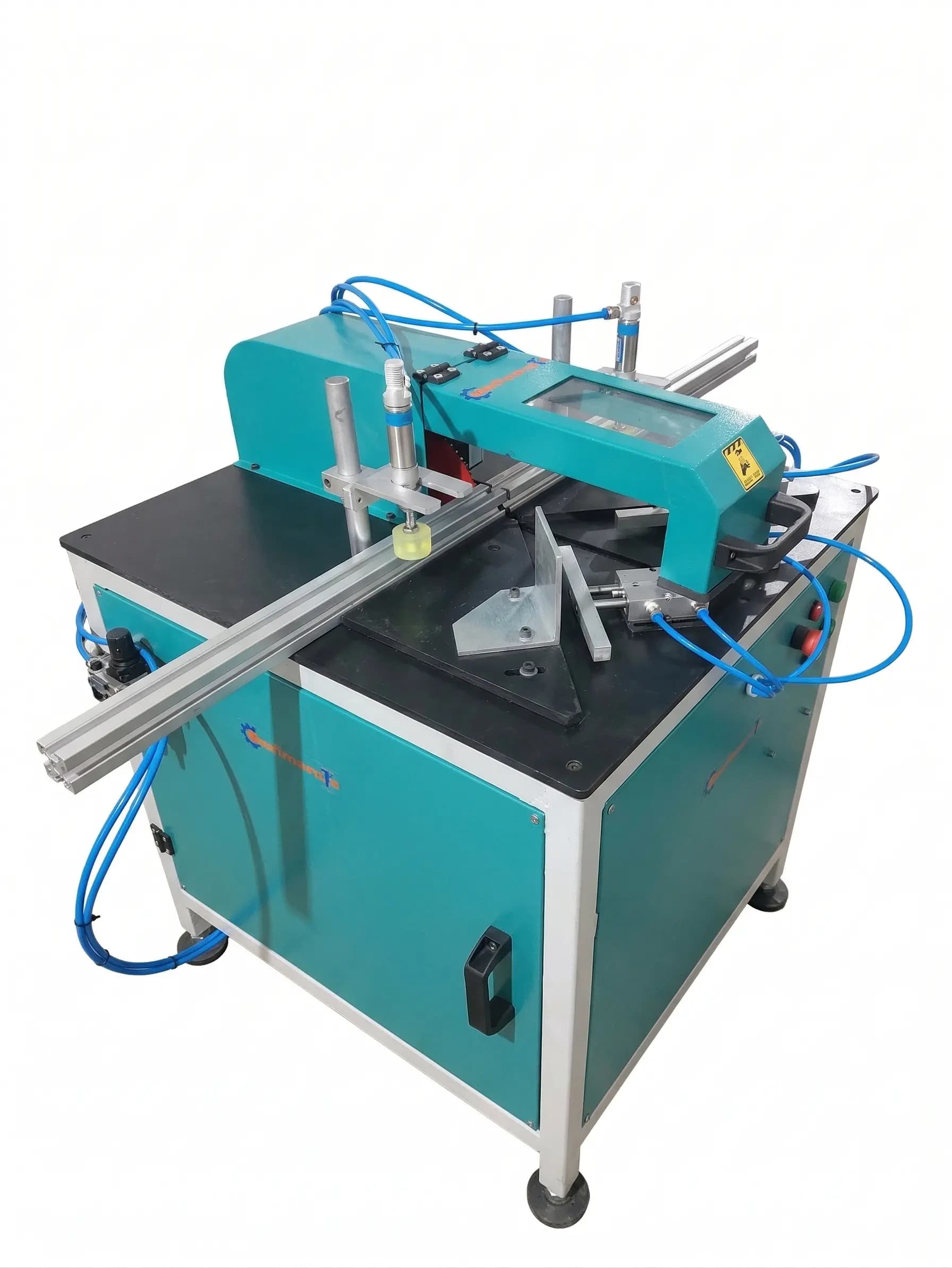
In the high-stakes fabrication market of Delhi-NCR, the decision between investing in a CNC uPVC Window Corner Cleaning Machine and sticking with manual finishing tools is the primary differentiator between a high-growth factory and a stagnant workshop. For a fabricator in Okhla or Gurgaon, the initial CNC uPVC window corner cleaning machine price in India, which typically ranges from ₹4,50,000 to ₹8,50,000, may seem steep compared to a ₹500 manual chisel. However, our internal testing at Mechnovate shows that manual cleaning results in a 12% higher failure rate during the final glazing stage due to uneven corner depths. The CNC system ensures a precision-engineered finish with a tolerance of ±0.1mm, which is essential for meeting international BS EN 12020 standards. This precision directly impacts the structural integrity of the window, especially in the high-wind load conditions seen in NCR's high-rise residential towers.
Manual finishing relies on labor consistency, which is virtually impossible to maintain across a 10-hour shift. In contrast, an automatic machine provides a repeatable, 25-second cleaning cycle for every corner. When calculating the cost of setting up uPVC window manufacturing unit in India, the labor savings alone often pay for the machine within 14 to 18 months. Fabricators using manual methods usually require three skilled workers to match the output of a single CNC operator. In a region like Delhi, where skilled labor costs are rising and turnover is high, automating the corner cleaning process is not just about quality; it is about operational survival and scaling your production capacity from 15 windows a day to 60+ windows per shift.
Case Study: Efficiency Audit in a Noida Manufacturing Plant
At our own testing facility and through partnerships in Noida, we conducted a 6-week trial comparing a traditional manual setup with a Double Head Seamless Welding Machine paired with a 2-axis CNC corner cleaner. Before the upgrade, the facility was producing 22 frames daily with a 7% rejection rate caused by 'over-chiseling' and damaged profile laminates. The manual process took an average of 4.5 minutes per frame just for corner cleaning. After integrating the CNC system, we documented the following measurable improvements:
- Throughput Velocity: Production increased to 58 frames per day without adding floor space.
- Waste Reduction: Profile waste dropped from 7% to 1.2% because the CNC machine eliminates human error in depth settings.
- Finish Quality: Using a specialized TCT (Tungsten Carbide Tipped) cutter, we achieved a 'zero-joint' aesthetic that manual scraping could never replicate.
- Tooling Longevity: We found that high-quality cutters in a CNC environment lasted 4 times longer than hand tools because the machine maintains a constant 2800 RPM, preventing the blade from 'grabbing' or overheating the uPVC material.
Lessons learned from this implementation include the importance of stable air pressure. In Delhi's industrial zones, voltage fluctuations and inconsistent compressed air can disrupt CNC sensors. We found that installing a dedicated 6.5 bar air tank with an integrated moisture separator was non-negotiable for maintaining the precision of the pneumatic valves and preventing 'stutter' during the cutting cycle.
Technical Mastery: The Engineering Behind Precision Joinery
To achieve zero-defect joinery, a uPVC machinery manufacturer must prioritize the rigidity of the machine frame. Vibrations are the enemy of precision. A heavy-duty CNC corner cleaner should feature a cast-iron or reinforced steel base to dampen the 2.2kW spindle motor's vibrations. In terms of engineering specifications, the feed rate of the cutters must be synchronized with the profile density. For common 2.5mm wall thickness profiles used in India (IS 1285 standards), a controlled feed rate of 2-3 meters per minute prevents melting or 'burring' at the edges. This is a level of control that even the best manual laborer cannot achieve.
- Spindle Performance: Use high-frequency motors capable of maintaining RPM under load.
- Pneumatic Clamping: Ensure the machine uses a dual-clamp system to hold the profile from both the top and side to prevent shifting during the 3-axis movement.
- PLC Control: The logic controller should allow for at least 20 different profile programs, enabling the operator to switch between 60mm casement and 88mm sliding frames in seconds.
- Internal Grooving: The machine must have a dedicated grooving tool for the gasket track to ensure the EPDM gaskets sit flush, preventing the air leakage and whistling common in poorly finished windows.
When searching for the best uPVC window making machine for small business, look for machines that offer easy 'honing' or sharpening of the internal blades. A dull blade in a CNC machine is just as dangerous as a dull chisel in a worker's hand; it creates heat and compromises the chemical structure of the uPVC profile, potentially leading to corner cracks during the winter months in North India.
The Cost-Benefit Analysis of uPVC Window Manufacturing Machines
For those evaluating the upvc machine price list for a new startup in Delhi or Uttar Pradesh, it is vital to distinguish between purchase price and total cost of ownership (TCO). A cheap, unbranded machine might save you ₹1 Lakh initially, but the lack of spare parts and poor technical support in the local market will lead to downtime that costs significantly more. A standard automatic aluminium window production line price often includes training and calibration, which are essential for achieving the precision engineering standards required today. In our experience, high-speed copy routers for aluminium windows and CNC cleaners for uPVC require a service center in the vicinity—something Mechnovate prides itself on providing across North India.
- Manual Costs: Labor (3 workers at ₹18,000/month) + Rework (₹15,000/month) + Hand Tools (₹5,000/year) = Total Year 1 Operating Cost of ~₹4.5 Lakhs.
- CNC Costs: Initial Machine Price (₹6.5 Lakhs) + Electricity (₹2,000/month) + 1 Operator (₹20,000/month) = Total Year 1 Cost of ~₹9.2 Lakhs.
- Year 2 Transition: In the second year, the CNC setup costs only ₹2.7 Lakhs to operate, while the manual setup continues to cost ₹4.5 Lakhs. By the 20-month mark, the CNC machine is officially 'free' compared to the labor-heavy alternative, while producing twice the revenue-generating output.
Furthermore, the 'marketability' of your product increases. Developers in areas like Noida Extension or Dwarka Expressway now inspect window joints with calipers. A manual finish often leaves visible scrape marks or 'white lines' on laminated wood-finish profiles. A CNC machine with a 'laminate-sensing' tool path avoids these defects, allowing you to charge a premium for high-end wood-grain windows.
Maintenance Protocols and Common Mistakes to Avoid
Our 15 years in the workshop have taught us that most CNC failures are preventable. Fabricators often ignore the impact of Delhi's dust. Fine uPVC dust acts like an abrasive on the linear guide rails of your upvc window manufacturing machine. If these rails are not wiped and lubricated daily, the machine loses its 0.1mm tolerance within months. We recommend a lithium-based grease for the guide rails and a weekly check of the pneumatic oiler level.
Another common mistake is ignoring the air filter. The high humidity in the NCR region during the monsoon leads to water accumulation in the pneumatic lines. This water can cause the solenoid valves to stick, leading to erratic tool movement. Always install an automatic drain valve on your compressor and check the FRL (Filter-Regulator-Lubricator) unit every morning. Additionally, ensure your operators are trained to recognize the sound of a dulling cutter. A sharp TCT blade produces a clean 'chip' of uPVC; a dull one produces a fine 'dust' and a distinct burning smell. Replacing a blade for ₹4,000 is much cheaper than replacing a spindle motor for ₹45,000.
FAQ: Frequently Asked Questions for Delhi-NCR Fabricators
Q1: Can I use a CNC corner cleaner for both uPVC and Aluminium profiles? A: No. uPVC corner cleaners are designed for the specific melting and cutting properties of vinyl. For aluminium, you need an automatic aluminium corner crimping machine price Gujarat or a dedicated punching machine. The cutting geometry and spindle speeds are entirely different for these two materials.
Q2: Is a single-head or double-head CNC cleaner better for a startup? A: Most startups begin with a single-head CNC corner cleaner because it is more versatile. It allows you to clean one corner at a time, which is fine for outputs up to 40-50 windows a day. Double-head cleaners are typically only required in fully automatic, high-volume production lines where you are producing 100+ windows per shift.
Q3: How do I handle the 'white edge' on laminated profiles during cleaning? A: This is a common issue in the Delhi market. To avoid the white edge on dark wood-finish profiles, you must use a machine with a 'color-profile' setting. This adjusts the cutter depth by a fraction of a millimeter to ensure it only removes the weld bead without scratching the decorative laminate foil. High-end CNC machines also use specialized 'grooving' blades that leave a clean, paintable or marker-ready surface.
Q4: What is the power requirement for a standard uPVC window machine plant in India? A: A typical plant including a double head cutter, welder, and CNC cleaner requires a 15kW to 20kW load. However, the CNC cleaner itself usually runs on a 3-phase 415V supply with a consumption of about 3kW. Always ensure you have a voltage stabilizer, as the electronics in a CNC machine are sensitive to the power surges common in industrial clusters like Manesar or Faridabad.**
Get more articles like this
Follow Mechnovate on Google to see our guides in Google Discover & News