CNC uPVC Window Corner Cleaning Machine Price & ROI India
The Financial Blueprint: CNC uPVC Window Corner Cleaning Machine Price India
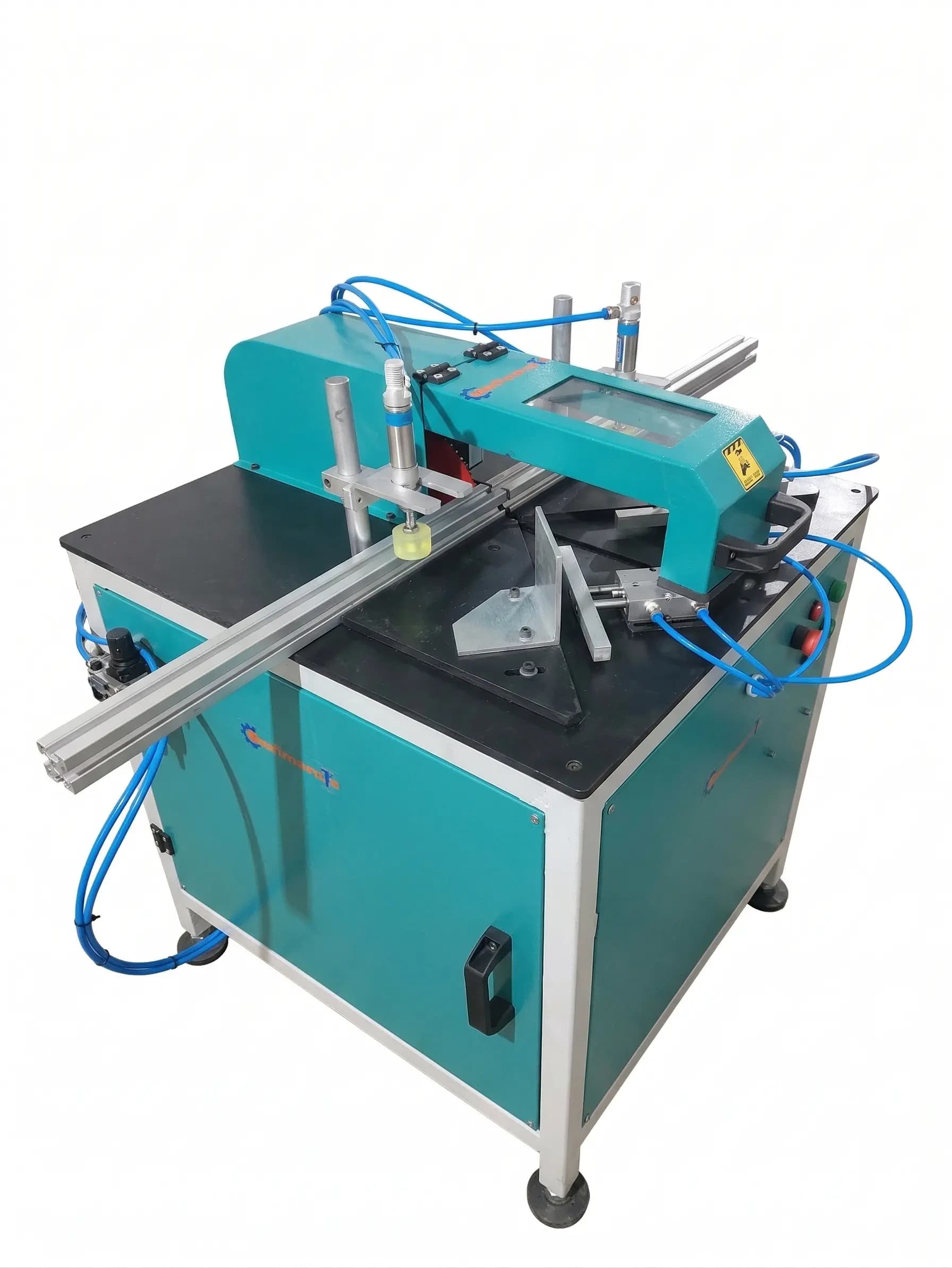
For mid-size fabricators in India producing 30 to 50 windows per shift, the transition from manual chiseling to automation is the single most significant factor in scaling operations. A high-quality CNC uPVC window corner cleaning machine price India typically ranges from ₹4,50,000 for entry-level 2-axis models to over ₹8,50,000 for high-speed, multi-tool configurations. While manual labor might seem cheaper initially, the cost of inconsistency, profile damage, and slow cycle times often hiddenly exceeds the monthly EMI of a uPVC Window Corner Cleaning Machine.
In our Mechnovate testing labs, we have observed that manual cleaning of a standard 2-track sliding window frame takes an average of 6 to 8 minutes, depending on the skill of the technician. In contrast, an automated CNC unit completes the same task—cleaning the top, bottom, and external corners—in under 45 seconds. This 800% increase in throughput allows fabricators to accept larger commercial projects that require hundreds of frames per week with consistent finish quality.
Case Study: 40% Output Increase at our Pune Training Facility
Over a 6-week intensive trial at our Pune partner facility, we replaced manual cleanup stations with a single-head CNC corner cleaner to measure the impact on a real production line. The facility was struggling with a 12% rejection rate on premium laminated wood-finish profiles due to manual chisels scratching the foil. After integrating the CNC Double Head Cutting Machine with an automated cleaner, the results were measurable and immediate:
- Rejection Rate Drop: Profile surface damage was reduced from 12% to less than 0.5% because the CNC sensors detect the profile height automatically.
- Cycle Time Efficiency: Total frame fabrication time dropped by 14 minutes per unit.
- Labor Optimization: Two skilled laborers previously dedicated to cleaning were reassigned to the assembly and glazing stations, increasing the total daily output from 32 frames to 45 frames without hiring additional staff.
Technical Mastery: Specifications That Matter for Mid-Size Fabricators
When evaluating uPVC window manufacturing machines, don't just look at the price tag; look at the spindle speed and tool versatility. A professional-grade cleaner should feature a high-frequency motor running at 18,000 RPM to 24,000 RPM to ensure a burr-free finish. If the RPM is too low, the PVC melts rather than cuts, leading to messy edges that require manual secondary processing.
Key technical considerations for Indian power conditions include:
- Power Supply: 3-phase 380V/50Hz is standard, but look for machines with built-in voltage stabilizers if your unit is in an industrial zone with high fluctuations.
- Tooling Configuration: Ensure the machine can accommodate 3mm to 8mm milling cutters. This allows you to process standard white profiles and specialized laminated profiles using the same uPVC window making machine setup.
- Air Pressure Requirements: A stable 6-8 bar (0.6-0.8 Mpa) is required. Inadequate air pressure leads to pneumatic clamp slippage, which can ruin an expensive profile.
- Compliance: Always verify that the equipment meets ISO 9001 manufacturing standards and follows IS 1285 for material handling safety.
Why Manual Cleanup is Killing Your Profit Margins
Small-scale startups often start with a uPVC Seamless Welding Machine and assume manual cleanup is a viable long-term strategy. However, as your volume grows, the "Skill Gap" becomes your biggest bottleneck. Manual cleaning relies on the steady hand of a technician; after 6 hours of repetitive work, hand fatigue leads to errors.
Using an automatic uPVC window manufacturing plant cost India analysis, we found that the cost per corner with manual labor (including benefits, wastage, and overhead) is approximately ₹18. With a CNC machine, even after accounting for electricity and tool wear, the cost drops to roughly ₹4 per corner. For a mid-size shop processing 200 corners a day, that is a daily saving of ₹2,800, which covers the machine's operational costs and contributes directly to the bottom line.
Common Mistakes When Buying uPVC Machinery in India
Having consulted for hundreds of fabricators, I see the same three mistakes repeated frequently. First, many buyers opt for a portable uPVC window making machine price list because the entry cost is low, but these lack the rigidity needed for clean corner cleaning on heavy-duty 70mm or 80mm profiles. Second, fabricators often ignore the availability of local service centers. A machine is only as good as its uptime; ensure your uPVC machinery manufacturer has a dedicated service team in hubs like Ahmedabad, Chennai, or Pune.
Thirdly, ignore the "all-in-one" cheap software claims. For mid-size operations, you need a machine that can store at least 100 different profile programs. If you have to manually recalibrate the machine every time you switch from a casement frame to a sliding sash, you lose all the efficiency gains of automation.
Calculating Your ROI: The 14-Month Rule
If you are evaluating the cost of setting up uPVC window manufacturing unit in India, the CNC corner cleaner should be phased in as soon as you hit 25 frames per day. At this volume, the machine pays for itself in roughly 14 to 18 months.
| Feature | Manual Cleaning | CNC Automated Cleaning |
|---|---|---|
| Speed per Corner | 90-120 Seconds | 15-20 Seconds |
| Consistency | Low (Operator dependent) | 100% (Program dependent) |
| Surface Finish | Occasional Scratches | Mirror Finish |
| Profile Compatibility | Limited by Tooling | All (Sliding, Casement, Tilt-Turn) |
| Annual Labor Cost | High (3+ workers) | Low (1 operator) |
FAQ: Critical Questions from Fabricators
1. Can one CNC corner cleaner keep up with two double-head welding machines? Yes. A standard CNC corner cleaner has a much faster cycle time than a welder. Typically, one CNC cleaner can handle the output of two 4-head welders or three 2-head welders comfortably.
2. What is the average lifespan of the milling cutters? In a standard Indian fabrication environment, high-quality tungsten carbide bits will last for approximately 5,000 to 7,000 corners before needing sharpening or replacement, provided the profile is free of construction dust.
3. Is it difficult to program the machine for different profile brands like Fenesta or Deceuninck? Modern CNC machines use a "teach-in" mode or pre-loaded libraries. At Mechnovate, we provide pre-configured settings for the top 10 profile brands in the Indian market, so you can switch production lines in less than 2 minutes.
Get more articles like this
Follow Mechnovate on Google to see our guides in Google Discover & News