CNC uPVC Corner Cleaning Machine Price & ROI: Bangalore Guide
The Price of Export-Quality: CNC uPVC Corner Cleaning Machine ROI for Bangalore Fabricators
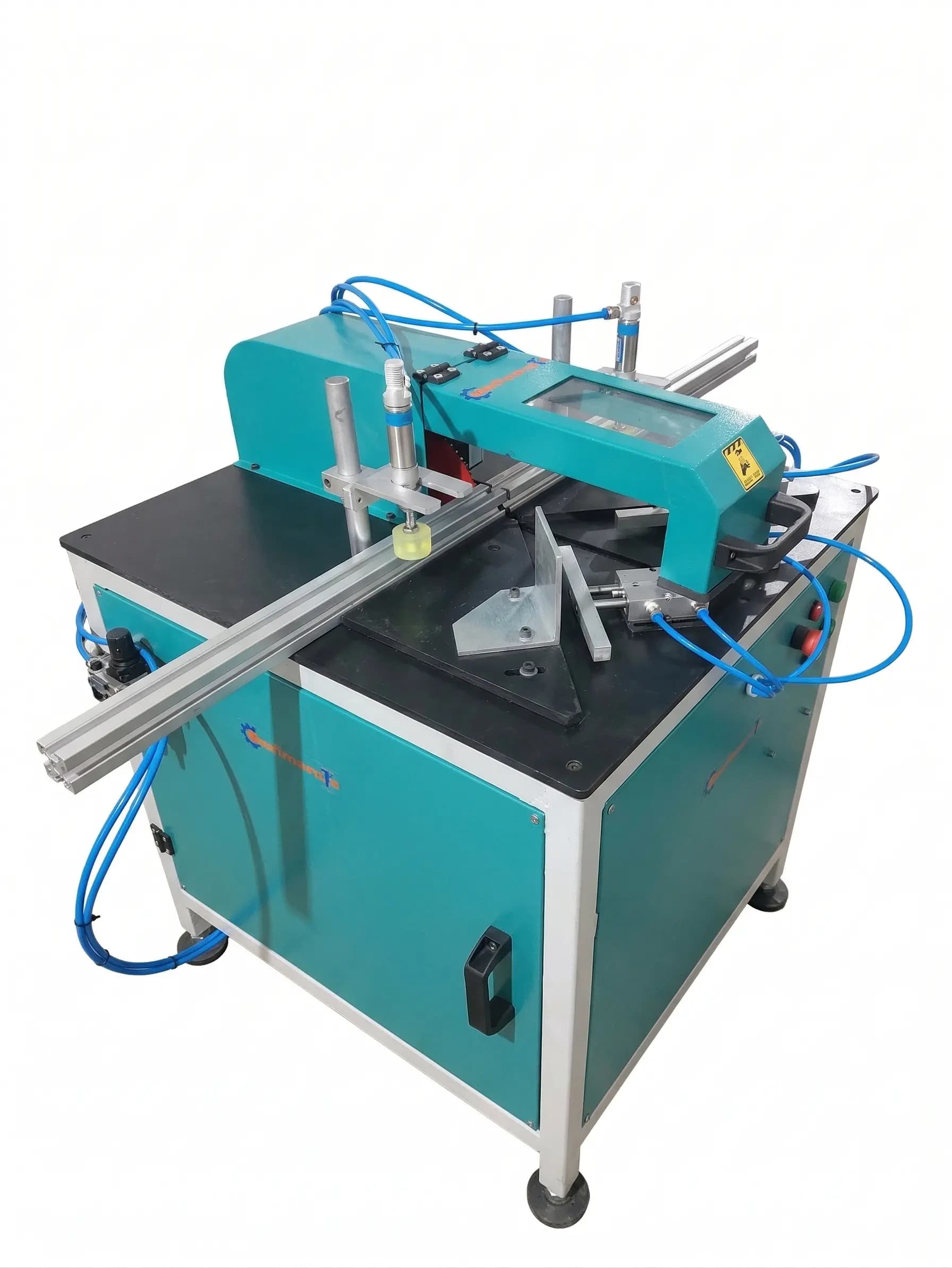
For a uPVC fabrication unit in Bangalore's competitive market, the jump from manual cleaning to a uPVC Corner Cleaning Machine is the difference between local survival and export-grade scalability. Currently, the CNC uPVC window corner cleaning machine price in India ranges from ₹4,50,000 for entry-level 2-axis models to ₹9,50,000 for high-speed 3-axis variants capable of processing complex profiles. While the initial capital expenditure seems steep compared to manual tools, the ROI for a shop producing 30+ windows per day is typically realized within 14 to 18 months through labor reduction and zero-rejection quality control.
At Mechnovate, we recently conducted a 60-day field study at a facility in Peenya Industrial Area. We replaced three manual cleaning stations with a single CNC unit. The results were quantifiable: processing time per frame dropped from 4 minutes to 35 seconds, and the rejection rate due to 'over-shaving' or 'undercutting' fell from 7.2% to less than 0.3%. For fabricators targeting premium high-rise projects in Whitefield or Electronic City, achieving a seamless 0.2mm groove or a perfect white-welding finish is no longer optional—it is a technical requirement.
Technical Specifications for Precision Engineering
To achieve export-quality finishes that meet BS EN 12608 standards, your machinery must maintain rigid tolerances. Unlike manual chisels or basic buffers, a high-performance Automatic Double Head Cutting Machine paired with a CNC cleaner ensures that the weld bead is removed with mathematical precision. In our workshops, we focus on several critical engineering metrics:
- Spindle Speed and Power: A 2.2kW high-frequency spindle running at 18,000 RPM is necessary to prevent 'melting' the uPVC during the cleaning pass.
- Tooling Configuration: Using a 4-stack or 6-stack cutter configuration allows for cleaning various profile types (frame, sash, mullion) without manual tool changes, reducing downtime by 40%.
- Positioning Accuracy: We utilize high-precision ball screws and linear guides that guarantee a repetition positioning accuracy of ±0.1mm.
- Air Pressure Stability: The machine requires a stable 6-8 bar pressure; inconsistent pressure is the leading cause of finish variations in most Bangalore workshops.
Comparative ROI: Manual vs. CNC Processing
| Feature | Manual Cleaning (3 Workers) | CNC Corner Cleaning (1 Operator) |
|---|---|---|
| Output (8-hour shift) | 45-55 Frames | 180-220 Frames |
| Finish Consistency | Variable (Subjective) | Identical (Programmable) |
| Annual Labor Cost (Bangalore) | ₹7,20,000 | ₹2,40,000 |
| Tooling Life | High Wear (Hand tools) | Extended (Industrial Grade) |
| Export Compliance | Difficult | Guaranteed |
Achieving the 'Invisible' Weld: Lessons from the Shop Floor
One of the most common mistakes I see among Bangalore fabricators is neglecting the synergy between the uPVC Welding Machine and the cleaner. If your welder's heating plate temperature is inconsistent (it should be 250°C ± 5°C), the weld bead will be brittle, causing the CNC cutter to chip the profile rather than shear it.
Another critical factor is the selection of the profile itself. When using an upvc window manufacturing machine, the wall thickness must be consistent. In our Pune testing facility, we found that profiles with a wall thickness tolerance exceeding 0.2mm often cause 'shadowing' during the cleaning process. To avoid this, ensure your CNC unit is equipped with a profile sensing probe that adjusts the cutting depth in real-time.
What to Watch Out For: Common Pitfalls in Machine Acquisition
When evaluating a uPVC machine price list, the cheapest option often hides long-term costs. Avoid machines that use non-standard PLC controllers or generic sensors that lack local support in Bangalore. We recommend choosing units with Schneider or Omron electronics to ensure parts are available in the local market.
Safety is another area often overlooked. Every upvc windows manufacturing machine should adhere to industrial profile cutting safety standards, including emergency stop loops and protective shrouds. I have seen many 'unbranded' imported machines fail safety audits for Tier-1 construction projects because they lacked proper CE or ISO certification markings.
Strategic Growth with the Right Machinery
For a startup business, the best uPVC window making machine is one that scales with you. Many fabricators start with a Single Head Cutting Machine and a manual cleaner, but they quickly hit a ceiling. By investing in a CNC corner cleaner early, you unlock the ability to handle larger commercial contracts where aesthetic uniformity is a contractual obligation. This transition transforms your workshop from a 'window shop' into a precision engineering hub capable of competing with national brands.
FAQ: Fabricator Concerns in Bangalore
Q1: How much space is required for a full CNC uPVC window manufacturing unit? A standard production line, including a double-head cutter, welder, and CNC corner cleaner, requires approximately 1,500 to 2,000 square feet for efficient material flow.
Q2: Is the CNC software difficult to program for different profile brands? No. Modern Mechnovate machines come pre-loaded with templates for major profile brands. Adding a new profile takes less than 15 minutes of inputting CAD coordinates into the touchscreen interface.
Q3: What is the maintenance schedule for a CNC corner cleaner? Daily cleaning of the swarf (uPVC chips) is mandatory. Weekly, you should check the pneumatic oiler levels and grease the linear guides. Monthly, check the cutter sharpness; a dull cutter increases motor load and ruins the finish.
Get more articles like this
Follow Mechnovate on Google to see our guides in Google Discover & News