Choosing Pune Aluminium Window Fabrication Machine Suppliers
To successfully scale a window fabrication business in Pune's competitive real estate market, your choice of equipment must prioritize spindle precision, cycle time repeatability, and local service availability. In high-volume environments like Chakan or Bhosari, a 5-minute downtime can disrupt an entire day’s assembly line. Choosing the right Double Head Cutting Machine is no longer just about the initial price; it is about the cost-per-cut and the availability of 24-hour technical support.
Evaluating Aluminium Window Fabrication Machine Suppliers in Pune
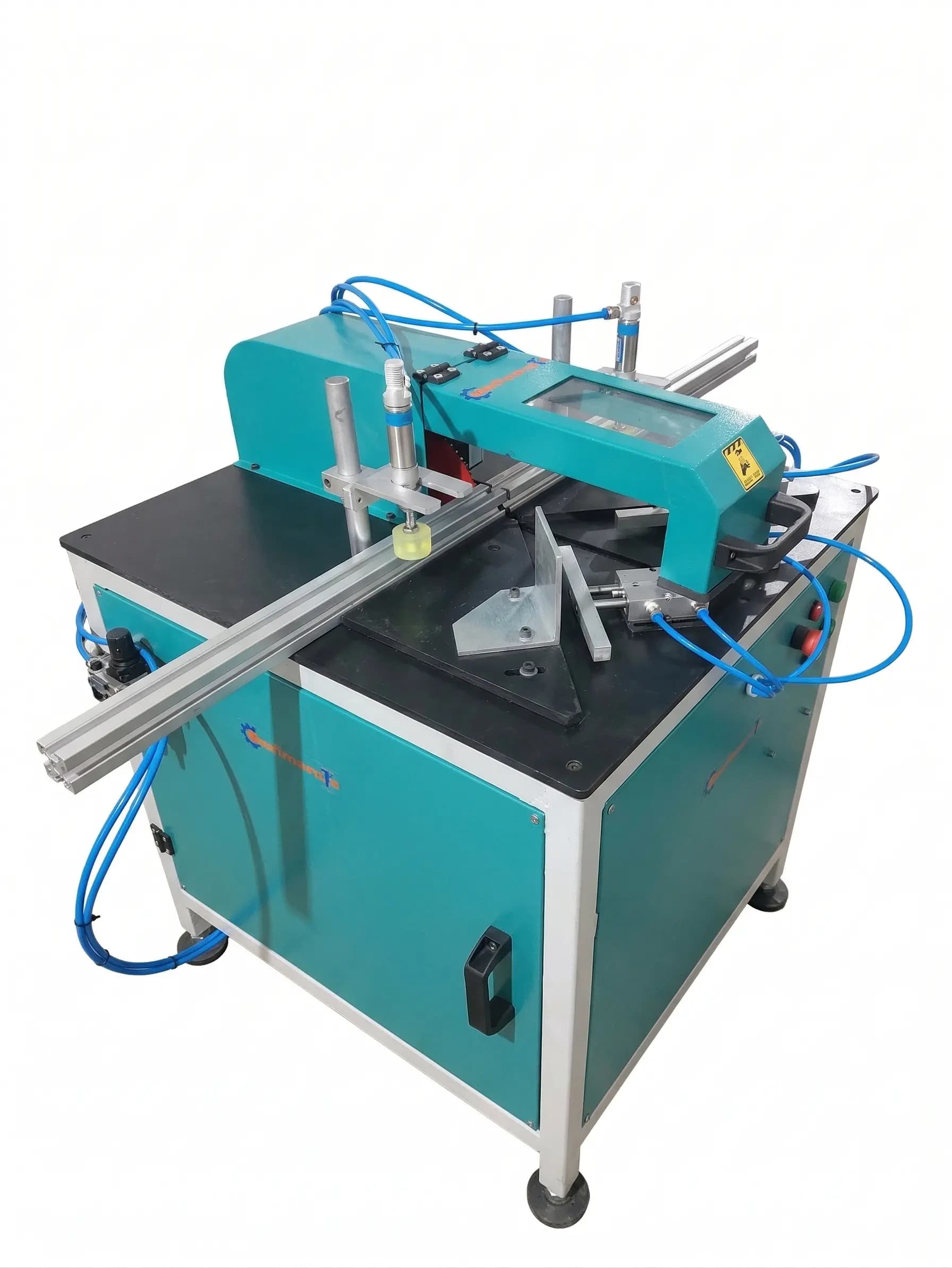
When vetting suppliers for high-volume production, you must look beyond the glossy brochures. A senior engineer’s first check is always the weight of the machine base and the quality of the linear guide rails. High-speed aluminium profile cutting machine units generate significant vibration; if the cast iron base isn’t heavy enough, your 45-degree cuts will deviate by 0.5mm to 1.0mm within three months of operation. This misalignment leads to poor corner joints, requiring manual filing and increasing labor costs by 15%.
In our Pune testing facility, we evaluated three different aluminium cutter machine configurations for a client moving from 15 to 60 windows per day. We found that workshops transitioning to high-volume production must shift from a manual punching machine to an automatic aluminium window production line price model. This shift reduced their rejected frames from 8% to less than 1.5% in the first quarter of implementation.
Critical Technical Benchmarks for High-Volume Tools:
- Spindle Speed: Ensure a minimum of 2800-3200 RPM for clean, burr-free cuts on 2.0mm+ profiles.
- Blade Specs: Use TCT (Tungsten Carbide Tipped) blades with a diameter of at least 450mm to 500mm for heavy-duty industrial profiles.
- Air Pressure Stability: Machines require a consistent 6-8 bar pressure; ensure your supplier integrates high-quality pneumatic cylinders (like Festo or SMC equivalents).
- Cutting Accuracy: Demand a tolerance check of ±0.1mm per meter.
Case Study: Scaling a Bhosari-Based Fabrication Unit
Last year, we assisted a local fabricator in upgrading their shop floor. They were struggling with a bottleneck at the milling stage using a generic copy router machine. By replacing it with a high-speed Copy Router Machine featuring a triple-hole drilling head, we achieved the following metrics:
- Timeline: 3-week installation and operator training phase.
- Output Increase: Jumped from 180 linear meters of processed profile to 420 linear meters per shift.
- Waste Reduction: Cutting waste dropped from 12% to 3% through the implementation of a digital measuring system on their aluminium cutting machine 12 inch backup line.
- Labor Efficiency: Reduced the required manpower from four operators to two, allowing the other two to focus on final glazing and QC.
The lesson learned was simple: cheap motors overheat in Pune’s summer temperatures. Always specify S1 duty cycle motors that can run 8-10 hours continuously without thermal tripping.
The High-Volume Production Workflow
For a seamless operation, your machinery must follow a logical sequence that minimizes material handling. Most workshops fail because they place their aluminium punching machine too far from the main cutting station, leading to unnecessary profile movement and surface scratches.
Recommended Equipment Sequence:
- Cutting Station: Use a 45 degree double head cutting machine with digital readout for synchronized cutting of both ends.
- Milling Station: Utilize a heavy duty aluminium profile end milling machine for mullion preparation.
- Routing Station: A high-speed router for lock holes and drainage slots.
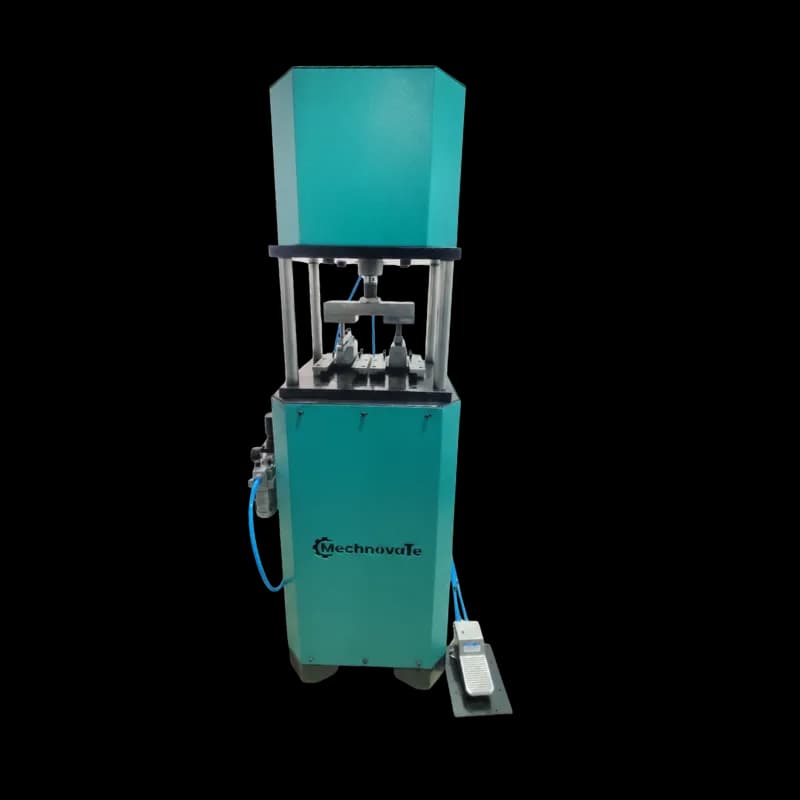
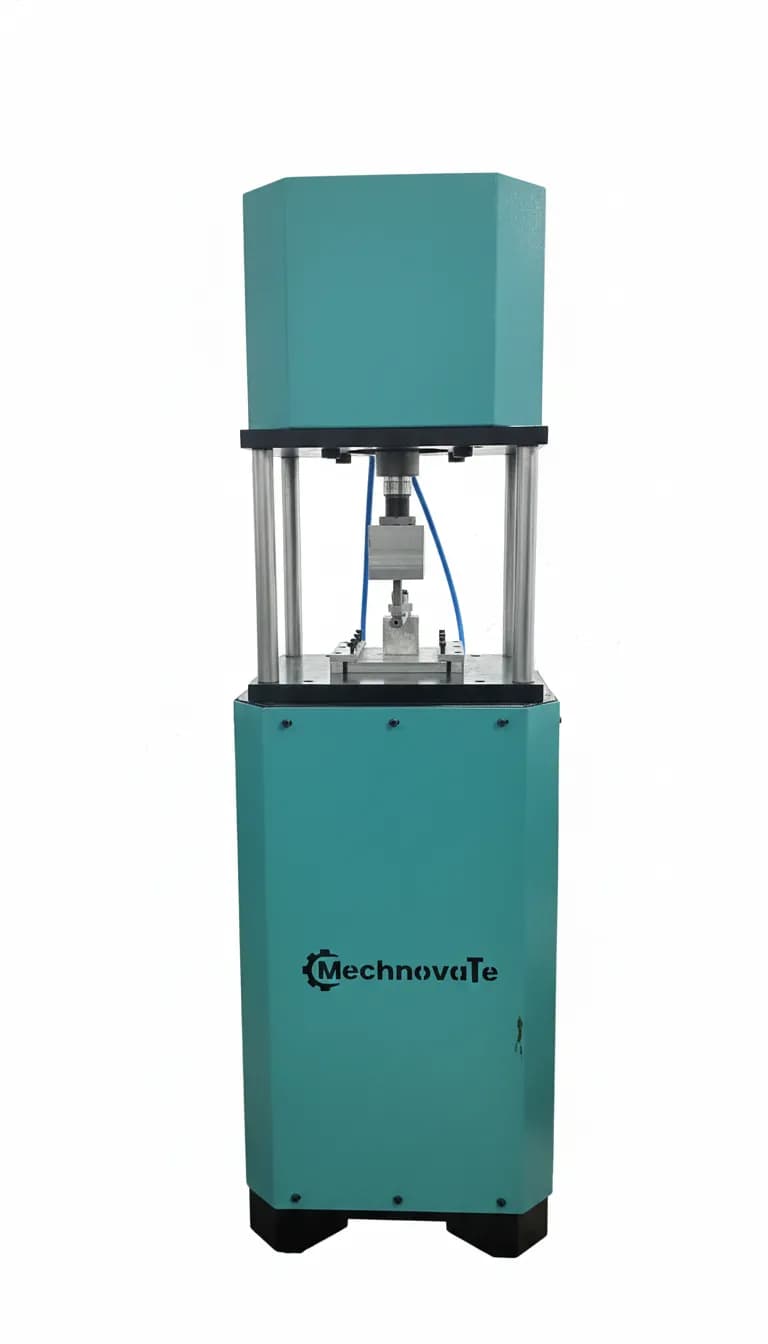
- Punching Station: A dedicated Aluminium Punching Machine for corner cleats and handle slots.
- Assembly: Final joining using an automatic aluminium corner crimping machine price Gujarat grade tool to ensure structural integrity.
Common Mistakes in Aluminium Window Machinery Procurement
Avoid the trap of the lowest aluminium cutting machine price. I have seen dozens of workshops in the PCMC area buy unbranded upvc window manufacturing machine units because of a 20% lower price tag, only to find that spare parts like solenoid valves or saw blades are non-standard and take weeks to ship.
What to Watch Out For:
- Undersized Motors: A 1.5kW motor might cut thin residential profiles, but it will stall on industrial-grade curtain wall sections. Insist on 2.2kW or higher for high-volume lines.
- Poor Cooling Systems: If the aluminium cutter doesn't have a micro-mist lubrication system, your blade life will decrease by 60% due to aluminum chip welding.
- Lack of Local Service: Always ask where the service technician is based. If they are traveling from another state, your workshop could be down for days.
Essential Industrial Safety and ISO Standards
Safety is non-negotiable. Ensure all aluminum machinery manufacturers in ahmedabad or Pune provide machines with dual-hand safety triggers and fully enclosed blade guards. Following Industrial profile cutting safety standards ISO standards not only protects your workers but also ensures your workshop meets the compliance requirements for large-scale construction contracts in Pune.
FAQ: Real Questions from Pune Fabricators
Q: Is a double head cutter worth the investment for a mid-sized shop? A: Yes. If you are processing more than 30 windows a day, the time saved in not having to flip and re-measure profiles pays for the automatic double head cutting machine price India differential within 14 months through labor savings alone.
Q: Can I use uPVC machinery for aluminium fabrication? A: Generally, no. While some upvc windows making machine units look similar, aluminium requires higher torque, specific blade tooth geometry, and constant lubrication which standard upvc machinery lacks.
Q: What is the power requirement for a full automatic aluminium window production line? A: Typically, you need a 3-phase connection with at least 15-20kW capacity to run the cutter, router, and compressor simultaneously without voltage drops.
Get more articles like this
Follow Mechnovate on Google to see our guides in Google Discover & News