Choosing Aluminium Window Machinery Manufacturers in Surat Gujarat
For fabricators in Surat facing high-volume contract demands, the choice of equipment is the difference between a 15% profit margin and a project loss due to rework. When navigating the landscape of aluminium window machinery manufacturers in Surat Gujarat, your primary metric should not be the initial sticker price, but the 'Cycle Time per Finished Frame.' In high-volume environments, every 30 seconds saved on a corner crimp or a 45-degree miter cut equates to hundreds of man-hours saved over a quarterly production cycle.
Technical Foundations: Selecting High-Volume Window Machinery
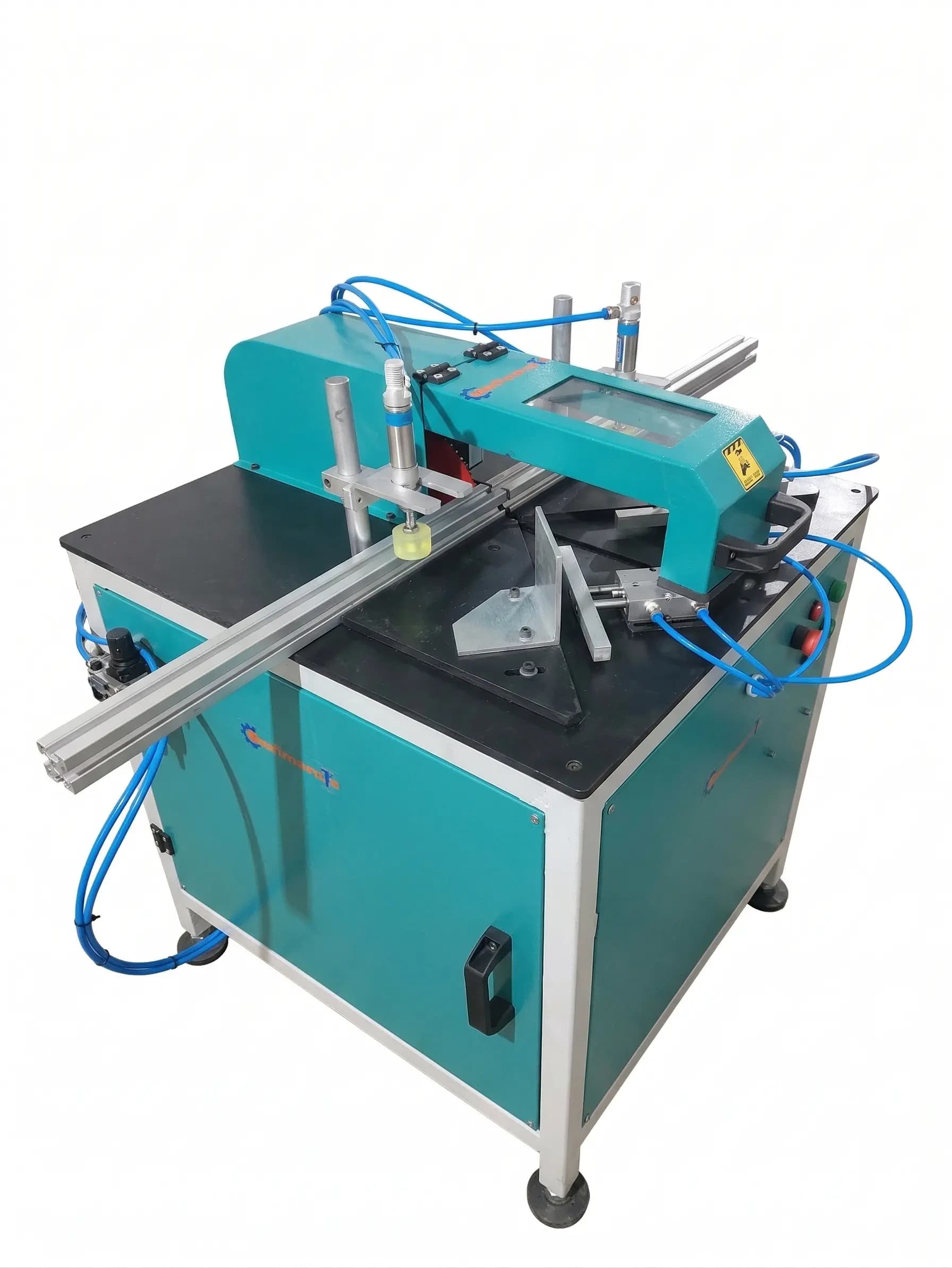
To scale production in a competitive hub like Surat, you must move beyond the standard 12-inch aluminium cutter used in small-scale job shops. High-volume orders require an Automatic Double Head Cutting Saw with a minimum 450mm or 500mm TCT blade. The engineering reasoning is simple: larger blades reduce vibration and allow for the simultaneous cutting of wider profiles used in thermal break and sliding systems without losing dimensional accuracy.
Key technical specifications to demand from your manufacturer include:
- Spindle Speed and Motor Power: Ensure a minimum of 2.2kW to 3.0kW per head with a spindle speed of at least 2800 RPM to guarantee burr-free cuts.
- Positional Accuracy: Look for linear guideways with a tolerance of +/- 0.1mm. High-volume orders in Surat often involve multi-story glass facades where a 1mm deviation across 20 frames can lead to massive installation failures.
- Pneumatic Stability: High-speed cycles require 6-8 bar constant pressure. Check the quality of the pneumatic cylinders and the integration of air filters/lubricators to prevent solenoid failure.
Case Study: Transitioning a Surat Facility to Automation
In early 2023, we consulted for a fabrication unit in the Sachin GIDC area of Surat. They were struggling with a 1,200-window order for a commercial complex using manual aluminium cutting machine 12 inch setups. Their rejection rate due to miter gaps was nearly 9%.
We implemented a tiered automation strategy:
- The Upgrade: Replaced three manual cutters with one Automatic Double Head Cutting Saw for Aluminium Profiles and an Automatic Corner Crimping Machine.
- The Result: Production jumped from 22 frames per shift to 68 frames per shift.
- The Metric: Material wastage dropped from 12% to 2.8% because the CNC-controlled positioning eliminated human measurement errors.
- Lesson Learned: The bottleneck shifted from cutting to punching. We quickly integrated a multi-station Aluminium Profile Punching Machine to balance the line flow.
Critical Features of Aluminium Window Machinery Manufacturers in Surat Gujarat
When evaluating local suppliers versus national brands, look for 'Industrial Profile Cutting Safety Standards' and ISO 9001 certification. A reputable manufacturer won't just sell you a machine; they will provide a layout for your shop floor.
The 'Big Three' Machines for High-Volume Success
- CNC Double Head Miter Saw: Essential for 45/90 degree precision. Digital display units are non-negotiable for high-volume repeatability.
- Heavy Duty Aluminium Profile End Milling Machine: For mullion processing, look for machines that can handle multiple profiles simultaneously. This is where 40% of time is often lost in manual setups.
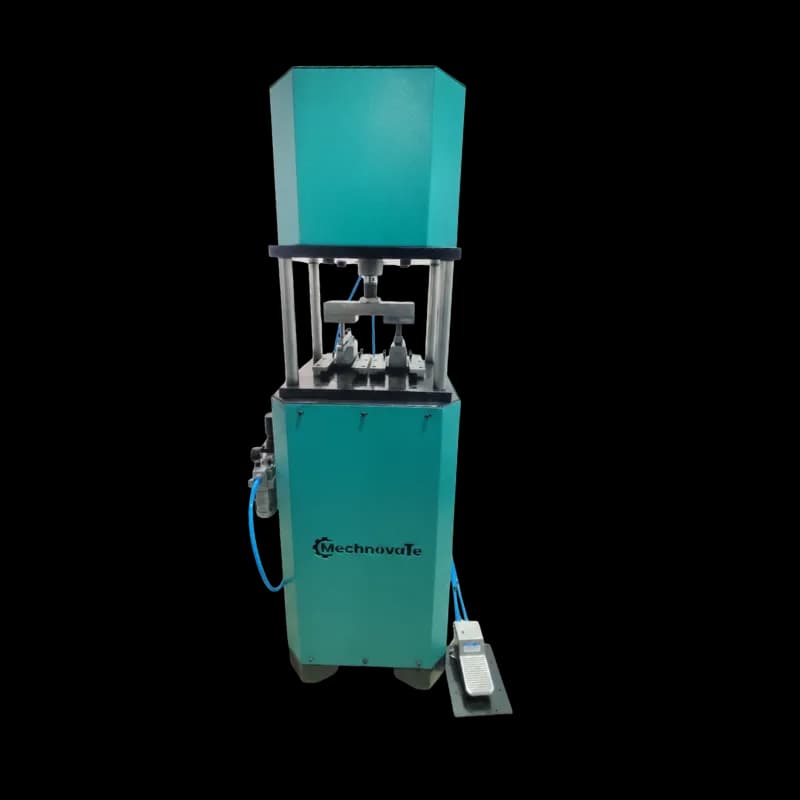
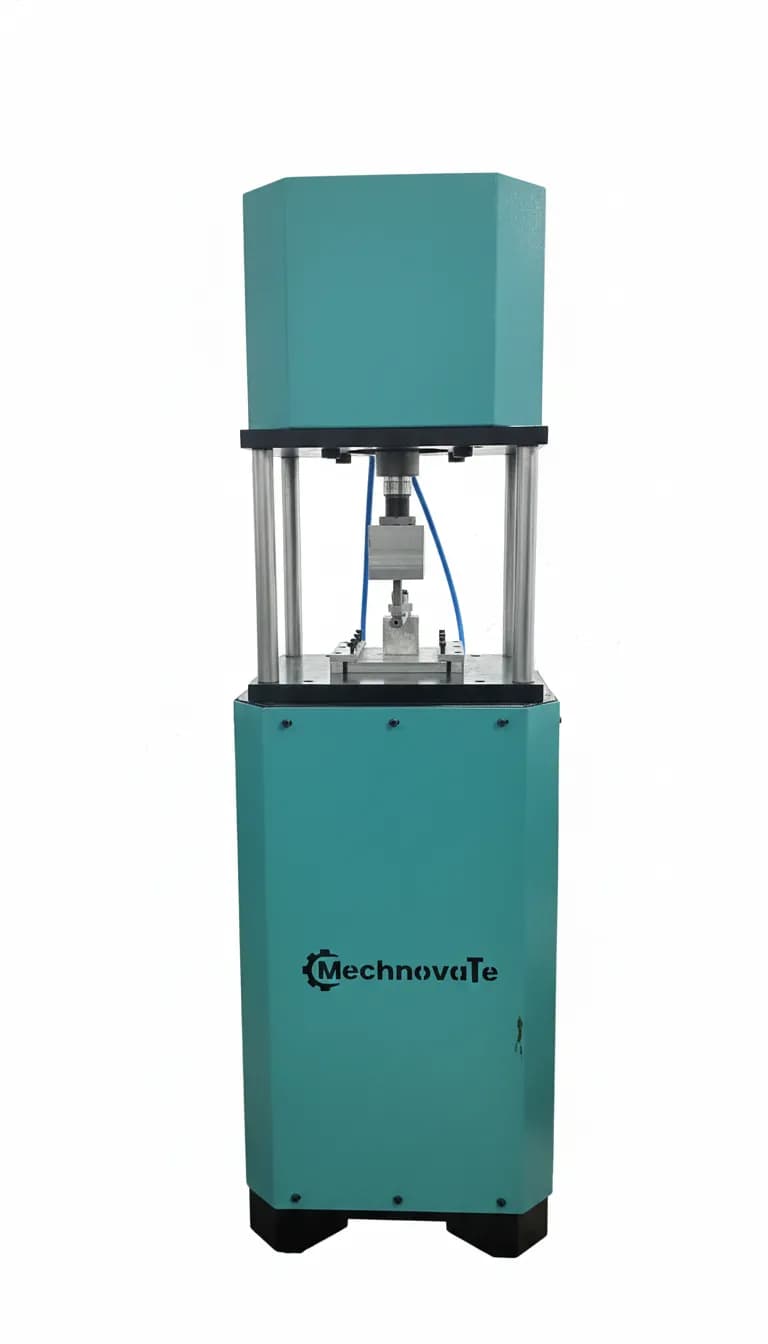
- Automatic Corner Crimping Machine: Hydraulic systems provide superior joining strength compared to mechanical screw-fixing, which is vital for the heavy wind-load requirements of Gujarat’s coastal-adjacent climate.
Avoiding Common Pitfalls in Machinery Procurement
The most common mistake I see in Surat’s industrial clusters is prioritizing the 'aluminium cutting machine price' over the 'Total Cost of Ownership' (TCO). A cheap machine with poor-quality bearings will require spindle replacement within 18 months, leading to downtime that costs triple the original savings.
What to Watch Out For:
- Inadequate Cooling Systems: Ensure the machine has an automatic micro-mist lubrication system. Dry cutting aluminium leads to blade clogging and jagged edges.
- Generic Motors: Demand branded motors (like ABB or Siemens) to ensure spare parts availability in Surat’s local markets.
- Lack of After-Sales Support: If the manufacturer doesn't have a service center within 100km, your high-volume production is at risk. Always ask for a list of active installations in Gujarat before signing.
Strategy for Hybrid uPVC and Aluminium Production
Many Surat fabricators are diversifying. If you are also looking at uPVC, the investment strategy changes. You will need a uPVC Welding Machine and a CNC uPVC Window Corner Cleaning Machine. While some aluminium tools cross over, the thermal properties of uPVC require specialized heating elements and specific feed rates. The cost of setting up a uPVC window manufacturing unit in India ranges from ₹8 Lakhs for a basic setup to ₹45 Lakhs for a fully automatic line.
FAQ: Expert Insights for Fabricators
Q1: What is the ideal blade size for high-volume aluminium fabrication? For commercial projects, a 500mm blade is the industry standard. It provides the depth needed for multi-track sliding profiles while maintaining the peripheral speed necessary for clean cuts.
Q2: How do I justify the cost of an automatic corner crimping machine? A single automatic crimper replaces approximately three workers manual-fixing corners. More importantly, it ensures every window is structurally identical, which is a requirement for RERA-approved projects in Gujarat.
Q3: Is a copy router machine necessary if I have a punching machine? Yes. While a Pneumatic Punching Machine handles standard slots, a High Speed Copy Router is essential for non-standard hardware, lock holes, and custom drainage slots that punching dies cannot accommodate.
Q4: What is the maintenance schedule for a double head cutting saw? Daily: Clean swarf and check lubrication levels. Weekly: Inspect belt tension and pneumatic seals. Monthly: Calibrate the digital length-stop to ensure +/- 0.1mm accuracy is maintained.
Get more articles like this
Follow Mechnovate on Google to see our guides in Google Discover & News