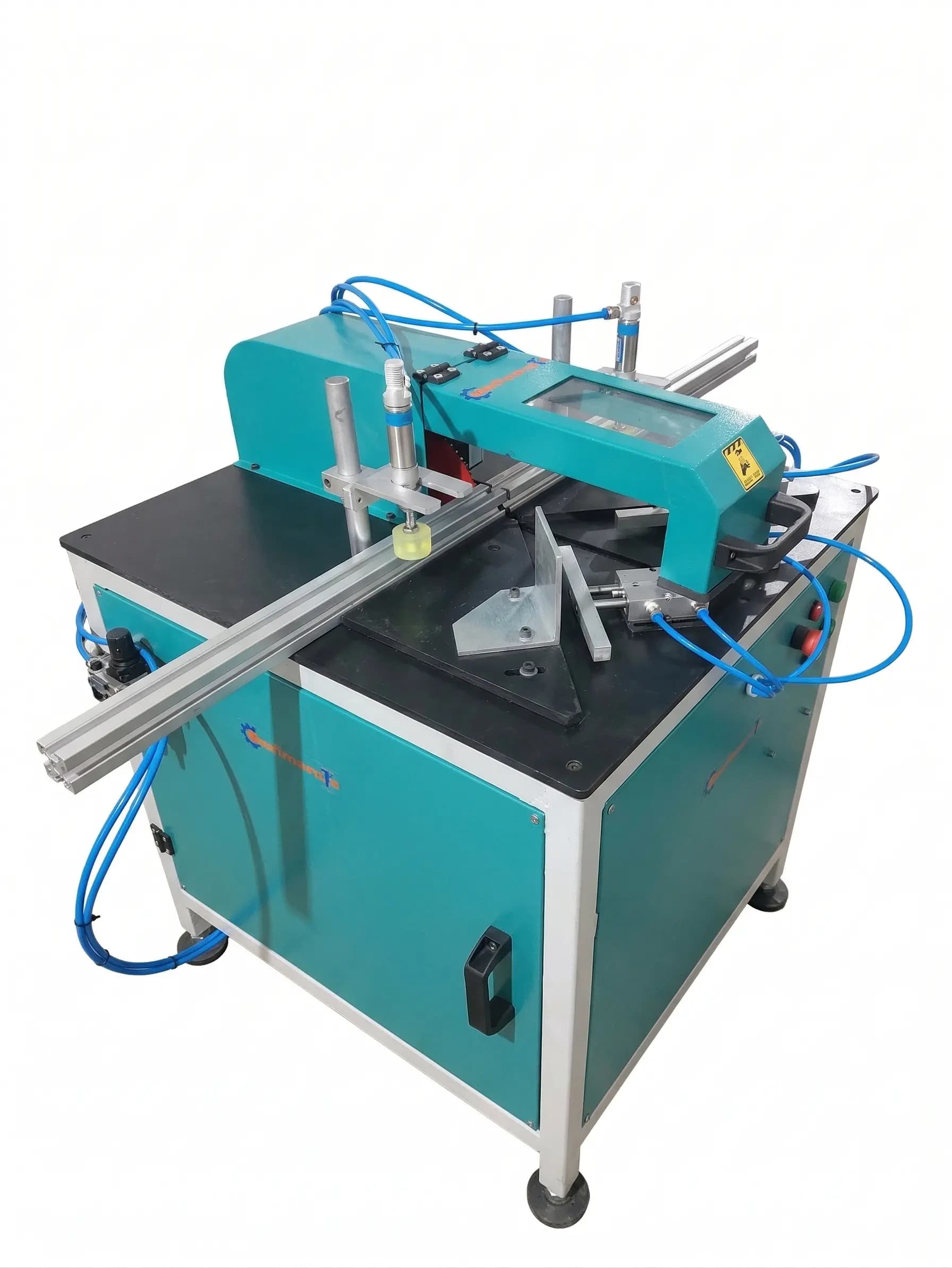
Burr-Free 12-Inch Aluminium Cutting Machine Guide for Bhopal
Achieving a burr-free finish on a 12-inch aluminium cutting machine requires a non-negotiable synchronization of three variables: Triple Chip Grind (TCG) blade geometry, a stabilized 2800-3200 RPM spindle speed, and a high-grade pulse lubrication system. In the high-volume workshops of Bhopal, where fabricators often switch between thin-walled window profiles and heavy-duty industrial sections, blade selection is the primary point of failure. If you are experiencing edge deformation or 'slugging,' your rake angle or feed rate is likely misaligned with the material hardness.
The Engineering of the 12-Inch Blade: TCG vs. ATB
In our Mechnovate testing facility, we evaluated over 15 different blade configurations for aluminium profile cutting. For standard 6063 T5/T6 alloy profiles used in Bhopal's construction sector, the Triple Chip Grind (TCG) is the industry standard for a reason. Unlike the Alternate Top Bevel (ATB) used in woodworking, the TCG features a high 'trapezoidal' tooth followed by a lower 'flat' raker tooth. The trapezoidal tooth does the heavy lifting by rough-cutting the center, while the flat tooth cleans the edges, significantly reducing the heat-affected zone.
Key technical specifications for a precision aluminium profile cutting machine include:
- Tooth Count: 80 to 120 teeth for a 305mm (12-inch) blade. 100-120 is ideal for thin-walled profiles (1.2mm - 2.0mm).
- Rake Angle: A negative rake angle (-5° to -7°) is essential. It prevents the blade from 'grabbing' the soft aluminium, ensuring the operator maintains control during manual feed.
- Kerf Thickness: 2.8mm to 3.2mm. Thinner kerfs reduce waste but can vibrate if the spindle run-out exceeds 0.03mm.
- Expansion Slots: Laser-cut slots with copper plugs to dampen harmonic vibration and manage thermal expansion during continuous operation.
Case Study: Reducing Waste in Bhopal Industrial Estate
Last year, we consulted for a fabrication unit in Govindpura, Bhopal, that was seeing a 12% material waste rate due to secondary deburring requirements. Their aluminium cutter machine was using a general-purpose blade with a positive rake angle, causing significant 'climb' and edge tearing.
We implemented a six-week optimization protocol:
- Week 1-2: Replaced generic blades with TCG -6° rake angle blades.
- Week 3-4: Installed a micro-mist lubrication system using vegetable-based oil instead of standard coolant.
- Week 5-6: Calibrated the pneumatic clamps to 6 bar pressure to eliminate profile vibration.
The Result: The workshop reduced cutting waste from 12% to 2.8% and increased their daily output by 45 window frames. By eliminating the need for manual filing and deburring, the labor cost per unit dropped by 18%. This proves that precision starts at the blade tip, not the finishing bench.
Maintenance Protocol for Industrial Profile Cutting
To maintain ISO 9001 standards and adhere to IS 1285 for aluminium extrusions, your upvc window manufacturing machine and aluminium cutters must undergo a rigorous maintenance schedule. In Bhopal’s dusty environment, particulate buildup on the guide rails is the leading cause of angular inaccuracy.
- Spindle Inspection: Every 500 cuts, check for lateral play. A deviation of just 0.05mm at the spindle translates to a 0.5mm gap at the 45-degree miter joint.
- Blade Cleaning: Aluminium is 'gummy.' Pitch and resin buildup can be removed using specialized solvents. Never use a wire brush as it damages the carbide tips.
- Lubrication Orifices: Ensure the spray nozzles are directed at the point of entry. If the blade enters dry, the first 10mm of the cut will always have burrs.
- Pneumatic Pressure: Check your aluminium punching machine and cutters for consistent 5-7 bar pressure. Pressure drops during a cut lead to blade 'chatter.'
Common Mistakes in Aluminium and uPVC Fabrication
Many workshops attempting to use an upvc cutting machine for aluminium profiles make the mistake of assuming the RPM requirements are identical. uPVC requires higher speeds but lower torque; aluminium demands high torque and stabilized RPM to prevent the metal from melting onto the blade teeth.
- Mistake 1: Using Wood Blades. Wood blades have a positive rake that 'pulls' the metal. This is extremely dangerous and leads to jagged edges.
- Mistake 2: Over-tightening the Arbor Nut. This can warp the blade plate, causing a 'wobble' that ruins the aluminium cutter machine price value by damaging the motor bearings.
- Mistake 3: Neglecting the copy router machine alignment. If your miters are perfect but your lock-holes are off, the entire frame integrity is compromised.
Advanced Setup: Feed Rates and Safety Standards
For high-speed aluminum window fabrication machinery, the feed rate should be consistent. Manual pull-down saws are prone to operator fatigue, leading to inconsistent cuts. We recommend a cutting machine automatic or semi-automatic feed for any workshop producing more than 20 frames per day.
Safety is paramount. Ensure your 12-inch machine complies with industrial profile cutting safety standards. This includes transparent polycarbonate guards, dual-hand operation triggers for pneumatic models, and emergency E-stops located within 500mm of the operator's stance. For those scaling up, exploring an automatic double head cutting machine price India is the logical next step to ensure 100% repeatability in 45 and 90-degree cuts.
FAQ: Expert Answers for Bhopal Fabricators
Q1: How many sharpenings can a 12-inch carbide blade handle? A: Typically, a high-quality industrial blade can be sharpened 8-12 times before the carbide tips become too thin to withstand the centrifugal force of 3000 RPM.
Q2: Can I use the same 12-inch machine for uPVC and Aluminium? A: Yes, but you must change the blade. A blade designed for upvc windows machines has a different tooth geometry (often ATB) and will fail quickly on aluminium profiles.
Q3: Why does my 45-degree cut look like 44.5 degrees? A: This is usually due to 'profile creep.' If your degree cutting machine doesn't have vertical and horizontal pneumatic clamping, the profile shifts slightly as the blade enters the material. Check your clamp gaskets for wear.
Get more articles like this
Follow Mechnovate on Google to see our guides in Google Discover & News