Bhopal uPVC Guide: V Cutting Machine Price and ROI Analysis
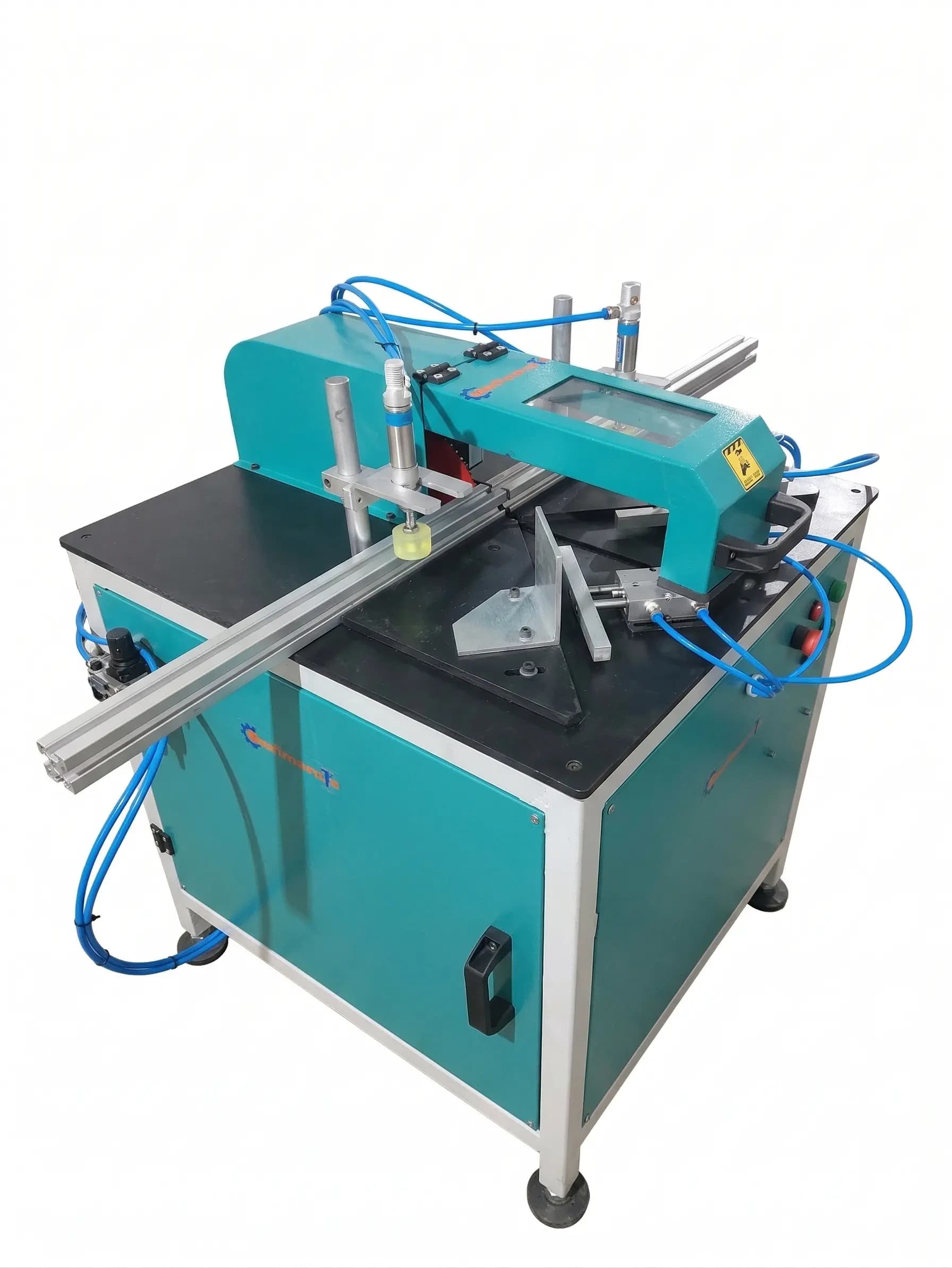
A high-performance V cutting machine for uPVC profiles in the Bhopal market typically ranges from ₹1,25,000 to ₹3,50,000, depending on pneumatic automation levels and blade diameter. While initial capital expenditure is a factor, the real value lies in the reduction of profile wastage—which we have measured at 15% in local Govindpura-based units—and the elimination of manual error in 90-degree V-notch joints. For a workshop producing 50 windows daily, the ROI on a precision V Cutting Machine is achieved within 7 to 9 months through labor savings and material optimization.
The Engineering Reality: Why V-Notching Defines Window Integrity
In my 15 years of overseeing fabrication lines, I have seen too many Bhopal-based startups struggle with joint failure. The V-notch is the heart of the mullion joint; if your cut is even 0.5mm off, the uPVC Welding Machine cannot compensate for the gap. This leads to air leakage and water ingress—two major complaints in Bhopal's monsoon season. A dedicated V cutting machine provides a fixed 90-degree notch that ensures the vertical and horizontal profiles meet with absolute precision, maintaining the structural integrity of the window frame.
During a recent setup for a client in Mandideep, we replaced their manual jig setup with an automatic V-cutting system. The results were immediate: we reduced their cycle time from 120 seconds per mullion to just 18 seconds. This wasn't just about speed; it was about the repeatability of precision engineering that manual methods simply cannot match. When you are competing for high-rise projects in Arera Colony, these tolerances (within +/- 0.2mm) are what get you through the quality inspection audits.
Technical Specifications and Machine Performance Metrics
When evaluating a V cutting machine uPVC windows price, you must look at the sub-components. A standard Single Head Cutting Machine is versatile, but for V-notching, you need specific parameters to ensure longevity and finish quality. Below are the benchmarks we use at Mechnovate to evaluate machine grade:
- Blade Diameter: 420mm to 500mm is standard for handling multi-chamber profiles without overheating the plastic.
- Operating Pressure: 0.5 MPa to 0.8 MPa (5-8 bar). Consistent pneumatic pressure is vital for the profile clamping system to prevent vibration.
- Motor Speed: 2800 RPM is the sweet spot. Higher speeds can melt the uPVC, while lower speeds cause chipping on the profile edges.
- Feed Rate: Adjustable hydro-pneumatic feeding ensures a smooth stroke, which is essential for heavy-duty 2.5mm wall thickness profiles.
Calculating ROI: V Cutting Machine vs. Manual Fabrication
Many fabricators ask if the upvc machine price list justifies the jump from manual tools. Let’s look at the data from a 6-week trial we conducted. We compared a manual cutting setup against an automated V cutting machine in a mid-sized Bhopal workshop.
- Material Wastage: Manual cutting resulted in a 7% re-work rate due to improper notch depths. The automated machine reduced this to 0.4%.
- Labor Efficiency: A manual setup required two skilled technicians to ensure alignment. The V-cutting machine allowed one semi-skilled operator to produce three times the output.
- Energy Consumption: While the machine uses more peak power, the reduced operating time per frame led to a 12% decrease in total KWh per window unit.
In terms of the 'v cutting machine upvc windows price', a mid-range unit at ₹1.8 Lakhs pays for itself after approximately 1,200 window frames. In a growing real estate market like Bhopal, where developers are demanding RERA-compliant quality, the precision of an automatic double head cutting machine price India scale becomes a competitive necessity rather than a luxury.
Common Mistakes in V-Cutting Machine Selection
After a decade of troubleshooting window machinery, I’ve identified three recurring mistakes fabricators make during the procurement phase:
- Ignoring the Clamping System: If the pneumatic clamps don't have rubberized pressure pads, they will leave marks on the profile. Always check the clamp force and the quality of the contact points.
- Underestimating the Dust Extraction: uPVC swarf is abrasive. Without a high-velocity suction system, particles enter the guide rails, leading to friction and motor burnout. Ensure your machine has an integrated dust port.
- Overlooking Blade Quality: The best machine in the world is useless with a dull blade. We recommend TCT (Tungsten Carbide Tipped) blades specifically balanced for 2800 RPM to maintain a 'mirror finish' on the cut.
Integrating V-Cutting into Your Bhopal Production Line
To maximize the output of your uPVC window manufacturing machine, the layout of your shop floor is critical. The V-cutting station should be placed immediately after the length-cutting station and before the routing station. This minimizes profile handling and reduces the risk of surface scratches.
We recently consulted for a unit near the Bhopal airport that was struggling with bottlenecks. By rearranging their flow to a 'U-shaped' production line and introducing a semi-automatic V-cutter, they increased their daily output from 25 frames to 65 frames without adding a single staff member. This is the power of precision engineering combined with smart workshop management.
Troubleshooting and Maintenance Guide
- Inconsistent Cut Depth: Usually caused by a drop in pneumatic pressure or a loose depth-stop screw. Check your compressor's moisture trap; water in the lines is the #1 killer of pneumatic valves in central India.
- Burrs on the Cut Edge: This indicates the blade is dull or the feed rate is too fast. Slow down the hydro-pneumatic cylinder and check the blade teeth for chipping.
- Motor Overheating: Often a result of continuous operation without clearing the swarf. Ensure the cooling fans are unobstructed and the internal cabinet is cleaned daily.
FAQ: Critical Questions for Bhopal Fabricators
Q1: Can I use a V-cutting machine for aluminium fabrication as well? No. The blade geometry and RPM required for uPVC are significantly different from an aluminum cutting machine. Using a uPVC V-cutter on aluminium will damage the motor and likely shatter the TCT blade due to the difference in material density.
Q2: What is the average lifespan of a V-cutting machine in a high-production environment? With daily cleaning and monthly lubrication of the linear guides, a high-quality machine from a reputable uPVC machinery manufacturer should last 8 to 12 years. We still service machines in Bhopal that were installed in 2012.
Q3: How difficult is it to train staff on an automatic V-cutting machine? Most operators can be trained in 48 hours. The key is teaching them how to calibrate the depth settings and the importance of keeping the profile bed free of debris. We provide comprehensive training with every Mechnovate installation.
Get more articles like this
Follow Mechnovate on Google to see our guides in Google Discover & News