Bhopal Guide: Heavy Duty Aluminium Profile End Milling Machine Selection
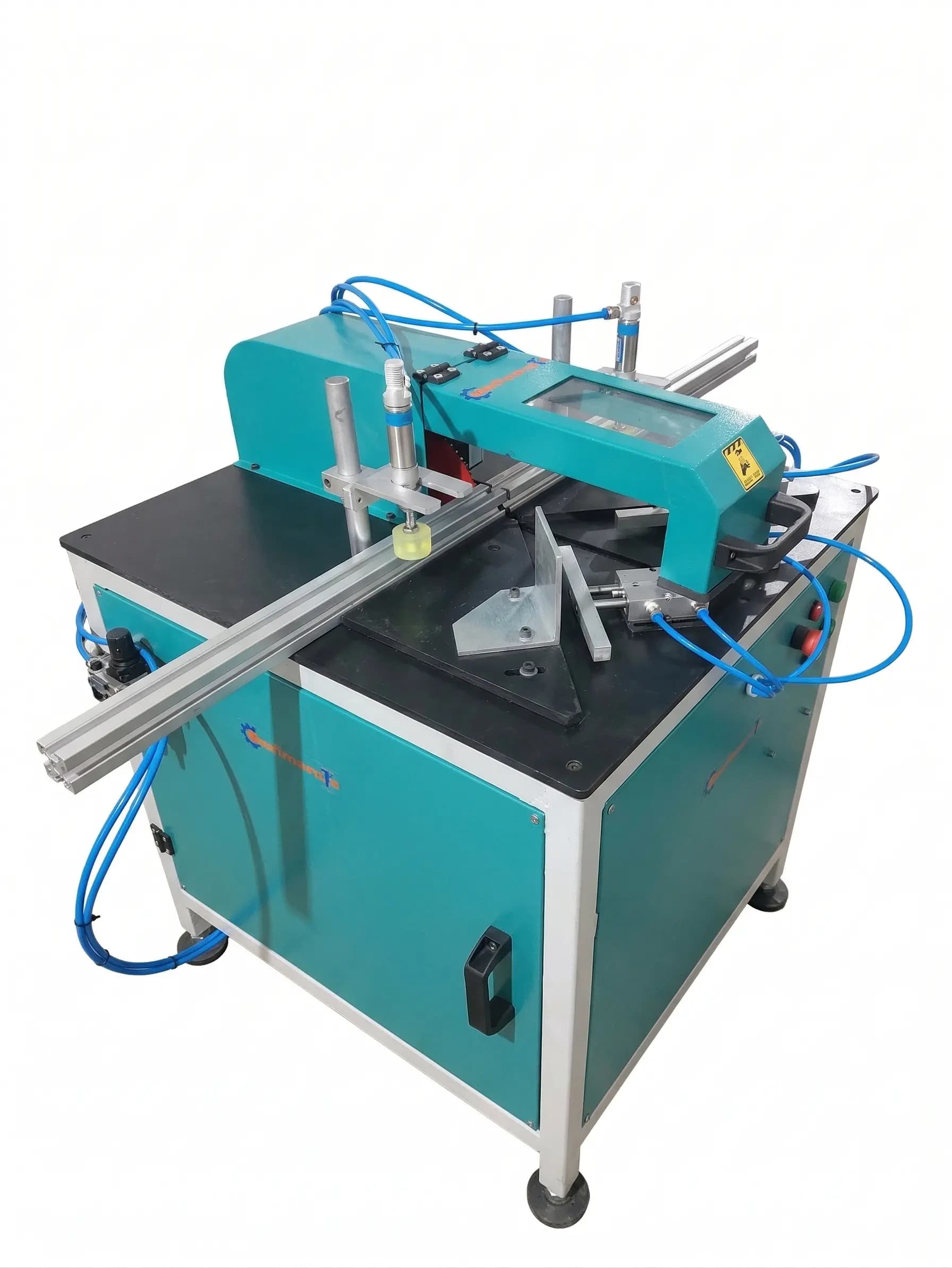
Selecting a heavy-duty aluminium profile end milling machine in Bhopal requires a technical focus on spindle stability, cutter block diameter, and pneumatic clamping force to handle the high-wall-thickness profiles prevalent in Madhya Pradesh's commercial projects. For fabricators scaling up production, the priority is not just the aluminium cutting machine price, but the machine's ability to maintain a tolerance of +/- 0.1mm over a 10-hour shift. At Mechnovate, our engineering team has observed that most regional failures stem from undersized spindle motors (less than 1.5kW) and inadequate blade cooling systems which lead to profile deformation during high-speed milling.
Technical Specifications for High-Performance End Milling
When evaluating heavy duty aluminium profile end milling machine options, you must look beyond the external frame. Engineering mastery is found in the feed mechanism and the spindle's RPM range. High-tensile aluminium alloys used in Bhopal's architectural projects require machines that operate between 2800 and 4500 RPM with a variable feed rate. This ensures that the cutter does not work-harden the material or cause 'chatter' marks on the finished mullion or transom.
Key technical parameters for industrial-grade performance include:
- Spindle Power: A minimum of 1.5kW to 2.2kW induction motor to maintain torque under load.
- Milling Depth Capacity: Adjustable up to 50mm to accommodate multi-chambered thermal break profiles.
- Clamping Pressure: Dual-vertical and horizontal pneumatic clamps operating at 6-8 bar to prevent profile shift.
- Cutter Block Diameter: A 200mm to 250mm cutter block allows for wider milling paths in a single pass, reducing cycle time.
Engineering Standards and Precision in Bhopal's Fabrication Hubs
To compete with national-level manufacturers, Bhopal-based workshops must adhere to international quality benchmarks like ISO 9001 and specific material standards such as IS 1285. Precision engineering is the difference between a window that whistles in the wind and one that is perfectly airtight. We recently conducted a performance audit at a facility in Mandideep, where we replaced entry-level manual punching machines with an automatic double head cutting machine integrated with a precision end miller.
The results were measurable and immediate:
- Milling waste reduced from 8% to 1.5% due to improved jig accuracy.
- Daily output increased from 25 frames to 65 frames with the same labor force.
- Tooling life extended by 40% because the machine's cooling system utilized a high-pressure mist lubricant rather than a simple gravity drip.
Common Mistakes in Aluminium Window Machinery Selection
Over 15 years in the workshop, I have seen fabricators make the same three mistakes when purchasing an aluminium profile cutting machine or end miller. First, prioritizing the lowest aluminium cutting machine 12 inch price over the cast-iron base weight. A light machine vibrates, and vibration is the enemy of precision. Second, ignoring the electrical components; in the Bhopal region, voltage fluctuations are common, and machines without built-in phase preventers or high-quality contactors fail within the first year.
Third, failing to consider the 'Total Cost of Ownership'. A cheap machine might save you ₹50,000 upfront but cost you ₹2,00,000 in ruined profiles and lost contracts due to poor finish. Always ensure your uPVC window manufacturing machinery or aluminium equipment has a rigid linear guide rail system. This prevents 'play' in the motor movement, ensuring every milling cut is perfectly perpendicular to the profile axis.
Strategic Layout for Industrial Aluminum Door Manufacturing Equipment
Efficiency in a fabrication unit is determined by the flow between the aluminum cutting machine and the milling station. A streamlined shop floor in Bhopal should follow a linear or U-shaped workflow to minimize material handling.
- Initial Sizing: Using a high-precision aluminium cutter machine with digital readouts for accuracy.
- Profile Preparation: Moving to the heavy-duty end milling machine for transom/mullion joints.
- Hardware Routing: Utilizing a high speed copy router for aluminium windows to create handle and lock slots.
- Assembly: Final joining using an automatic aluminium corner crimping machine price-justified by the speed of assembly.
Safety Standards and Maintenance Protocols
Safety is non-negotiable in industrial profile cutting. Every machine must meet ISO standards for operator protection. This includes dual-hand safety start buttons, which ensure the operator's hands are away from the cutting zone, and transparent polycarbonate shields that prevent chips from flying while maintaining visibility.
Maintenance is the key to longevity. We recommend a weekly 'Deep Clean' where the aluminium chips are vacuumed from the internal lead screws and the pneumatic filters are drained of moisture. In Bhopal’s humid monsoon months, moisture in the air lines is the leading cause of solenoid valve failure in upvc windows machines and aluminium equipment. Installing a refrigerated air dryer is the single best investment you can make for your upvc window manufacturing machines and aluminium lines.
FAQ: Expert Answers for Bhopal Fabricators
Q: Can I use the same end milling machine for both aluminium and uPVC profiles?
A: While technically possible with a blade change, it is not recommended. The RPM requirements and blade geometries for uPVC window machinery are different from aluminium. Aluminium requires higher torque and specific cooling lubricants that can degrade uPVC over time.
Q: What is the ideal blade diameter for a heavy-duty end miller?
A: For industrial-grade work, a 250mm diameter blade is the standard. This provides enough peripheral speed to cleanly cut through thick-walled architectural profiles without dragging or creating burrs.
Q: How do I justify the cost of an automatic milling machine versus a manual one?
A: The ROI is typically seen within 8-12 months. An automatic machine ensures consistency that a manual operator cannot match over an 8-hour shift. This reduces rework and allows you to take on high-volume commercial projects in Bhopal that require strict compliance with architectural drawings.
Get more articles like this
Follow Mechnovate on Google to see our guides in Google Discover & News