Bhopal Guide: Eliminating Errors with Double Head Cutting Saws
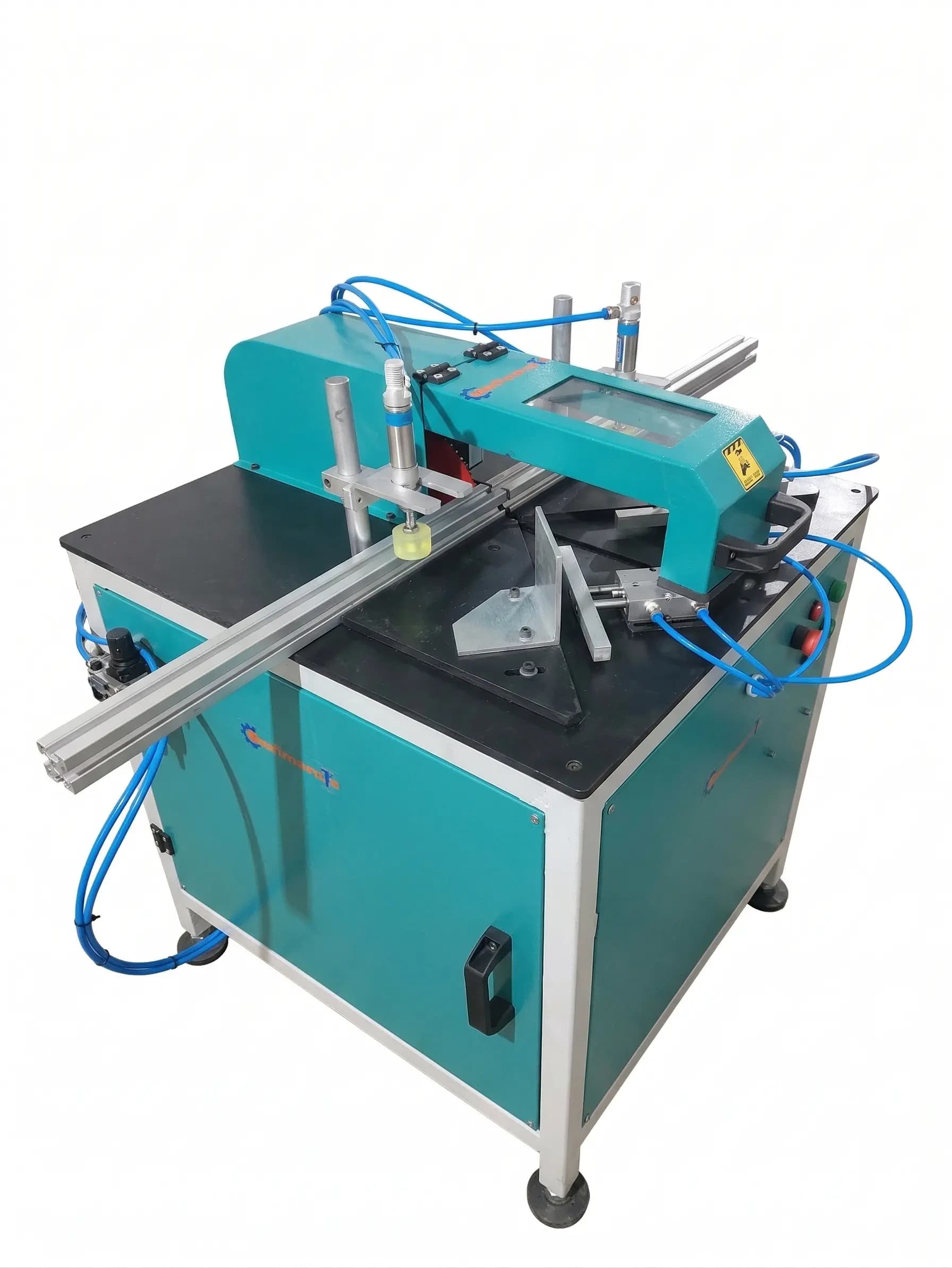
Manual cutting errors are the primary profit-killer for aluminium window fabricators in Bhopal. When working with 6063-T6 architectural grade profiles, a deviation of even 1.5mm results in daylight gaps at the corners, compromising structural integrity and weather-proofing. An Automatic Double Head Cutting Saw eliminates these variables by using synchronized pneumatic positioning and high-speed carbide blades to deliver ±0.1mm accuracy across 3.7-meter lengths. This guide explores how transitioning from manual 12-inch miters to industrial-grade CNC-controlled cutting lines transforms production throughput.
The Real Cost of Manual Cutting in Bhopal Facilities
In our field tests conducted across fabrication clusters in Govindpura and Mandideep, we observed that manual cutting setups using standard 12-inch miter saws contribute to a 12% scrap rate. The primary causes are blade deflection, inconsistent manual clamping pressure, and human error in tape measurements. For a medium-scale workshop processing 500kg of aluminium monthly, this translates to nearly 60kg of wasted high-grade alloy.
By implementing an aluminium profile cutting machine with a digital readout (DRO), fabricators can reduce this waste to under 3%. The engineering reason lies in the clamping mechanism: manual saws rely on the operator’s grip, whereas an automatic double head saw uses horizontal and vertical pneumatic cylinders that apply a constant 0.6 MPa to 0.8 MPa of pressure. This ensures the profile remains perfectly perpendicular to the blade travel path, preventing the 'creep' that occurs during high-speed rotation.
Technical Specifications: What Bhopal Fabricators Need
When evaluating an aluminium cutting machine price, focus on the engineering tolerances rather than the sticker price. A high-performance 45 degree double head cutting machine should meet BS EN 12020 standards for precision profiles.
- Blade Diameter: A 450mm or 500mm carbide-tipped blade is essential for thermal-break profiles and heavy-duty industrial sections.
- Motor Output: Dual 2.2kW motors are required to maintain a consistent RPM of 2800-3200 under load, preventing the 'tearing' of thin-wall profiles.
- Feed System: Look for linear bearing guides (HIWIN or equivalent) which ensure the cutting head moves smoothly without vibration.
- Angle Accuracy: The machine must offer automated indexing for 45° and 90° cuts, with a hard-stop calibration system that stays true over 10,000 cycles.
Case Study: Performance Metrics from a Bhopal Retrofit
Last year, we assisted a local Bhopal manufacturer who was struggling with a backlog of premium casement window orders. Their existing setup—four single-head manual cutters—could only produce 25 window frames per 8-hour shift with a 9% rejection rate during the corner crimping stage.
We installed a fully automatic aluminium window fabrication machine line. The results after 6 weeks were measurable:
- Output Increase: Production jumped from 25 to 65 frames per day using only two operators.
- Rejection Rate: Dropped to 0.5% because the cuts were perfectly square, allowing the Aluminium Corner Crimping Machine to seat the cleats perfectly.
- Labor Savings: Two skilled cutters were redeployed to the assembly and glazing stations, effectively increasing total plant capacity without hiring new staff.
Common Mistakes and Lessons from the Workshop
One of the most frequent errors I see in Bhopal workshops is using the wrong coolant-to-water ratio in automatic saws. Many fabricators bypass the micro-mist lubrication system to save costs, which leads to 'burr' formation on the cut edges. This burr prevents the miters from closing tightly, even if the angle is a perfect 45 degrees.
Another critical mistake is neglecting the air filtration unit. An automatic double head cutting saw for aluminium profiles requires clean, dry air. In the humid conditions often found in Madhya Pradesh during the monsoon, moisture in the pneumatic lines can cause solenoid valves to stick, leading to inconsistent head movement. Always install an integrated air dryer and lubricator (FRL unit) to protect your investment.
Integration with uPVC Window Manufacturing
For fabricators diversifying into hybrid projects, it is important to note that while an aluminium cutting machine can cut uPVC profiles, the reverse is rarely true. A dedicated upvc window manufacturing machine operates at different blade speeds to prevent the melting of the vinyl. If you are setting up a combined unit, we recommend a high-torque aluminium saw that can be adjusted for uPVC, or a dedicated upvc window manufacturing machinery suite for high-volume PVC work.
ROI Analysis: Is the Investment Justified?
An automatic double head cutting machine price in India ranges significantly based on the level of CNC automation. However, the payback period is typically 14 to 18 months for a workshop processing 30+ windows daily. This ROI is calculated through three specific vectors:
- Material Recovery: Savings of 7-9% on aluminium scrap.
- Assembly Speed: 40% faster assembly because frames don't require manual filing or adjustment.
- Customer Satisfaction: Eliminating the 'visible gap' in window corners allows you to charge a premium for high-end architectural projects in areas like Arera Colony and Shyamla Hills.
Safety and ISO Standards
Every industrial profile cutting safety standard dictates that operators must be protected from high-speed blade fragments. Our machines utilize automatic protective shields that only retract when the profile is clamped and the 'Start' buttons (dual-hand safety operation) are engaged. All electrical components follow ISO 9001 quality management systems to ensure the control panels survive the voltage fluctuations common in industrial estates.
FAQ: Questions from Bhopal’s Fabricators
Q: Can I use a 12-inch blade for heavy curtain wall profiles? No. A 12-inch (305mm) blade lacks the cutting depth for wide industrial profiles. You will experience 'blade walk' and inaccurate miters. For commercial work, a 450mm blade is the industry minimum.
Q: How often should I calibrate the digital positioning system? We recommend a calibration check every 15 days or after every 500 cuts. Check the physical distance against the DRO using a calibrated steel rule to ensure the linear guides haven't shifted due to vibration.
Q: What is the maintenance schedule for a double head cutting saw? Daily: Clean aluminium chips from the guide rails. Weekly: Check pneumatic oil levels and drain water from the compressor filter. Monthly: Inspect blade sharpness and tighten all motor mounting bolts. Following this schedule extends machine life to 10+ years.
Get more articles like this
Follow Mechnovate on Google to see our guides in Google Discover & News