Bangalore Guide: Reduce Waste with Automatic Double Head Cutting Saws
To reduce material wastage in Bangalore's competitive aluminium fabrication sector, workshops must move beyond manual measurements and single-head limitations. In high-volume environments like Peenya and Jigani, wastage rates of 10-15% on premium T6 aluminium profiles are no longer sustainable. The solution lies in the implementation of an automatic double head cutting saw for aluminium profiles, which leverages CNC precision to minimize offcuts and human error. This guide provides a technical roadmap for optimizing your cutting cycles, drawing from 15 years of hands-on experience in machine calibration and factory floor management.
Technical Foundations of Precision Engineering in Aluminium Cutting
Achieving sub-millimeter accuracy starts with understanding the mechanical rigidity of your aluminium cutting machine. When we calibrate machines for Bangalore clients, we focus on the intersection of blade stability and profile clamping pressure. A standard 450mm or 500mm TCT blade must maintain a peripheral speed of approximately 3000-3200 RPM to ensure a clean, burr-free finish that eliminates the need for secondary processing.
Material wastage often stems from 'walking' blades or vibration during the entry point of the cut. To combat this, we utilize heavy-duty linear guide rails and pneumatic damping systems that regulate the feed rate. In our internal testing at Mechnovate, we found that a feed rate of 2-3 meters per minute on a 2.5mm wall thickness profile provides the optimal balance between speed and precision. If your aluminium profile cutting machine is vibrating, you are likely losing 0.5mm per cut to kerf-width inconsistency, which adds up to several meters of wasted profile per week.
- Check the parallelism of the two cutting heads every 48 operating hours.
- Ensure the pneumatic pressure is locked at a stable 6-8 bar; fluctuations here cause clamping shifts.
- Verify the digital scale calibration against a certified master gauge twice per month.
- Use high-quality synthetic cooling mists to prevent chip welding on the blade teeth.
Case Study: Reducing Waste from 12% to 3.5% in a Bangalore Facility
Last year, we overhauled the production line of a major upvc windows manufacturers machine setup in the Hosur Road industrial belt. The facility was struggling with a 12% scrap rate using a combination of manual miter saws and a standard single cutting unit. The primary issue was the cumulative error caused by multiple hand-measurements and the inherent 'creeping' of manual end-stops.
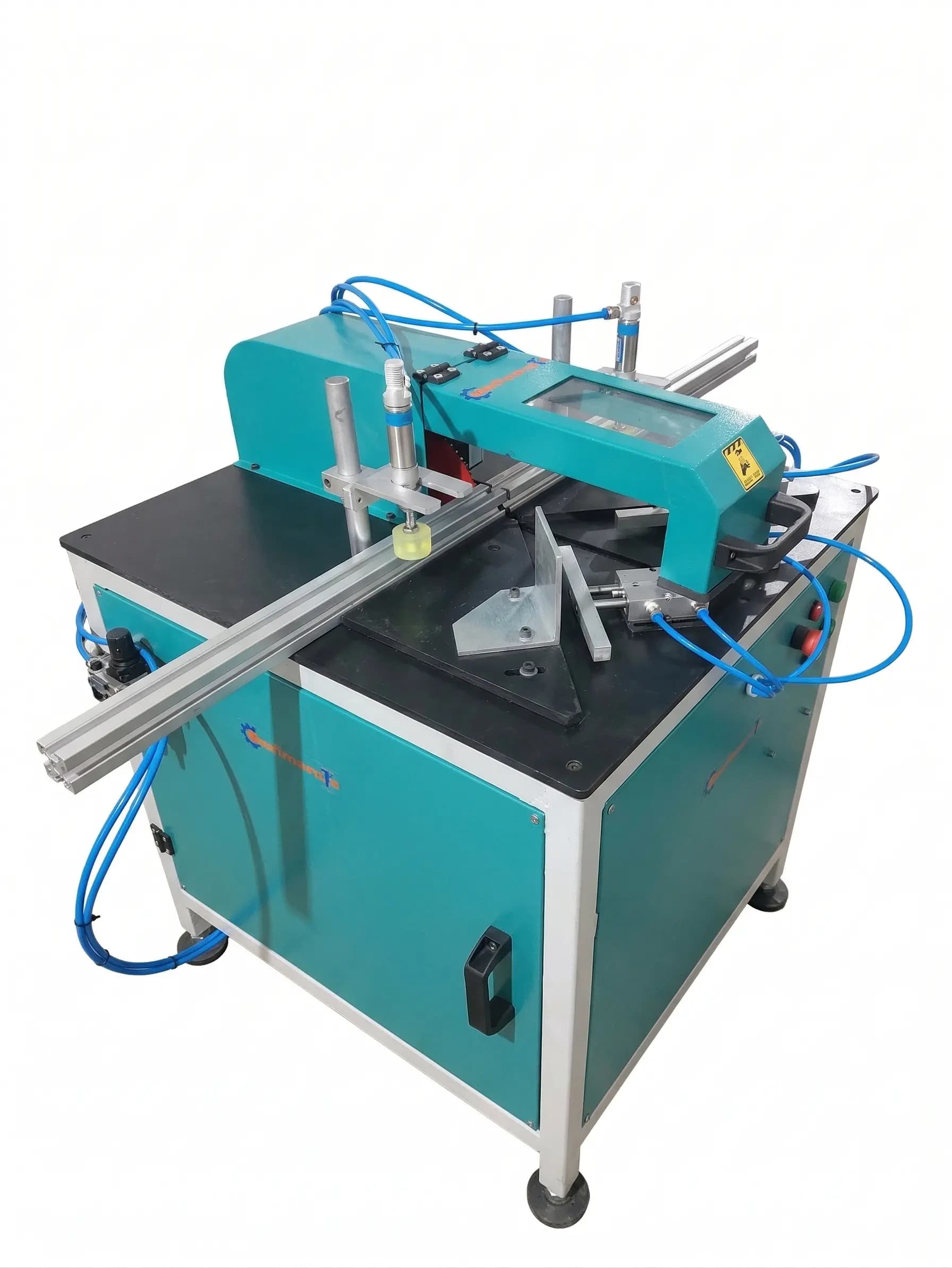
We replaced their workflow with a 45 degree double head cutting machine featuring a 4.2-meter bed and an integrated CNC controller. Over a six-week observation period, the results were measurable and immediate. By utilizing the machine’s optimization software—which nests cutting lists to prioritize longer lengths—we reduced their average offcut size from 450mm to just 85mm.
- Before: 12% material wastage, 85 frames/day, 3 full-time operators.
- After: 3.5% material wastage, 135 frames/day, 1 operator.
- Result: The saving on raw material alone paid for the automatic double head cutting machine price India within 14 months.
Optimizing Your Aluminium Cutting Machine 12 Inch and Larger Blades
Whether you are using a standard aluminium cutting machine 12 inch for small casements or a massive 500mm aluminum cutting machine for curtain walls, the principles of precision engineering remain identical. One common mistake we see in many Bangalore workshops is the use of generic blades for both uPVC and aluminium. While a upvc windows manufacturing machine can handle high tooth counts, aluminium requires specific gullet depths to clear chips effectively.
For those operating an automatic aluminium window production line price sensitive workshop, we recommend investing in a high-speed copy router machine to complement your cutting station. When the cutting is precise, the downstream processes—like punching and routing—become significantly faster because the profile sits perfectly in the jigs. If you are still using a manual punching machine, consider how a 0.5mm error in your head cutting machine output forces the operator to 'force' the profile into the die, leading to cracked powder coating and rejected parts.
Maintenance Protocols to Ensure ISO 9001 Standards
Adhering to Industrial profile cutting safety standards ISO standards isn't just about safety; it’s about consistent output quality. To maintain the accuracy of your aluminium profile punching machine suppliers in Uttar Pradesh or Bangalore provide, you must implement a rigorous preventative maintenance schedule.
- Weekly Spindle Inspection: Check for any radial play in the motor spindle. Even 0.05mm of play will result in a poor degree cutting machine finish.
- Pneumatic Oil Mist Levels: Never run your aluminium cutter machine dry. The friction between the blade and the aluminium profile generates localized heat that can warp the profile edges.
- Chip Extraction: Bangalore’s humidity can cause aluminium dust to clump in the internal workings of your head cutter machine. Ensure your vacuum extraction system is pulling at least 1500 m3/h.
- Sensor Cleaning: The limit switches on an automatic upvc window plant cost India are sensitive. Dust buildup leads to 'false' home positions, resulting in inaccurate cut lengths.
Critical Pitfalls: What to Watch Out For When Buying Machinery
When evaluating the upvc machine price list or aluminium cutting machine price, many business owners make the mistake of choosing the lowest entry cost without considering the total cost of ownership. A cheap upvc windows making machine often lacks the cast-iron base necessary for dampening motor vibration. Without a stable base, your upvc welding machine will never receive perfectly square cuts, leading to weak corners and failed stress tests.
Furthermore, ensure your supplier provides a uPVC window machine service center in Tamil Nadu or Karnataka. At Mechnovate, we have seen dozens of uPVC window manufacturing machines sitting idle in Bangalore because the owner couldn't source a specific solenoid valve or a proprietary CNC board. Always verify that the heavy duty aluminium profile end milling machine and automatic aluminium corner crimping machine price Gujarat you are quoted includes a local warranty and technician support.
FAQ: Expert Insights for Fabricators
Q: Can I use the same double head saw for both uPVC and Aluminium profiles? A: While physically possible, we advise against it for high-precision shops. Aluminium requires higher torque and specific cooling mists that can degrade the seals in a dedicated upvc machinery unit. If you must do both, ensure you change the blade and adjust the feed speed to prevent melting the uPVC or stalling on the aluminium.
Q: What is the most common cause of inaccurate 45-degree cuts? A: It is almost always the profile support. If the long profile is sagging even 2mm over its length, the 45 degree double head cutting machine will produce a cut that is 'open' at the top or bottom. Always use synchronized roller conveyors to keep the material perfectly horizontal.
Q: Is it worth upgrading to a CNC uPVC window fabrication machine price in India for a small workshop? A: If your volume exceeds 30 windows per day, yes. The labor savings and the reduction in upvc window manufacturing machine downtime for manual adjustments will usually cover the cost of the CNC upgrade within 18 months.
Q: How do I calculate the ROI on a new aluminium cutter machine? A: Calculate your monthly spend on raw aluminium. If you can reduce wastage from 10% to 3%, that 7% saving is your direct monthly profit increase. Add the value of the 30% increase in output capacity, and you will see that a high-quality upvc window machine is an asset, not an expense.
Get more articles like this
Follow Mechnovate on Google to see our guides in Google Discover & News