Automatic Double Head Cutting Machine Price and ROI in Hyderabad
Current Market Dynamics and Price Points in Hyderabad
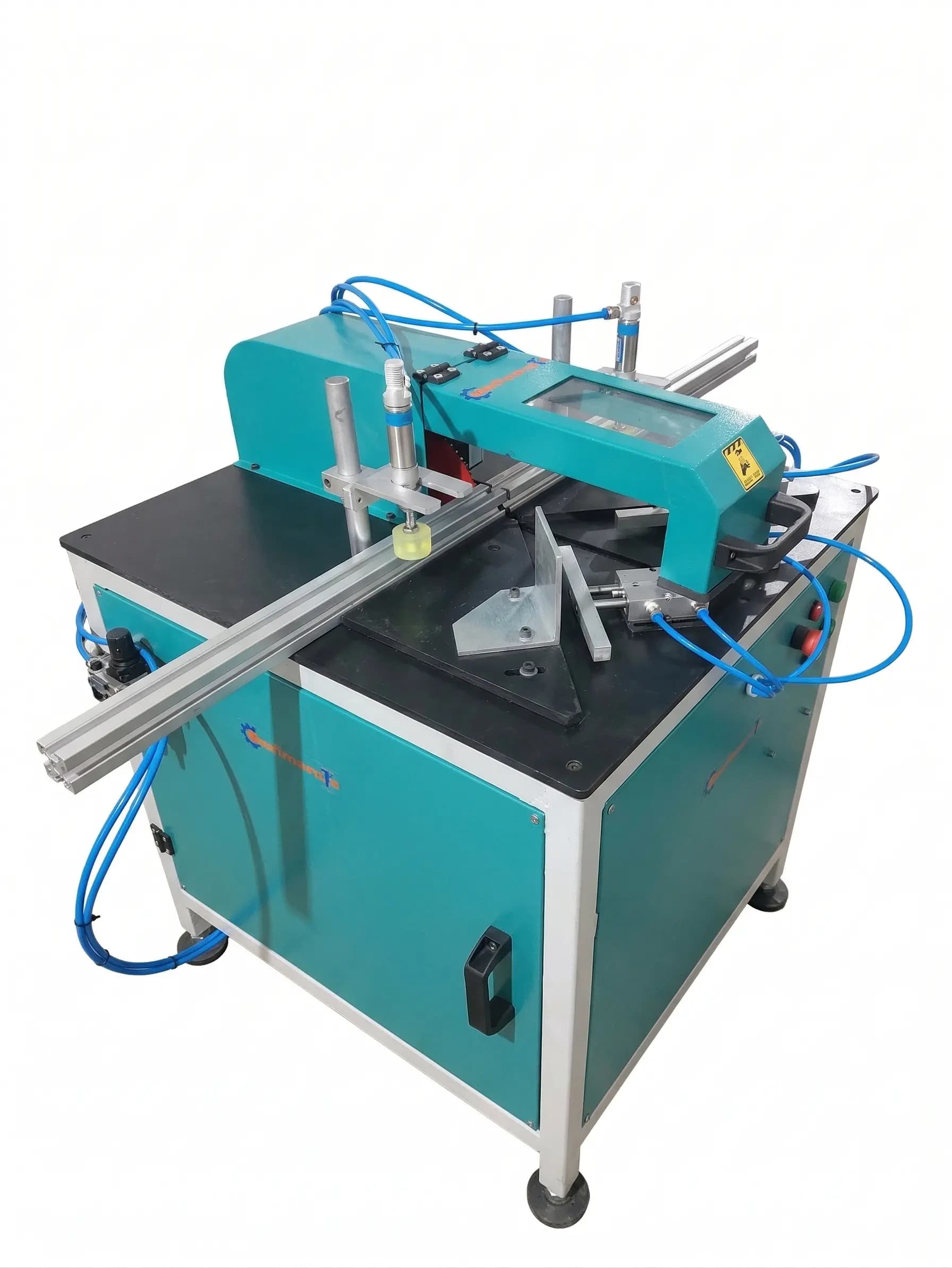
In Hyderabad’s luxury real estate sector, particularly for high-rise developments in Jubilee Hills, Gachibowli, and Financial District, the demand for high-performance windows is at an all-time high. To meet the architectural requirements of these gated communities, fabricators are moving away from manual saws toward high-precision equipment. In today's market, the automatic double head cutting machine price India typically ranges from •4,50,000 for entry-level pneumatic models to •12,50,000 for fully CNC-integrated systems. For a professional setup catering to premium projects, a mid-range double head miter saw for aluminium profiles price usually lands around •7.5 lakhs, providing the necessary balance between speed and miter accuracy.
When evaluating the cost of setting up uPVC window manufacturing unit in India, the cutting machine is your most critical investment. It is the 'heart' of the production line. A standard Double Head Cutting Machine allows for simultaneous 45-degree or 90-degree cuts on both ends of a profile, which is essential for ensuring that the subsequent welding or crimping process results in a perfectly square frame. In my 15 years of workshop experience, I have seen fabricators try to save •2 lakhs by opting for two single-head saws, only to lose triple that amount in wasted profiles and labor costs within the first year.
Technical Specifications: Beyond the Head Cutting Machine Price
Precision engineering is not about the sticker price; it is about the tolerances. When we build or calibrate a uPVC Window Machinery system at Mechnovate, we adhere to BS EN 12020 standards for aluminium profile tolerances. For Hyderabad's high-rise wind loads (often exceeding 2.0 kPa), the window frames must be perfect. A deviation of even 0.5mm in the cut length can lead to air infiltration and water leakage in a 25th-floor apartment.
Key technical specifications to demand from your upvc window manufacturing machine include:
- Blade Diameter: For heavy-duty aluminium fabrication, a 500mm blade is superior to a standard aluminium cutting machine 12 inch (300mm). The larger blade allows for cutting wider multi-track sliding profiles common in Hyderabad villas.
- Motor Power: Look for a minimum of 2.2kW to 3.0kW per head. High-speed aluminium profile cutting machine systems require constant torque to prevent blade 'wandering' during the feed cycle.
- Feed Mechanism: Hydro-pneumatic feeding is essential for aluminium. It ensures a smooth, constant feed rate, which prevents burrs and extends blade life. For upvc window manufacturing machines, standard pneumatic feed is often sufficient.
- Angle Precision: The machine must offer a precision of ±0.1mm/m. This is critical when using an Aluminium Corner Crimping Machine later in the process.
Case Study: ROI Analysis from a Tellapur Luxury Project
Last year, we assisted a fabricator in the Tellapur area who had secured a contract for 450 villas. Initially, they were using a single cutting manual setup. We conducted a 6-week performance test comparing their old method with a new automatic double head cutting saw for aluminium profiles.
Before (Manual Setup):
- Average time to cut one window set: 14 minutes.
- Material waste (scrap due to measurement error): 8.5%.
- Rejection rate at QC: 4%.
- Output: 18 frames per 8-hour shift.
After (Mechnovate Automatic Setup):
- Average time to cut one window set: 2.5 minutes.
- Material waste: 1.8%.
- Rejection rate at QC: <0.5%.
- Output: 65 frames per 8-hour shift.
The ROI Calculation: The fabricator saved approximately •32,000 per month in raw material waste alone. By increasing output by nearly 360%, they reduced their labor-per-frame cost by 70%. The automatic upvc window manufacturing plant cost India for this specific upgrade was recovered in exactly 13.5 months. This doesn't even account for the higher price they were able to charge for 'precision-engineered' windows that met gated community standards.
Common Pitfalls in Aluminium and uPVC Machinery Selection
Many fabricators search for the best upvc window machinery brands India but fail to look at the service infrastructure. In my experience, the biggest mistake is buying a 'cheap' upvc window machine from an importer without a local service center in Telangana or Andhra Pradesh. When a PLC or a pneumatic valve fails during a peak project, every day of downtime costs you more than the initial savings on the machine.
Another common error is mismatching the machine to the profile. If you are fabricating Schüco or Alupure systems, using a low-end aluminium cutter machine with high blade run-out will ruin the thermal break. Always check the spindle run-out; it should be less than 0.02mm. Furthermore, ensure your copy router machine and aluminium punching machine are aligned with the same technical specifications as your primary cutter to maintain workflow continuity.
Scaling Your Fabrication: From Manual to Fully Automatic Production
If you are a startup, the best uPVC window making machine for small business is usually a portable or single-head unit. However, the jump to an automatic double head cutting machine is the single biggest factor in moving from 'local contractor' to 'industrial manufacturer'. To scale successfully in Hyderabad, follow this 3-step technical roadmap:
- Standardize your Profile: Whether it is 60mm or 70mm series, ensure your upvc window manufacturing machinery is calibrated to the specific wall thickness of your profile to avoid 'crushing' during clamping.
- Invest in Air Quality: A head cutting machine is only as good as the air feeding it. Use a refrigerated air dryer. Moisture in the lines is the #1 cause of solenoid valve failure in upvc windows machines.
- Blade Maintenance: Don't wait for the blade to get blunt. A dull blade in an aluminum cutting machine generates heat, which warps the profile. We recommend professional sharpening every 2,000 to 3,000 cuts depending on the alloy grade (e.g., 6063 T6).
Whether you are looking for an aluminium window corner crimping machine price or a full upvc window making machine price list, remember that you are buying 'minutes' and 'millimeters'. The more accurately you cut, the less you spend on finishing and repairs.
Frequently Asked Questions (FAQ)
Q: What is the difference between a 45-degree and a 90-degree cut on a double head machine? A: A 45 degree double head cutting machine is designed for miter joints, essential for standard window frames. A 90-degree cut is used for mullions and transoms. High-end machines can switch between these angles automatically via the PLC controller.
Q: Can I use the same machine for both aluminium and uPVC? A: While a cutting machine aluminium can technically cut uPVC, the blade geometry and RPM requirements differ. Aluminium requires a lower RPM and a cooling mist system, while uPVC requires higher speeds and better dust extraction to prevent the profile from melting at the edges.
Q: What is the typical power requirement for a double head saw? A: Most industrial upvc window manufacturing machines require a 3-phase 415V supply. A double head saw typically draws 4kW to 6kW. Ensure your workshop in areas like Cherlapally or Pashamylaram has the sanctioned load before purchasing.
Q: How long does it take to train an operator on an automatic cutting machine? A: For a basic head cutter machine, a technician with basic mechanical knowledge can be trained in 2-3 days. However, mastering the optimization software to minimize waste usually takes about two weeks of hands-on experience.
Get more articles like this
Follow Mechnovate on Google to see our guides in Google Discover & News