Automatic Aluminium Window Production Pune: Supplier Guide
Transitioning to automatic production in Pune’s high-demand real estate market requires more than just capital; it requires a shift from manual guesswork to micron-level precision. To achieve faster project turnaround, your workshop must move beyond the limitations of a standard 12-inch aluminium cutting machine and integrate CNC-controlled systems that synchronize cutting, punching, and milling. In the Chakan and Bhosari industrial belts, we have seen fabricators reduce lead times by 60% simply by standardizing their miter cuts through automated feed systems.
The Chakan Case Study: Scaling from 15 to 55 Units Per Day
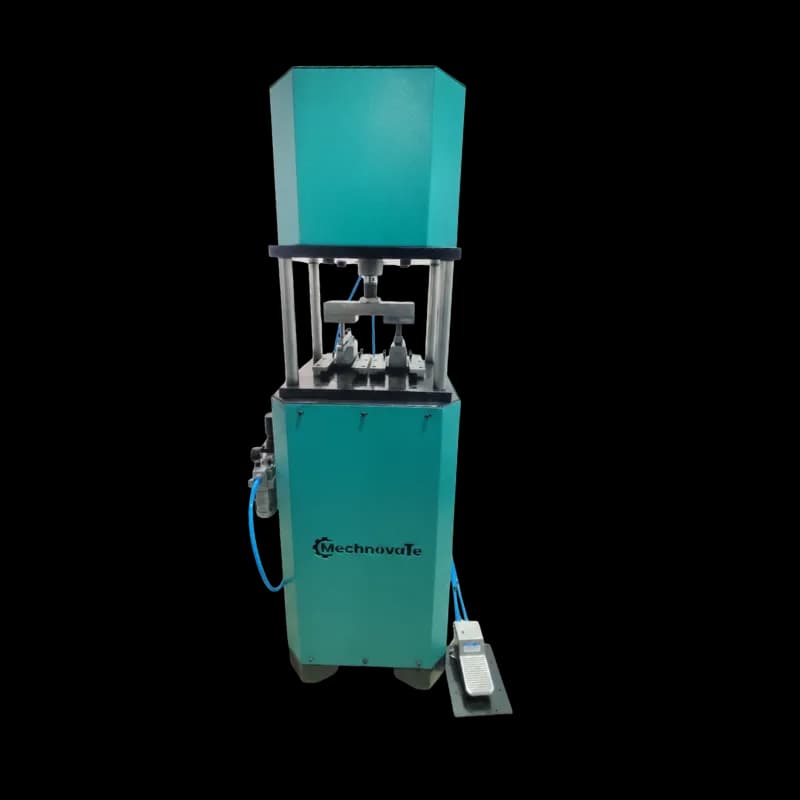
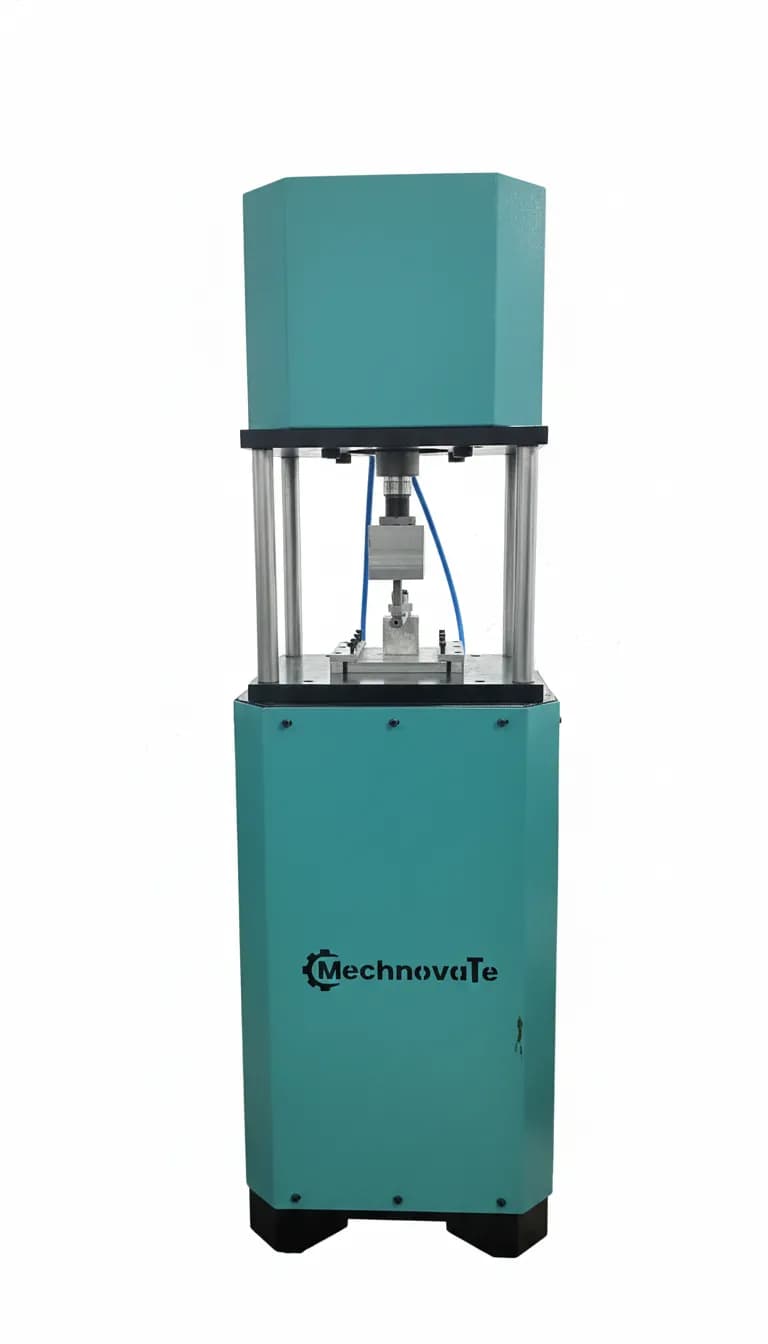
In early 2023, our engineering team assisted a mid-sized fabricator in Pune who was struggling with a 12% material waste rate using manual miter saws. We replaced their legacy setup with an automatic double head cutting machine and a synchronized aluminium window corner crimping machine. Within six weeks of calibration, the results were measurable: material waste dropped to 2.8%, and daily output jumped from 15 windows to 55 windows with a two-man crew.
The primary lesson learned was that automation is not just about speed; it is about eliminating the 'measure twice, cut once' human error. By using a digital positioning system, the operator simply inputs the dimensions from the site measurement sheet, and the machine adjusts the 45-degree or 90-degree angles with a tolerance of ±0.1mm. This level of precision engineering is essential when working with high-end architectural profiles that exceed 2.0mm thickness.
Technical Specifications to Demand from Suppliers
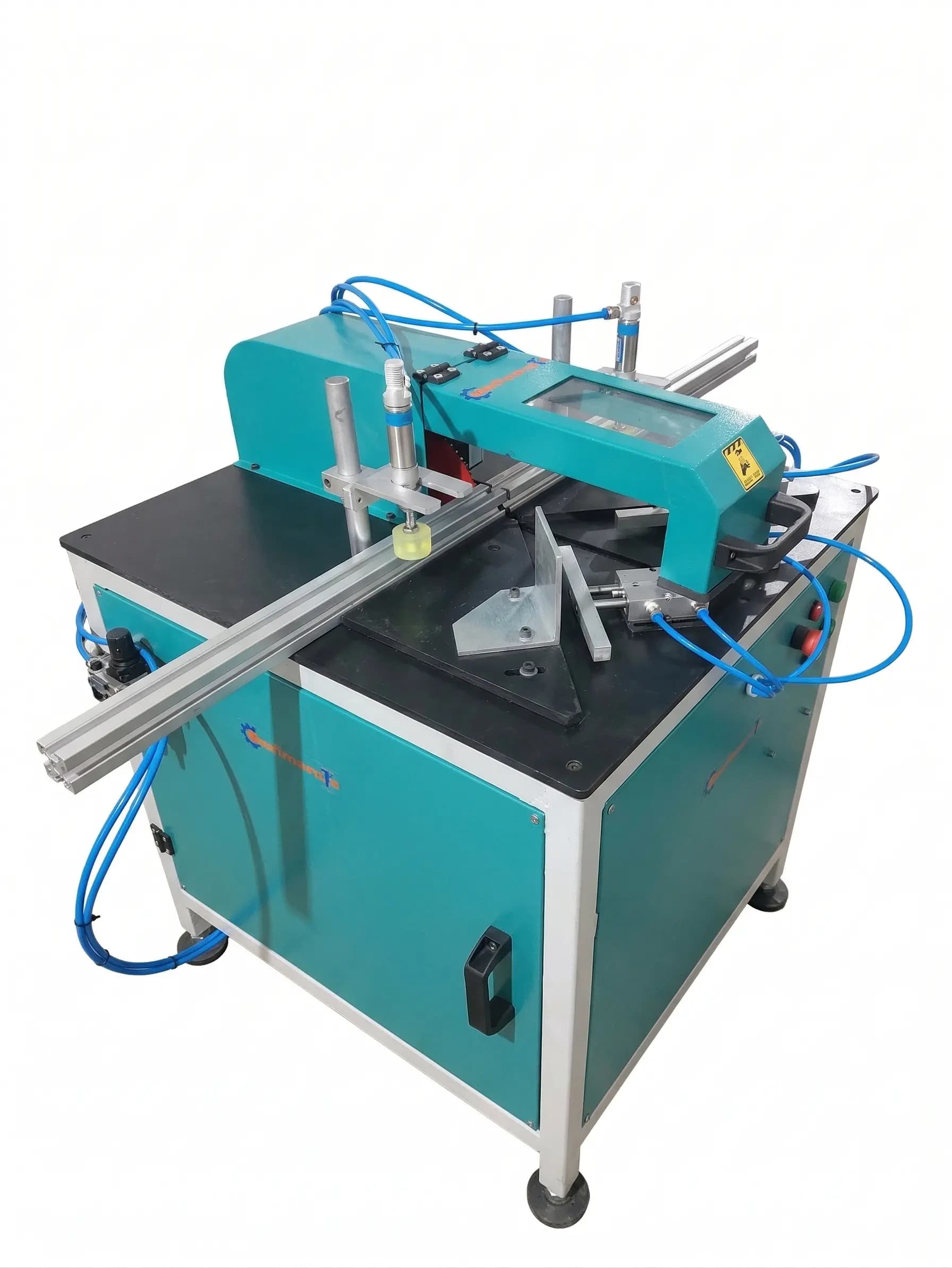
When evaluating an aluminium window fabrication machine suppliers Pune, you must look past the paint job and scrutinize the internal engineering. A high-quality aluminium profile cutting machine should feature a spindle motor with at least 2.2kW to 3.0kW power to maintain a constant RPM of 2800-3200 under load. Ensure the saw blade is a hard alloy (carbide-tipped) with a diameter of at least 450mm to 500mm to handle wider curtain wall profiles.
Check for these specific technical benchmarks during your factory visit:
- Guide Rail System: Demand linear square guide rails (like HIWIN or equivalent) rather than round shafts for the head movement to ensure long-term parallelism.
- Pneumatic Stability: The clamping system must provide at least 6-8 bar of pressure across three points to prevent profile vibration during the high-speed descent of the blade.
- Feed Rate Control: Look for hydro-pneumatic damping cylinders that allow for a smooth, adjustable feed rate, preventing 'burrs' on the cut edge of the aluminium profile.
- Safety Compliance: Any automatic cutting machine must meet Industrial profile cutting safety standards ISO standards, featuring a protective shield that automatically lowers before the blade engages.
Eliminating the Manual Punching Bottleneck
While many focus on the cutter, the real delay often happens at the slotting and punching stage. Transitioning to an automatic aluminium window production line price calculation must include a multi-station aluminium punching machine. A manual punching machine often creates 'deformation' around the hole, leading to poor hardware fitment and onsite delays.
By moving to a hydraulic-powered punching unit, you can process lock holes, weep holes, and handle slots in a single stroke across multiple profile types. In our Pune testing facility, we found that a 5-ton hydraulic station could process 400 profiles in the time it took a manual operator to finish 50. This is the difference between meeting a project deadline for a Hinjewadi IT park and paying liquidated damages for delays.
5 Critical Questions for Your Machinery Supplier
To ensure you are not buying a machine that will be obsolete in 24 months, ask your supplier these specific engineering questions:
- What is the run-out tolerance of the spindle? Anything above 0.02mm will lead to premature blade wear and poor finish.
- Is the software proprietary or open-source? Proprietary software from a reputable uPVC and aluminium machinery manufacturer allows for easier updates and integration with ERP systems.
- What are the specific electrical protections? Given Pune’s industrial power fluctuations, ensure the machine has a phase-failure protector and an Overload Relay.
- Do you stock genuine spares in Maharashtra? A broken induction sensor can stop your entire line; ensure your supplier has a local service center.
- What is the table flatness specification? For large-frame fabrication, the machine bed must be milled on a large-scale gantry to ensure it is perfectly level.
The Economics of Upgrading: ROI and Maintenance
The aluminium cutting machine price is only 40% of the total cost of ownership. The real cost lies in blade consumption and electricity. An automatic upvc window plant cost India analysis shows that high-efficiency motors (IE3 grade) save approximately ₹12,000 per month in electricity costs compared to local unbranded motors. Furthermore, using a mist-spray lubrication system instead of manual oiling can extend your saw blade life by 300%.
Don't overlook the importance of the heavy duty aluminium profile end milling machine in your setup. A precision-milled mullion joint is the hallmark of a premium window. If your supplier cannot demonstrate a clean, burr-free finish on a 4-blade milling setup, they are not providing industrial-grade equipment. Always insist on a live demo using your specific profile brand (e.g., Hindalco, Jindal) to check for fitment tolerances.
FAQ: Fabricator Concerns in Pune
Q1: Is an automatic double head cutting saw for aluminium profiles better than two single-head saws? Yes, because the double head saw ensures that the length measurement between the two miters is digitally locked. Two single saws introduce two sets of human measurement errors, which accumulate over a 20-story building project.
Q2: Can I use the same machine for uPVC and Aluminium? While possible, it is not recommended. Aluminium requires higher torque and specific lubrication (coolant), whereas uPVC requires higher RPM and vacuum dust extraction. Using an aluminium cutter for uPVC without proper speed control can melt the profile edges.
Q3: What is the typical lead time for a full automatic production line? For Mechnovate-standard machinery, lead times are usually 4-6 weeks for manufacturing and 3 days for onsite commissioning and staff training in Pune.
Q4: Do I need a specialized flooring for these machines? Heavy-duty CNC machines require a reinforced concrete base (M25 grade) of at least 150mm thickness to prevent vibration-induced inaccuracies over time.
Q5: What is the warranty on the CNC components? Most reputable suppliers offer a 12-month comprehensive warranty on mechanicals and a 24-month warranty on the PLC/Inverter systems.
Get more articles like this
Follow Mechnovate on Google to see our guides in Google Discover & News