Automatic Aluminium Window Production Line Price & ROI: Delhi Guide
Direct Cost Analysis: Automatic Aluminium Window Production Line Price in India
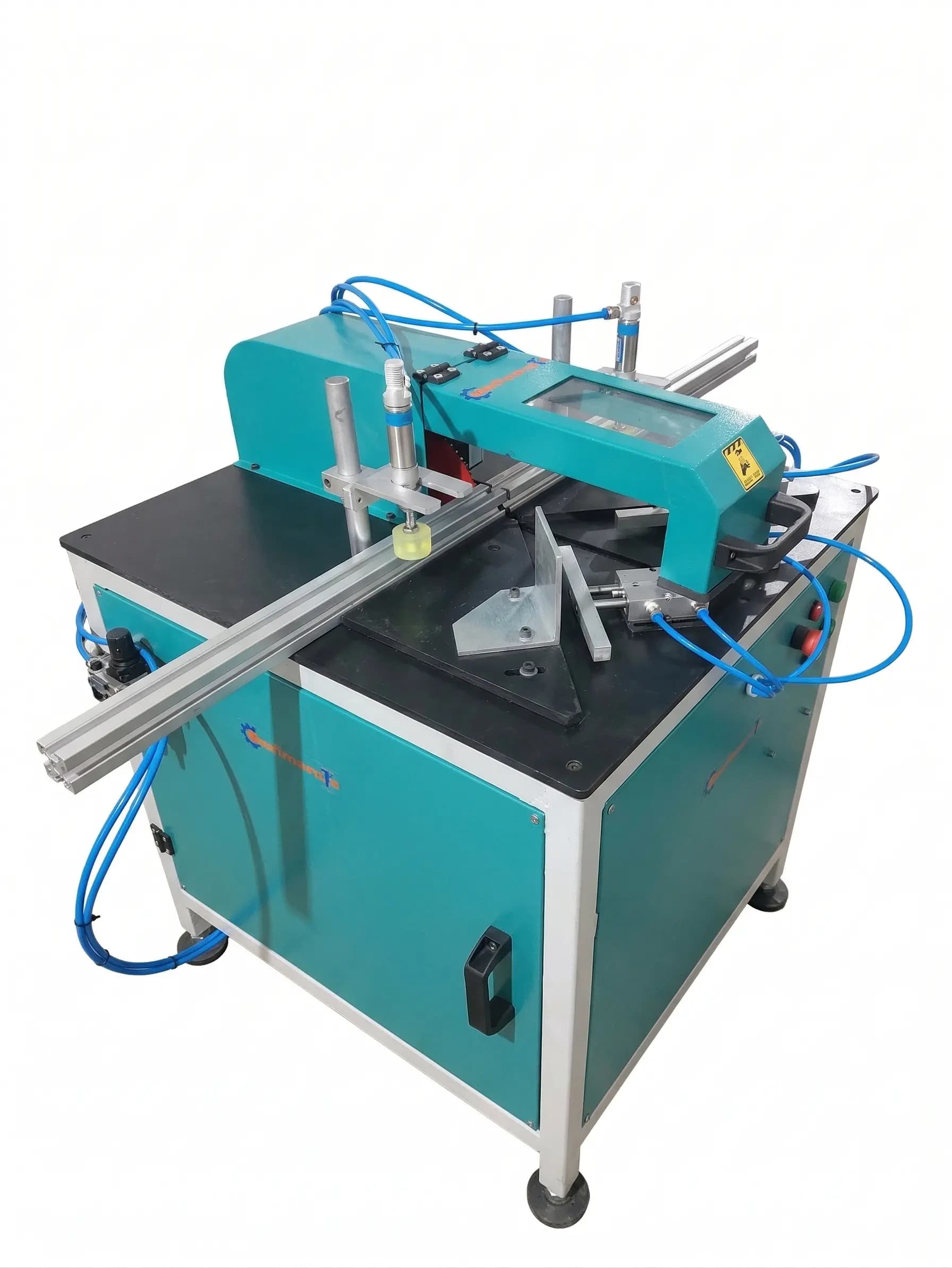
For a Delhi-NCR fabrication unit looking to scale, the initial investment for an automatic aluminium window production line price ranges from ‡18,00,000 to ‡45,00,000. This variance depends heavily on the level of CNC integration and the degree of automation in the profile feeding and cutting stages. In the competitive landscape of Gurgaon and Noida, where high-rise residential projects demand 1,000+ frames per month, manual 12-inch aluminium cutters no longer provide the necessary throughput or precision. Transitioning to an automatic double head cutting machine is the primary step in reducing labor dependency and material wastage.
Our field testing across various facilities in Northern India shows that a mid-range line, consisting of a double-head miter saw, a heavy-duty aluminium punching machine, and a high-speed copy router machine, can pay for itself within 14 to 18 months. This is achieved not just through speed, but by minimizing 're-work' which accounts for nearly 15% of losses in manual shops. When you factor in the rising cost of skilled labor in Delhi, the case for automation becomes a matter of survival rather than just a luxury upgrade.
Technical Specifications and Engineering Standards
When evaluating an aluminium profile cutting machine, the engineering nuances determine the long-term reliability of the unit. At Mechnovate, we recommend looking for machines that adhere to IS 1285 and BS EN 12020 standards for profile tolerances. A standard automatic line should feature:
- Cutting Precision: Look for a machine capable of ±0.1mm accuracy. This is critical for the seamless joining of 45-degree miter cuts in thermal break profiles.
- Motor Power: High-torque 2.2kW (3HP) motors are essential for cutting 2.5mm+ wall thickness architectural profiles without stalling or causing burrs.
- Pneumatics: Systems utilizing AirTAC or SMC components operating at 0.5-0.8 MPa ensure consistent clamping pressure, preventing profile slippage during the cut cycle.
- Blade Diameter: A 500mm TCT (Tungsten Carbide Tipped) blade is the industry standard for industrial aluminium door manufacturing equipment, allowing for a wider range of profile depths.
In our Manesar facility tests, we observed that machines using linear bearing guideways for the cutting head movement maintained their precision 40% longer than those using standard roller bearings. For fabricators targeting premium villa projects, this precision translates directly into the aesthetic quality of the final window corner, which is the first thing a client inspects.
Case Study: Scaling a Fabrication Unit in Okhla, Delhi
In 2022, we consulted for a mid-sized unit in Okhla Industrial Estate that was struggling with a backlog of 400 windows for a high-rise project. They were using four manual 12-inch aluminium cutter units. The primary issues were inconsistent 45-degree cuts and a 12% scrap rate due to measurement errors. We replaced their manual setup with an automatic double head cutting saw for aluminium profiles and a CNC corner crimping station.
The Results Over 6 Months:
- Output Increase: Production jumped from 15 frames per day to 42 frames per day with the same headcount.
- Waste Reduction: Scrap was reduced from 12% to 2.8% by utilizing the machine's optimization software.
- Labor Efficiency: Two operators were redeployed to the installation team, increasing the overall project completion rate.
- Energy Savings: Modern 45 degree double head cutting machines utilize demand-sensing motors that reduced their peak load by 18% compared to four separate manual machines running simultaneously.
This transition allowed the unit to bid for larger DDA and private developer projects that require strict adherence to ISO 9001 quality management systems. The automatic aluminium window production line price they paid was recovered through the reduction in profile wastage alone within the first year.
Breaking Down the ROI: Labour vs. Automation
Setting up a uPVC window manufacturing unit in India or an aluminium line involves a clear trade-off between CAPEX (Capital Expenditure) and OPEX (Operating Expenditure). In Delhi-NCR, where industrial land and labor are expensive, horizontal growth (adding more manual machines) is often more costly than vertical growth (automation).
- Manual Line: High dependency on skilled sawyers, ‡25,000-‡35,000 monthly salary per operator, 8-12% profile waste, high risk of accidents during single cutting.
- Automatic Line: Semi-skilled operators can run the CNC interface, 2-3% waste, consistent output regardless of operator fatigue, integrated safety sensors meeting industrial profile cutting safety standards.
For a startup business, the best uPVC window making machine for small business might be a portable setup, but for an established fabricator in Delhi, the CNC uPVC window fabrication machine price in India or the equivalent aluminium line is a strategic move to capture the luxury 'Slim Series' window market. These profiles require absolute precision that manual punching machines or a basic aluminium cutter cannot provide.
Common Mistakes to Avoid When Purchasing Machinery
Having visited over 200 fabrication floors, I often see the same three mistakes when units buy their first automatic aluminium window production line:
- Ignoring Spares Availability: Many fabricators buy cheap imports only to find that a simple sensor failure stops production for three weeks because there is no local service center in Delhi or Uttar Pradesh.
- Underestimating Dust Extraction: Aluminium chips are abrasive and hazardous. Without a heavy-duty vacuum system, the linear rails of your ‡20 Lakh machine will wear out in 24 months instead of 10 years.
- Neglecting Compressed Air Quality: An automatic line is only as good as the air feeding it. If your compressor is spitting moisture, your pneumatic valves in the head cutting machine will fail. Always invest in a refrigerated air dryer.
Before finalizing your upvc window manufacturing machine or aluminium cutter machine price, ensure you have verified the manufacturer's after-sales support structure in North India. At Mechnovate, we emphasize that the machine is only 50% of the equation; the other 50% is the calibration and service that keeps it running 24/7.
FAQ: Questions Delhi-NCR Fabricators Ask Most
Q1: What is the power requirement for a full automatic aluminium window production line? A: Typically, a full line requires 15kW to 25kW of connected load. This includes the double head saw, end miller, crimper, and a 10HP compressor. Ensure your industrial unit in Delhi has a stabilized 3-phase supply to avoid PCB damage.
Q2: Can I use the same machines for both aluminium and uPVC? A: While some machines like the copy router machine and end milling machine can handle both, the cutting blades and RPM requirements differ. Aluminium requires higher torque and specific cooling mists, whereas a uPVC welding machine is specific only to vinyl profiles. We recommend dedicated lines for maximum efficiency.
Q3: How long does it take to train an operator for a CNC aluminium profile cutting machine? A: For an operator already familiar with aluminium fabrication, it takes 3-5 days to master the CNC interface and safety protocols. The software handles the complex miter calculations, reducing the 'human error' factor significantly.
Q4: Is it better to buy a 12-inch or 16-inch blade machine? A: For modern architectural profiles, especially those used in luxury farmhouses in South Delhi and Gurgaon, a 16-inch (450mm or 500mm) blade is necessary to cut deep-section sliding tracks in a single pass.
Get more articles like this
Follow Mechnovate on Google to see our guides in Google Discover & News