Automatic Aluminium Window Production Line Price & Mumbai Setup Guide
Setting up an automatic aluminium window production line in Mumbai requires an investment between ‡15 Lakhs and ‡45 Lakhs depending on automation levels and profile complexity. For high-rise projects exceeding 20 floors, standard manual setups fail to meet the strict wind-load and air-permeability standards required by BMC regulations. This guide provides a technical roadmap for fabricators transitioning from manual processes to high-precision engineering systems capable of handling 2.5mm+ wall thickness profiles for premium high-rise installations.
Investment Breakdown: Automatic Aluminium Window Production Line Price in India
A professional-grade production line is centered around speed and repeatability. A mid-range automatic line typically includes an Automatic Double Head Cutting Saw, a corner crimper, and a copy router. These machines eliminate the 2-3mm variance common in manual cutting, which is the primary cause of water leakage in high-rise windows.
- High-End Automatic Line (‡35L - ‡45L): Includes CNC 4-axis machining centers and double-head saws with digital displays.
- Standard Automatic Line (‡18L - ‡28L): Features heavy-duty 45/90-degree cutting machines and pneumatic corner crimpers.
- Basic Powered Line (‡12L - ‡16L): Consists of single-head aluminium cutters and manual punching machines.
When calculating your aluminium cutting machine price, factor in the cost of high-speed TCT blades (500mm diameter or higher) which are essential for burr-free cuts on architectural-grade alloys.
Engineering for Mumbai High-Rises: Precision and Wind Load
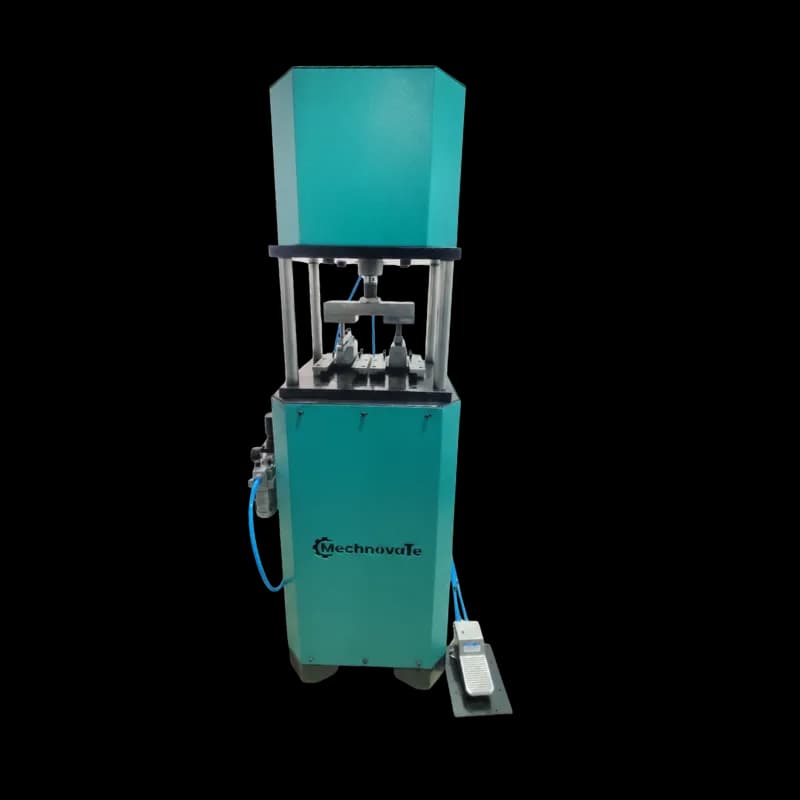
Mumbai’s coastal environment demands windows that meet IS 875 (Part 3) for wind loads. For buildings over 70 meters, the corner strength of the window frame is non-negotiable. An Aluminium Corner Crimping Machine provides a hydraulic force of up to 48kN, ensuring the joinery can withstand monsoon gust pressures that would otherwise cause miter joints to separate.
Precision engineering in this context means maintaining tolerances within +/- 0.2mm across a 3-meter profile. High-rise fabricators must use 12-inch or 20-inch aluminium cutter machine configurations to ensure the blade path remains perpendicular throughout the stroke. This level of accuracy is impossible with hand-held tools or low-grade upvc window manufacturing machines adapted for aluminium.
6-Week Case Study: Optimizing a Facility in Bhiwandi
In our recent project for a Mumbai-based fabricator, we replaced their legacy manual cutters with a fully automatic aluminium window production line. Over 6 weeks, we monitored the shift in production metrics and found that the transition solved a critical bottleneck in the glazing department. Previously, 14% of frames required rework due to poor miter joints.
- Before: 18 frames per day, 12% scrap rate, 3-man cutting team.
- After: 55 frames per day, 2% scrap rate, 1 operator for the Automatic Double Head Cutting Saw.
- Result: The client achieved a 200% increase in output while reducing aluminium profile wastage by 950kg per month.
The lesson learned was that the aluminium cutting machine price was recouped in just 8 months through material savings alone. We also found that using a High Speed Copy Router at 12,000 RPM significantly reduced the profile deformation common at lower speeds.
Essential Machinery for Precision Fabrication
To compete for high-value tenders, your shop floor must meet ISO 9001 and BS EN 12020 standards. The following equipment list represents the minimum viable setup for a professional Mumbai-based aluminium fabrication unit:
- Automatic Double Head Cutting Saw: Must feature pneumatic clamping and a 45/90 degree tilting head with digital length measurement.
- Heavy Duty Corner Crimper: Hydraulic operation with adjustable knives to accommodate multi-chambered profiles.
- End Milling Machine: For precisely machining the ends of mullions and transoms to fit the frame contour.
- High Speed Copy Router: Used for milling lock holes and water slots; must have a high-frequency motor to prevent vibration marks.
- Punching Machine: For high-volume handle and hinge holes where a router would be too slow.
Common Mistakes to Avoid in Aluminium Setup
Many fabricators try to use upvc windows making machine setups for aluminium profiles. This is a critical error because the torque requirements and blade speeds are vastly different. Using a upvc cutting machine on thick aluminium profiles will lead to motor burnout and dangerous blade shatter incidents.
Another frequent oversight is ignoring air supply quality. An automatic aluminium window production line requires a stable 6-8 bar pressure with integrated moisture separators. Wet air entering the pneumatic cylinders of your aluminium profile cutting machine will cause solenoid failure within months, leading to expensive downtime.
FAQ: Fabricator Queries in Mumbai
Q: Can I use the same machine for uPVC and Aluminium? While some copy routers and end millers are compatible, your cutting machines should be specific. Aluminium requires higher torque and specific lubrication systems (oil mist) that most upvc machinery lacks.
Q: What power supply is required for a full production line? A full automatic line typically requires a 3-phase, 440V supply. We recommend a dedicated 15kW to 25kW connection to handle the simultaneous load of the saws, compressors, and hydraulic units.
Q: How often do the TCT blades need sharpening? For architectural aluminium, blades should be checked every 2,500 cuts. Using dull blades increases the heat in the profile, causing the powder coating to peel at the cut edge, which is a major reason for project rejection by architects.
Q: Is a CNC machine necessary for a startup? No, but a semi-automatic line with digital readouts is the baseline for quality. You can start with a heavy-duty aluminium cutting machine 12 inch setup and upgrade to CNC as your volume exceeds 30 windows per day.
Get more articles like this
Follow Mechnovate on Google to see our guides in Google Discover & News