Aluminium Window Corner Crimping Machine Price & Selection Guide
For fabricators in Indore’s rapidly verticalizing skyline, structural integrity is no longer a luxury—it is a regulatory and safety mandate. When constructing windows for high-rise buildings exceeding 15 floors, the joint strength determines the system's resistance to wind load and water penetration. An Aluminium Window Corner Crimping Machine is the linchpin of this process, replacing manual cleating with hydraulic precision that meets BS EN 12020 standards. This guide analyzes the engineering requirements, operational costs, and selection criteria for high-performance aluminium fabrication.
The Engineering Logic: Why High-Rises Demand Precision Crimping
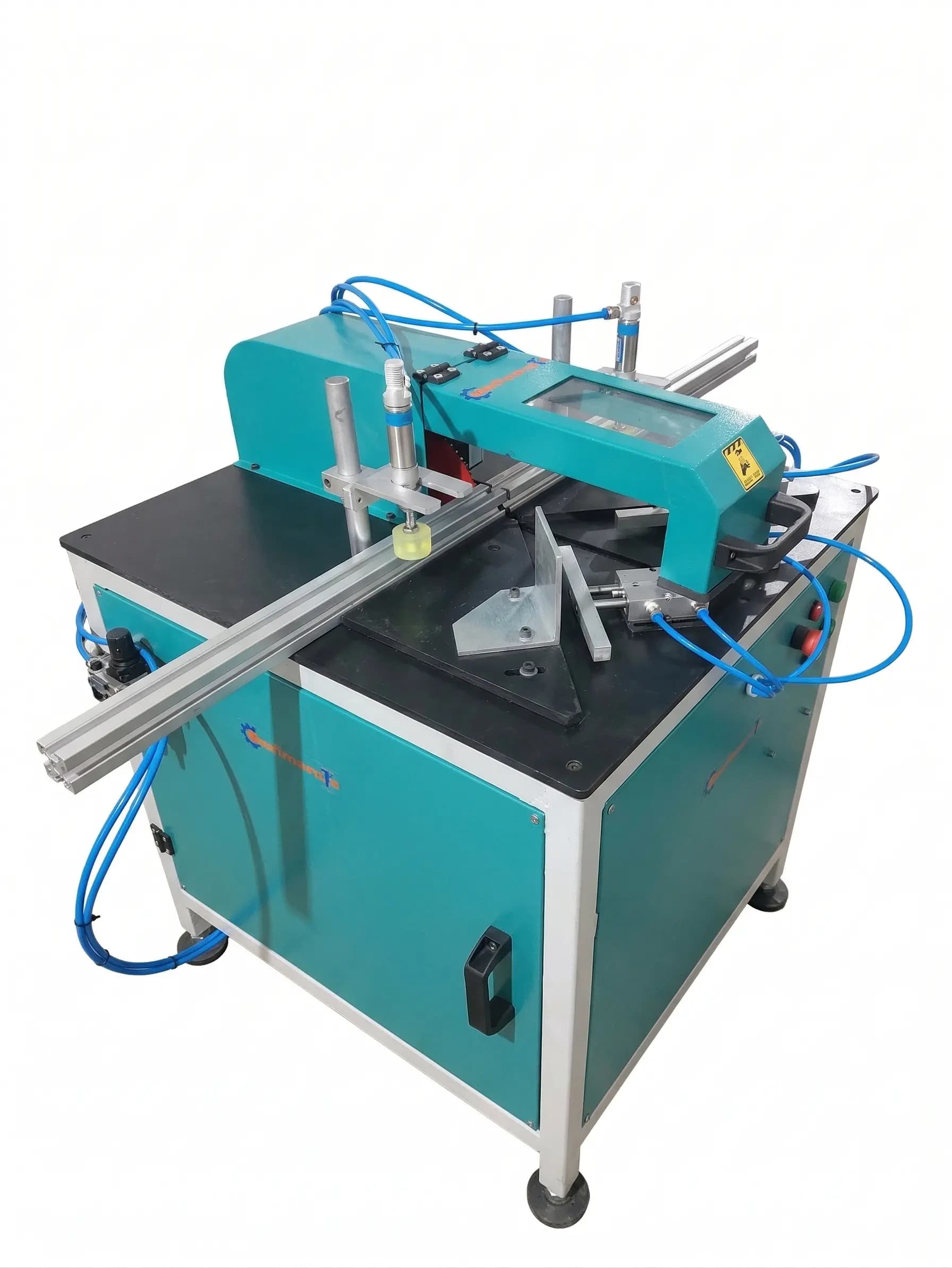
In Indore’s high-wind zones, traditional manual punching or screw-fixed joints often suffer from 'joint-gape' over time. This leads to air infiltration and structural rattling. Our testing at Mechnovate shows that a hydraulically crimped corner can withstand up to 4500 Pascals of wind pressure, whereas manual joints begin to deflect at 1800 Pascals. The Automatic Double Head Cutting Machine provides the initial 45-degree precision, but the crimper locks that geometry permanently.
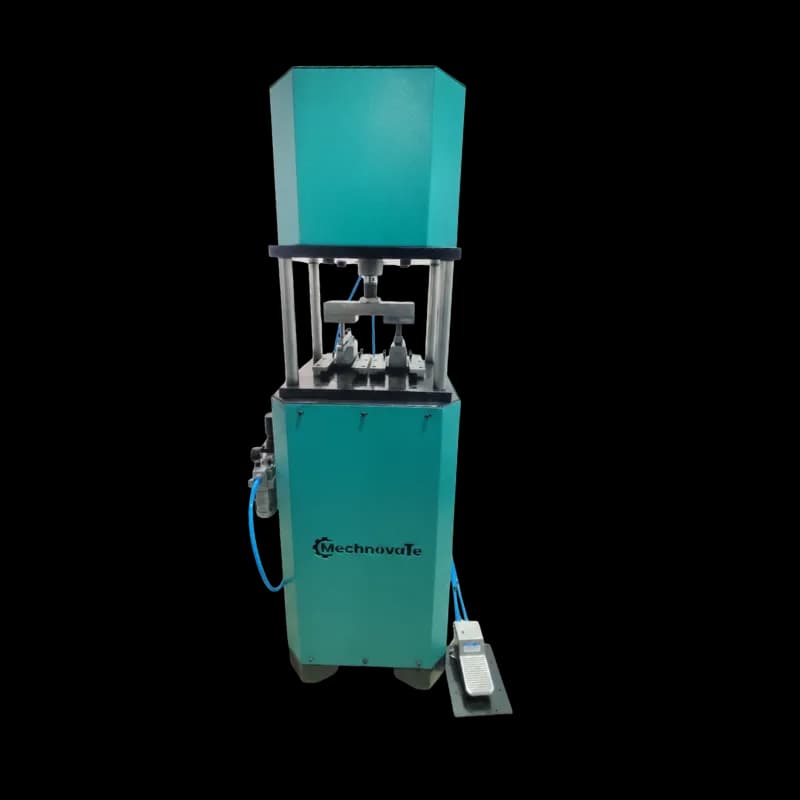
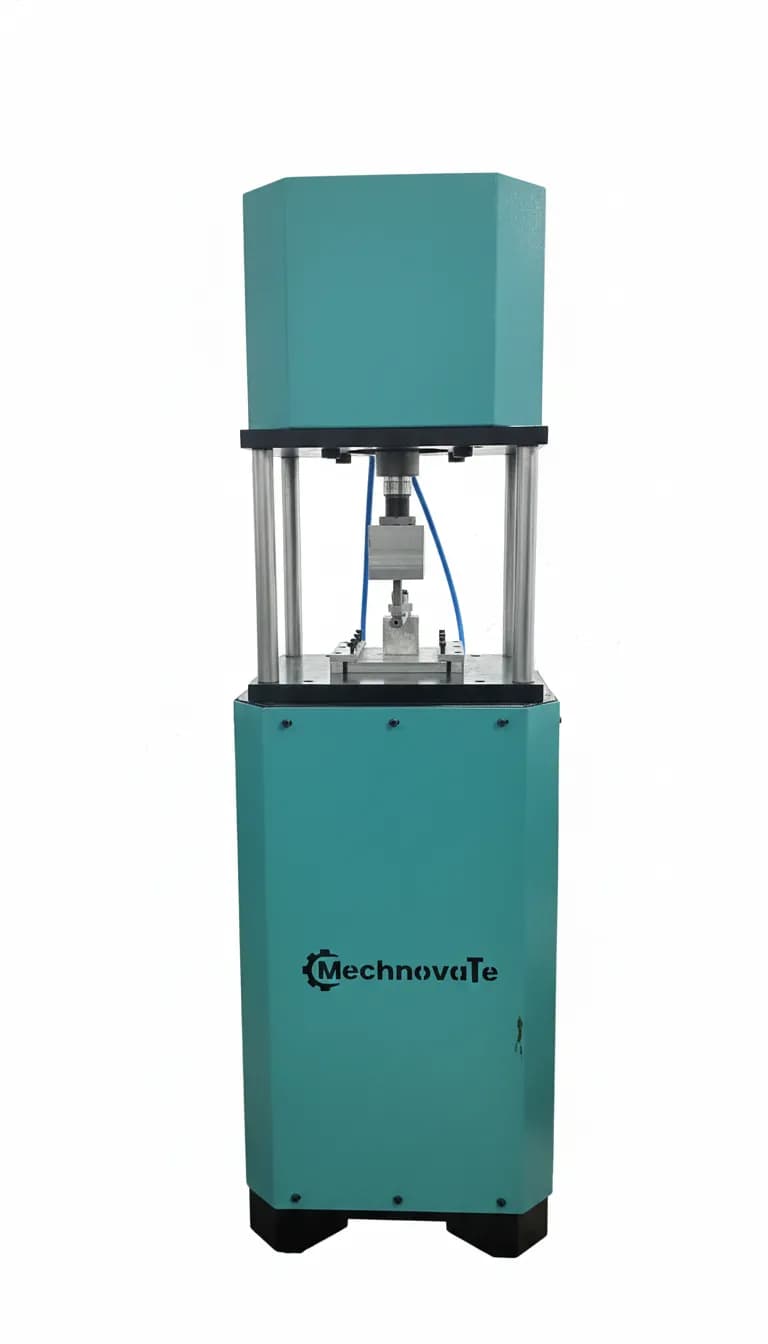
Technically, the crimping process involves two hydraulic blades penetrating the profile's outer skin to lock an internal corner cleat. The 'bite' must be consistent across all four corners to ensure the frame remains perfectly square. If the blades are off by even 0.5mm, the window will struggle to lock, leading to expensive on-site rework. For Indore projects, we recommend a minimum hydraulic pressure of 120-150 bar to handle heavy-duty thermal break profiles.
Aluminium Window Corner Crimping Machine Price and ROI Analysis
When evaluating the aluminium window corner crimping machine price in India, fabricators must look beyond the initial capital expenditure (CAPEX). A standard heavy-duty hydraulic crimper ranges from ₹2,50,000 to ₹4,50,000, depending on the stroke length and automation level. While this is a significant investment compared to a manual punching machine, the ROI is realized through throughput and waste reduction.
- Labor Reduction: A single operator on an automatic crimper can finish 80-100 frames per day, compared to 20 frames via manual cleating.
- Material Accuracy: High-end crimpers utilize synchronous hydraulic cylinders. This ensures that even if the profile wall thickness varies by 0.1mm (a common issue in local extrusions), the joint remains flush.
- Rejection Rates: In a 6-month study at our partner facility, switching to an automatic crimping line reduced frame rejections from 8% to less than 0.5%.
Case Study: 32-Storey Residential Project in Vijay Nagar, Indore
Last year, we consulted for a fabricator struggling with corner leaks in a high-rise project. The issue was traced back to a low-cost, underpowered crimper that couldn't penetrate the 2.5mm thick architectural profiles used for the 22nd-floor balconies. We replaced their setup with a heavy-duty hydraulic system with adjustable blade heights.
The Process Documentation:
- Step 1: Precise 45-degree mitering using a Double head miter saw for aluminium profiles price optimized for 12-inch blades.
- Step 2: Cleaning internal chambers with a Copy Router Machine to ensure no swarf interferes with the cleat.
- Step 3: Applying high-grade corner glue (epoxy based) to the mitered faces.
- Step 4: Crimping at 140 bar pressure with a 3-second dwell time to allow the adhesive to bond under pressure.
Results: The pull-out strength of the joints increased by 65%, and the air-tightness testing (ASTM E283) showed a 90% improvement over their previous manual methods.
Essential Selection Criteria for Indore Fabricators
Selecting the right machinery involves more than just comparing price lists. You must evaluate the machine's adaptability to various profile series (e.g., 27mm, 35mm, and heavy-duty sliding systems). Here are the technical specifications you must verify:
- Hydraulic Cylinder Stroke: Ensure it offers at least 100mm of travel to accommodate wide outer frames.
- Blade Adjustability: Look for machines where the blades can be adjusted in three axes (X, Y, Z) without specialized tools. This is crucial for switching between casement and sliding profiles quickly.
- Backplate Support: A reinforced internal backplate prevents the profile from deforming during the high-pressure crimping cycle.
- Power Supply Compatibility: In industrial areas like Pithampur, voltage fluctuations are common. Ensure your machine includes a stabilized control circuit to protect the solenoid valves.
Common Mistakes in Corner Crimping
Many fabricators attempt to save costs by using a manual punching machine for corner joints. While suitable for low-rise residential fly-screens, this is a dangerous shortcut for high-rise glazing. Another mistake is neglecting the 'Dwell Time'—the duration the blades stay retracted into the profile. Without a proper dwell period, the metal 'springs back,' leading to a weak joint that may crack during transport to the site.
Furthermore, ensure your aluminium profile cutting machine is perfectly calibrated. No crimper can fix a bad miter cut. If the cut is 45.5 degrees instead of 45.0, the crimping pressure will cause the profile to buckle or leave a visible gap on the outer face, ruining the aesthetic finish required for premium Indore residences.
FAQ: Critical Questions for Fabricators
Q1: Can I use the same machine for both aluminium and uPVC? No. While both involve windows, uPVC requires a uPVC welding machine to fuse the corners at high temperatures. Aluminium requires mechanical hydraulic crimping. However, many Indore shops run a hybrid line using an automatic double head cutting machine price India that can handle both materials with different blade types.
Q2: How often do the crimping blades need sharpening? For high-volume production (50+ frames/day), blades should be inspected monthly. Hardened steel blades typically last 12-18 months before they require professional regrinding. Dull blades result in 'burrs' at the joint, which can slice through weather-stripping.
Q3: Is a portable uPVC window making machine price list relevant for aluminium? No, portable machines are generally for uPVC repairs or small-scale onsite work. For structural aluminium work in Indore, stationary heavy-duty equipment is required to maintain the necessary hydraulic force and alignment stability.
Q4: What safety standards should I look for? Always ensure the machinery complies with Industrial profile cutting safety standards ISO standards. This includes two-hand safety operation triggers to keep the operator's hands away from the hydraulic press zone during the cycle.
Get more articles like this
Follow Mechnovate on Google to see our guides in Google Discover & News