2024 Guide: Aluminium Corner Crimping Machine Price Gujarat
Ahmedabad’s window fabrication market is shifting toward high-performance thermal break profiles that require absolute structural integrity. For fabricators in Gujarat, the automatic aluminium corner crimping machine price typically ranges from ₹2,80,000 to ₹6,50,000 depending on hydraulic tonnage, PLC integration, and knife adjustment mechanisms. Investing in a precision crimper is no longer optional if you are targeting high-rise residential projects in GIFT City or industrial complexes in Sanand where airtightness is a non-negotiable contract requirement.
The Engineering Behind Airtight Joints in Gujarat’s Climate
In our Mechnovate testing facility, we have observed that 90% of window leakages in Ahmedabad's monsoon season stem from poor corner joinery. A manual punching machine often fails to provide the 48-60 bar of consistent hydraulic pressure needed to deform the inner profile wall into the cleat. This results in micro-gaps that compromise the thermal efficiency of the building.
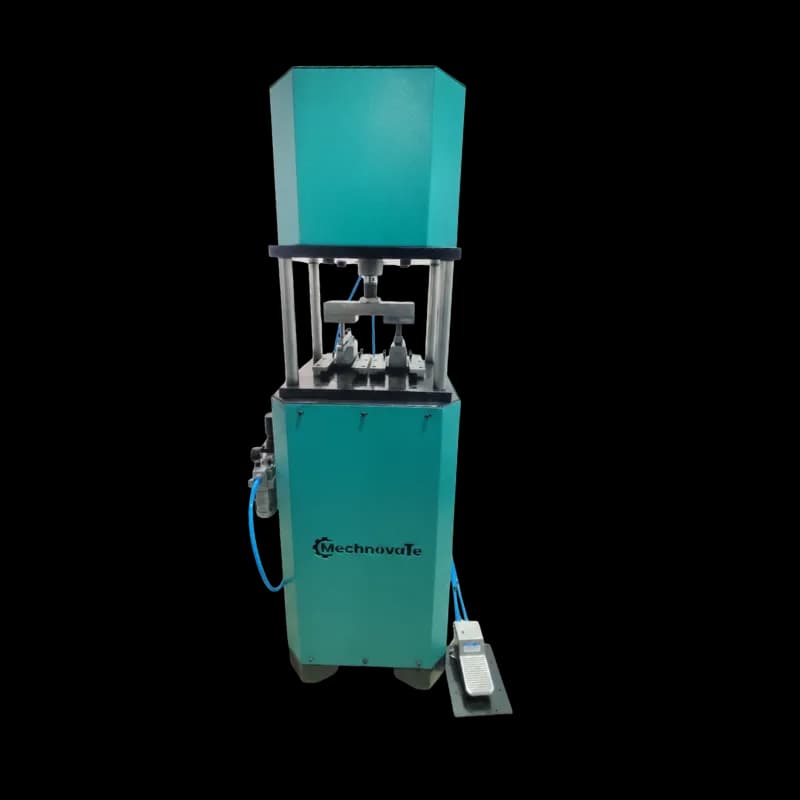
Modern automatic corner crimping machine units utilize a synchronized hydraulic system that drives three knives simultaneously into the profile. This ensures that the corner is not just held by the cleat but is mechanically fused. For fabricators working with heavy-duty profiles (above 2.0mm thickness), we recommend machines with a minimum of 5-ton crimping force to maintain compliance with IS 1285 standards for aluminium alloys.
Case Study: Boosting Output in a Sanand Fabrication Unit
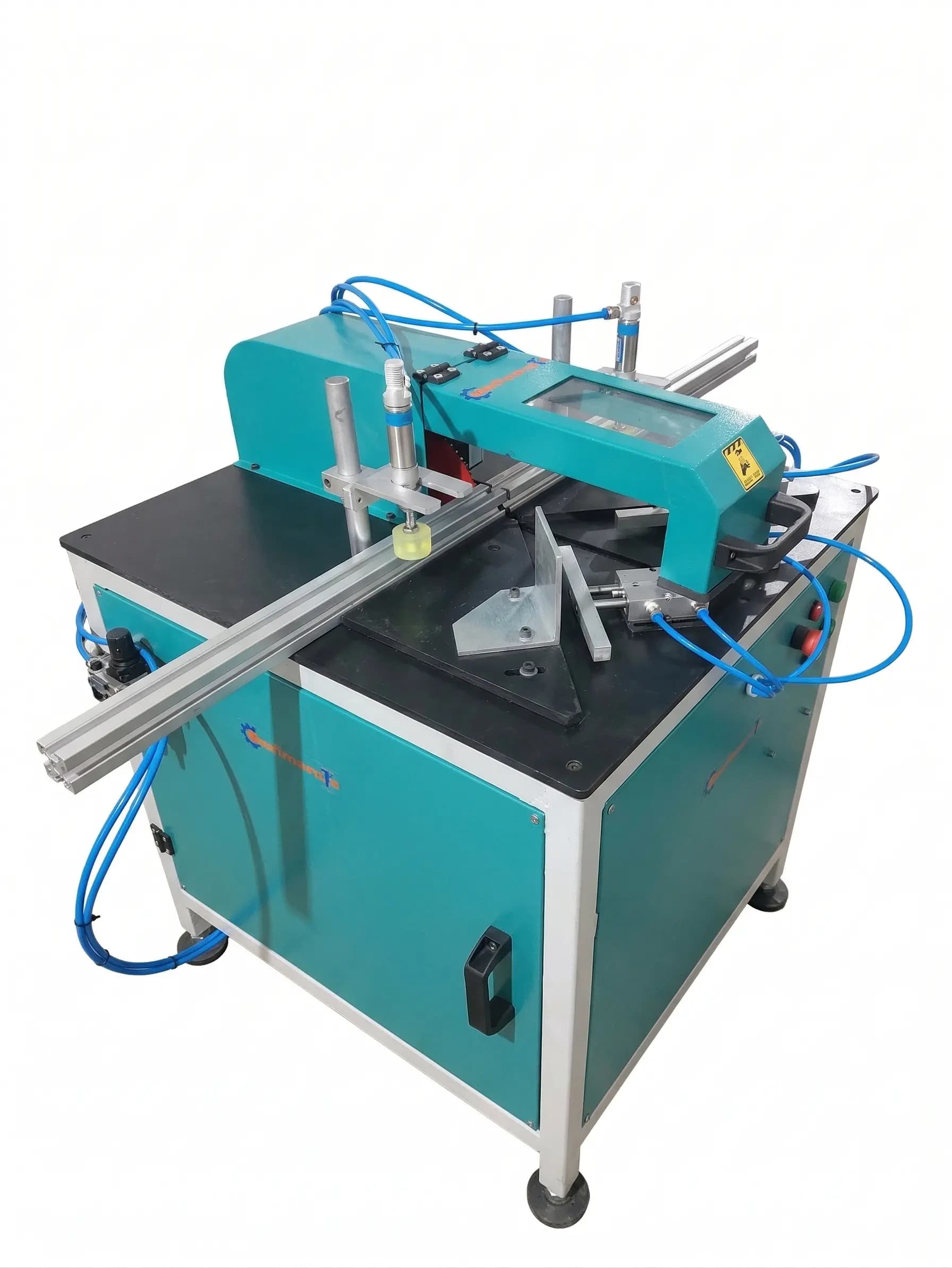
Last year, we assisted a mid-sized workshop in Sanand that was struggling with a 12% rejection rate due to misaligned miters. They were using traditional manual methods, producing roughly 15 frames per 8-hour shift. After installing a double head miter saw for aluminium profiles and an automatic crimping line, the results were transformative:
- Output Increase: Production jumped from 15 to 55 frames per day.
- Waste Reduction: Cutting errors dropped from 8% to less than 1.5%.
- Labor Efficiency: Two operators now handle what previously required five skilled craftsmen.
- Quality Consistency: 100% of the corners passed the 0.05mm feeler gauge test, ensuring a perfect airtight seal.
This transition allowed the fabricator to move from small residential repairs to a 400-unit commercial contract within six months. The aluminium window machinery manufacturers in Ahmedabad Gujarat often overlook the synergy between the cutter and the crimper; if your 45-degree cut is off by even 0.2 degrees, no crimper in the world can make that joint airtight.
Selection Guide: Automatic Aluminium Corner Crimping Machine Price Gujarat
When evaluating the cost of setting up uPVC window manufacturing unit or an aluminium line, the crimper is your most critical investment after the saw. Prices in the Gujarat market vary based on several technical variables that you must verify before purchase:
- Hydraulic System Quality: Ensure the machine uses a dedicated hydraulic pump capable of maintaining 15-20 MPa pressure without overheating during 10-hour shifts.
- Profile Height Capability: Entry-level machines often max out at 90mm. For modern curtain walls and heavy sliding doors, look for a machine that handles up to 120mm or 150mm profile heights.
- Knife Adjustability: High-end models feature millimetric scales or digital readouts for knife positioning. This is vital if you frequently switch between different profile series (e.g., 25mm to 45mm).
- Tooling Material: Insist on HCHCR (High Carbon High Chromium) steel for the crimping knives. Cheap carbon steel knives will blunt within 3 months, leading to 'burrs' and loose joints.
For those also diversifying into polymers, the uPVC window manufacturing machine selection process involves different parameters like heater plate precision, but for aluminium, it is all about mechanical force and structural alignment.
Common Pitfalls and Maintenance of Aluminium Machinery
As an engineer who has repaired hundreds of machines across India, the most common mistake I see is neglecting the hydraulic oil filtration. Contaminated oil causes the solenoid valves to stick, leading to asynchronous knife movement. This results in one side of the window being tight while the other has a visible gap. Always use ISO VG 46 or 68 grade hydraulic oil and change it every 2,000 working hours.
Another critical factor is the 'back-rest' alignment. If the back-rest is not perfectly square to the crimping knives, your frames will be 'out of square,' meaning the glass will never sit perfectly. We suggest using a heavy duty aluminium profile end milling machine to ensure all components are prepped correctly before they reach the crimping stage.
Technical Specifications for Ahmedabad Fabricators
| Feature | Standard Entry Level | Industrial Grade (Mechnovate) |
|---|---|---|
| Power Supply | 2.2 kW / 380V | 3.0 kW / 380V |
| Rated Oil Pressure | 12 MPa | 16-20 MPa |
| Air Consumption | 20 L/min | 30 L/min |
| Max. Crimping Height | 90 mm | 125 mm |
| Control System | Manual Valves | PLC Controlled Solenoids |
Selecting aluminum window machine manufacturers in Ahmedabad requires a visit to their factory. Ask to see a 'pressure hold' test—the machine should be able to maintain maximum pressure for 5 seconds without the needle flickering. This indicates a high-quality seal and valve assembly.
FAQ for Window Fabricators
1. Can one crimping machine handle both uPVC and aluminium? No. Aluminium requires high-pressure hydraulic crimping to deform the metal. uPVC windows are joined using a upvc welding machine which uses heat to fuse the corners. They are entirely different technologies.
2. What is the expected ROI for an automatic crimper in Gujarat? Given the current labor rates in Ahmedabad and Surat, most fabricators see a full return on investment (ROI) within 10 to 14 months through labor savings and the ability to charge a premium for certified airtight windows.
3. Do I need a special foundation for the machine? While these machines are heavy, a standard 6-inch reinforced concrete floor is sufficient. However, we recommend using anti-vibration pads to maintain the precision of the knife alignment over long-term use.
Get more articles like this
Follow Mechnovate on Google to see our guides in Google Discover & News