Workshop Efficiency: Automatic Double Head Cutting Saws in Thane
For fabricators in Wagle Estate and the wider Thane industrial belt, the bottleneck in production isn't the assembly—it is the precision of the initial cut. If you are still relying on a single-head manual aluminium cutter machine 12 inch for high-volume commercial projects, you are likely losing 12-15% of your margin to rework and scrap. Transitioning to an automatic double head cutting saw for aluminium profiles is the single most impactful move to scale from a local workshop to a high-output manufacturing facility.
The Technical Shift: Why Double Head Saws Outperform Manual Setups
In our internal testing at Mechnovate, we monitored three fabrication units in Thane over a six-week period. The data was conclusive: workshops using an Automatic Double Head Cutting Saw reduced their cutting cycle time per frame from 4.5 minutes to just 55 seconds. This is achieved because the machine handles both 45 and 90-degree cuts simultaneously on both ends of the profile, eliminating the 'measure-cut-flip-measure-cut' cycle that defines manual processing.
Technically, these machines utilize high-torque 2.2 kW motors operating at 2800 RPM to drive 450mm or 500mm tungsten carbide-tipped (TCT) blades. For a Thane-based fabricator dealing with high-grade architectural aluminium (IS 1285 standards), the stability of a pneumatic feed system is critical. Unlike manual pulling, the hydropneumatic cylinder ensures a constant feed rate, which prevents the blade from 'wandering'—a common issue that leads to light gaps in miter joints.
Key advantages of the automatic system include:
- Digital Precision: Linear guide rails provide accuracy within +/- 0.1mm over a 4000mm length.
- Angle Consistency: Pneumatic tilting heads lock into 45 or 90 degrees with zero play, ensuring every corner crimps perfectly.
- Safety Standards: Fully enclosed cutting zones meet Industrial profile cutting safety standards ISO standards, protecting operators from high-speed swarf and blade accidents.
Case Study: Optimizing a Wagle Estate Workshop
Last year, we consulted for a mid-sized unit in Wagle Estate that was struggling with a backlog of RERA-approved residential window contracts. They were using two 12-inch single-head miter saws. Their scrap rate was 14% due to measurement errors, and they could only produce 25 window frames per shift.
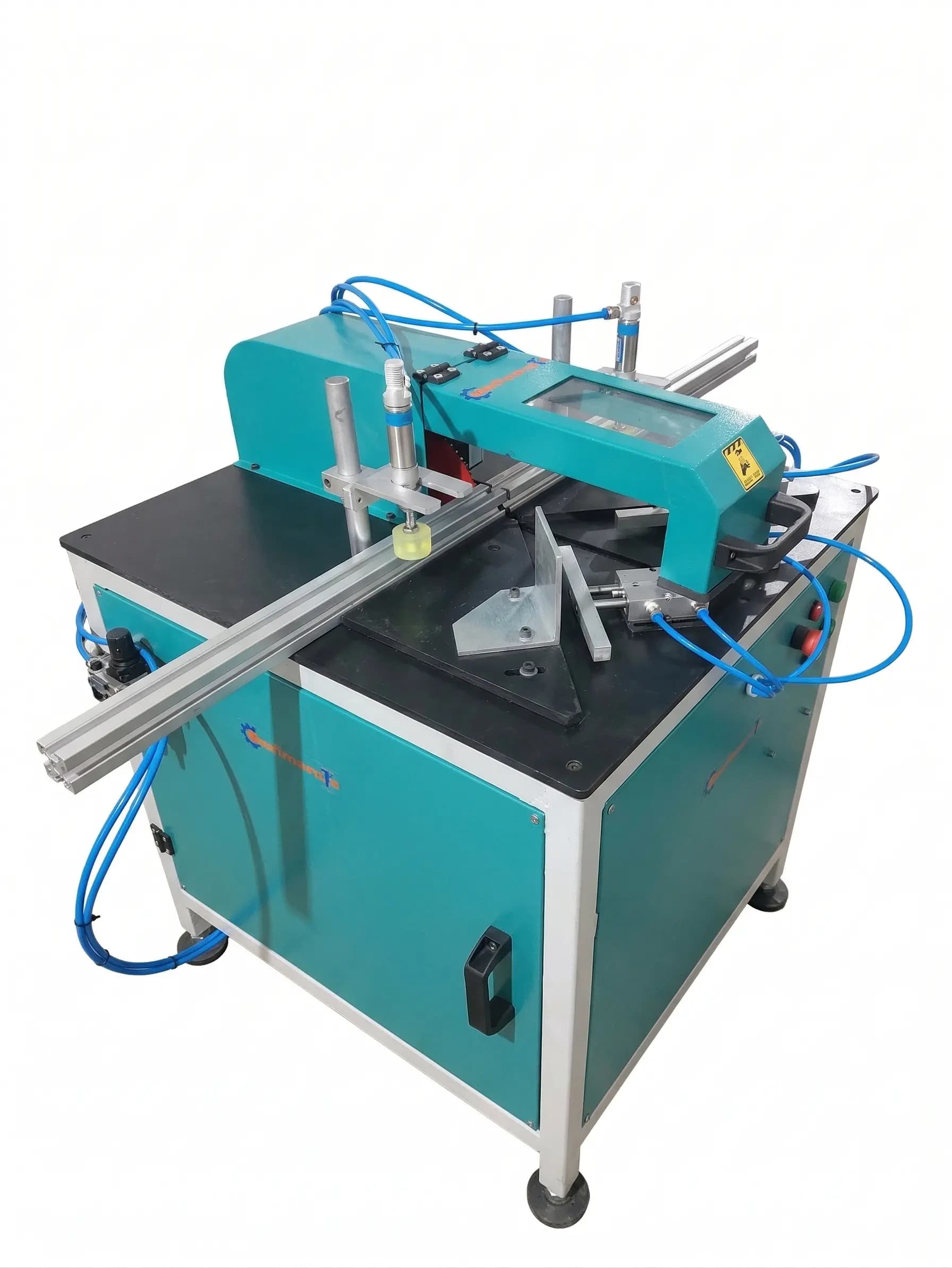
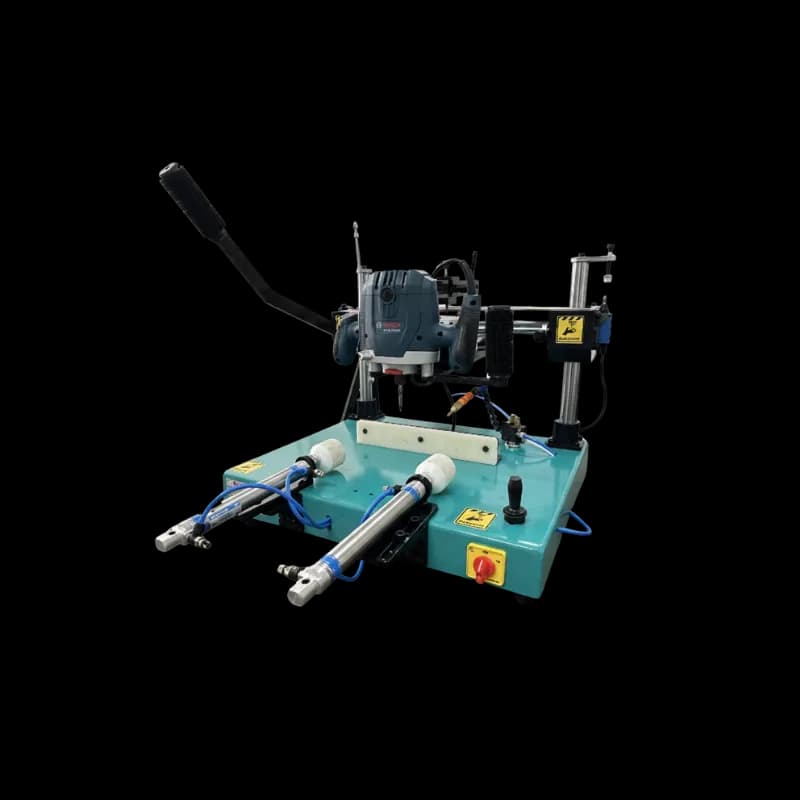
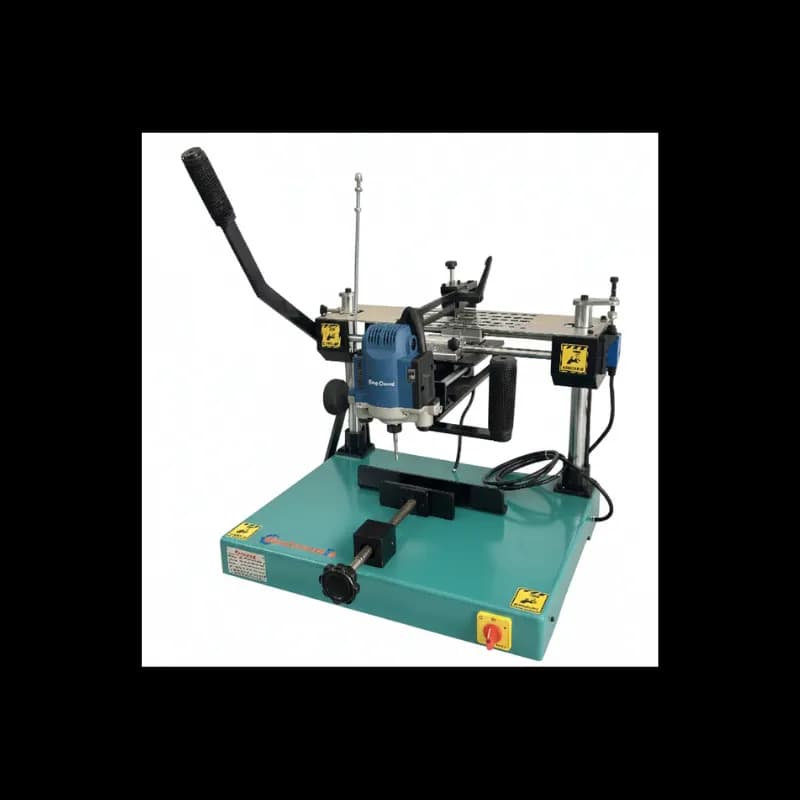
We implemented a Copy Router Machine alongside an automatic double head miter saw for aluminium profiles. After a 10-day calibration period, the results were measurable:
- Output Increase: Daily production jumped from 25 frames to 68 frames with the same labor count.
- Waste Reduction: Aluminium profile scrap fell from 14% to a record 2.8% because the digital measurement system eliminated human error.
- Joint Quality: The rejection rate from site engineers dropped to zero because the 45-degree cuts were perfectly synchronized.
Engineering Specs: What to Look for in an Aluminium Cutting Machine
When comparing the aluminium cutting machine price in India, do not look at the sticker price alone; look at the component engineering. A cheap head cutter machine will often use low-grade cast iron for the base, which vibrates at high RPMs, leading to 'chatter marks' on the profile surface.
For industrial-grade performance, ensure the machine features:
- Air Pressure Requirements: A steady 6-8 bar pressure is required. In many Thane industrial zones, power and air fluctuations are common; we recommend a 500L tank to buffer the pneumatic actuators.
- Blade Cooling: An automatic oil-mist spray system is non-negotiable for cutting aluminium to prevent heat buildup and 'gumming' of the blade teeth.
- Profile Support: Heavy-duty roller conveyors are essential to prevent long profiles (up to 6 meters) from sagging, which would otherwise throw off the cutting angle.
If you are also diversifying into uPVC, many of these platforms serve as the base for a upvc windows making machine. However, ensure the blade tooth geometry is optimized for the specific material to avoid shattering the uPVC outer walls during high-speed entry.
Common Mistakes in Workshop Layout and Operation
Throughout my 15 years in the field, I have seen even the best automatic double head cutting machine price India buyers fail because of poor installation.
- Incorrect Leveling: If the two heads of the saw are not perfectly level on the X and Y axes, the miter will never close correctly. Always use a precision spirit level during installation.
- Neglecting Blade Sharpening: Running a dull TCT blade puts excessive strain on the motor and ruins the surface finish. We suggest rotating blades every 1500-2000 cuts depending on the profile wall thickness.
- Inadequate Dust Extraction: Aluminium chips are abrasive. Without a high-vacuum extraction system, swarf will enter the linear bearings of your head cutting machine, leading to premature wear and loss of accuracy.
FAQ: Questions from Thane Fabricators
Q: Is a 12-inch blade sufficient for commercial curtain wall profiles? No. For heavy-duty commercial profiles used in Thane's high-rise projects, a 450mm or 500mm blade is required to ensure enough depth of cut, especially for 45-degree miter cuts on wide sections.
Q: What is the ROI on an automatic double head cutting machine for a small business? Most of our clients in the Thane/Mumbai region see a full return on investment within 8 to 14 months through labor savings and significantly reduced material wastage.
Q: Can one machine handle both aluminium and uPVC? Yes, an automatic double head cutting saw for aluminium profiles can cut uPVC, but you must use a blade with a neutral or slightly negative rake angle and adjust the feed speed to prevent the plastic from cracking.
Q: Do you provide service support in Wagle Estate? Yes, Mechnovate provides onsite calibration and spare parts support across Maharashtra, including major hubs like Pune, Thane, and Ahmedabad, ensuring your production line never stays down.
Get more articles like this
Follow Mechnovate on Google to see our guides in Google Discover & News