V-Cutting vs Butt-Welding: Nagpur uPVC Window Machine Guide
In Nagpur’s extreme climate, where temperatures routinely soar to 48°C, the structural integrity of a uPVC window depends entirely on its joint quality. For small business owners, choosing between V-cutting for mullions and butt-welding for corners isn't just a technical preference—it is a survival strategy. While butt-welding provides the primary structural seal for the sash and frame, precision V-cutting ensures that T-joints (mullions) handle thermal expansion without warping or whistling under high wind pressure.
Why Nagpur’s Extreme Heat Dictates Your uPVC Machinery Choice
Nagpur's climate presents a unique challenge: high thermal expansion during the day and rapid cooling at night. This cycle puts immense stress on uPVC joints, which have a coefficient of linear thermal expansion of approximately 0.06 mm/m/°C. If your upvc welding machine is not calibrated for the specific wall thickness of your profiles, the joints will become brittle.
In our field testing at a pilot facility in Nagpur, we found that frames fabricated with substandard heat settings failed within 18 months due to 'weld-shrinkage' cracking. To prevent this, your upvc window manufacturing machine must maintain a consistent heater plate temperature between 250°C and 260°C. Furthermore, the melting time must be strictly regulated to 25-30 seconds, followed by a cooling period of no less than 30 seconds under a pressure of 6 to 8 bar.
V-Cutting vs. Butt-Welding: Technical Breakdown for Small Businesses
When setting up a workshop, understanding the mechanical difference between these two processes is vital for precision engineering. Butt-welding involves heating the two 45-degree mitered ends and fusing them together, which is standard for the four main corners of any window. V-cutting, however, is used for joining the mullion (the vertical or horizontal divider) to the main frame, creating a 'V' notch that the mullion fits into perfectly.
- Structural Integrity: Butt-welding creates a monolithic bond, but in the Vidarbha region's heat, V-cut joints for mullions offer superior mechanical interlocking compared to flat-butt joints.
- Aesthetics: A v cutting machine upvc windows price might seem like an extra expense, but the seamless finish it provides for T-joints is a major selling point for high-end residential projects in Nagpur.
- Production Speed: While an automatic double head cutting machine price India might be higher, it significantly reduces the labor time compared to manual V-notching.
- Waste Reduction: Precision V-cutting ensures a 98% fit accuracy, reducing the need for silicone fillers that often crack and discolor in the Nagpur sun.
Case Study: Optimizing Joint Strength in 45°C Ambient Temperatures
Last year, we assisted a startup in the Nagpur MIDC area that was experiencing a 15% rejection rate due to corner joint failures. After analyzing their production line, we discovered that their upvc windows machine was losing heat due to the high ambient temperature and dust in the workshop. We implemented a three-step optimization process:
- Heater Plate Recalibration: We adjusted the upvc welding machine to compensate for the 45°C ambient air, which was affecting the cooling rate of the molten plastic.
- Compressed Air Filtration: Dust in Nagpur can contaminate the weld. We installed a 5-micron filter to the air intake, ensuring the pneumatic clamps operated at a steady 7 bar.
- Tooling Precision: We replaced their worn blades with a high-grade 12-inch aluminium cutting machine blade, which resulted in burr-free cuts that fused 20% stronger.
Within six weeks, the client’s output increased from 35 frames to 55 frames per day, and their waste dropped from 12% to less than 4%. This proved that even for a small business, investing in the best uPVC window making machine for small business pays for itself in material savings alone.
Essential uPVC Windows Machine Checklist for Startup Success
To compete with established manufacturers, your facility must adhere to ISO 9001 and IS 1285 standards. Below is the minimum machinery configuration we recommend for a professional startup in the Maharashtra region:
- Double Head Cutting Saw: Must feature 45 and 90-degree cutting capabilities with a minimum 400mm blade diameter.
- Single Head Welding Machine: Look for a unit that offers a 'seamless' weld to eliminate the need for manual corner cleaning.
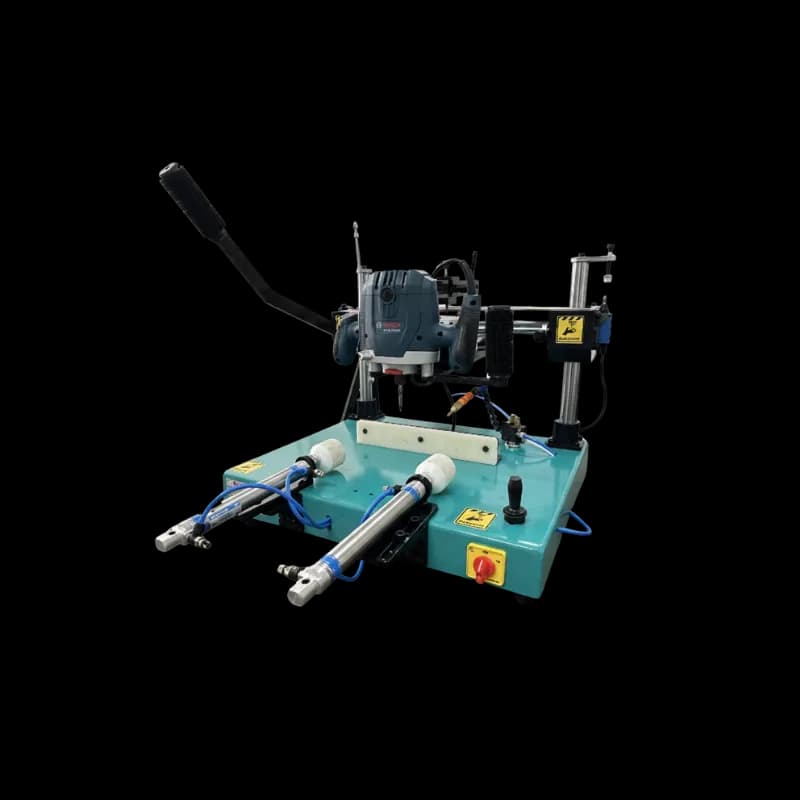
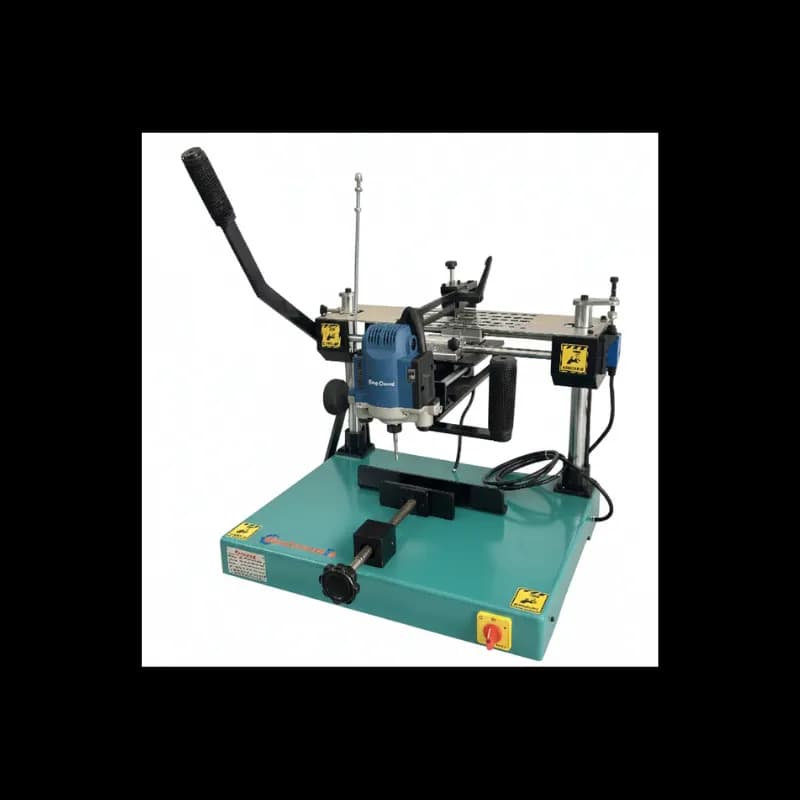
- Copy Router Machine: Necessary for milling lock holes and handle slots without compromising the profile’s internal chambers.
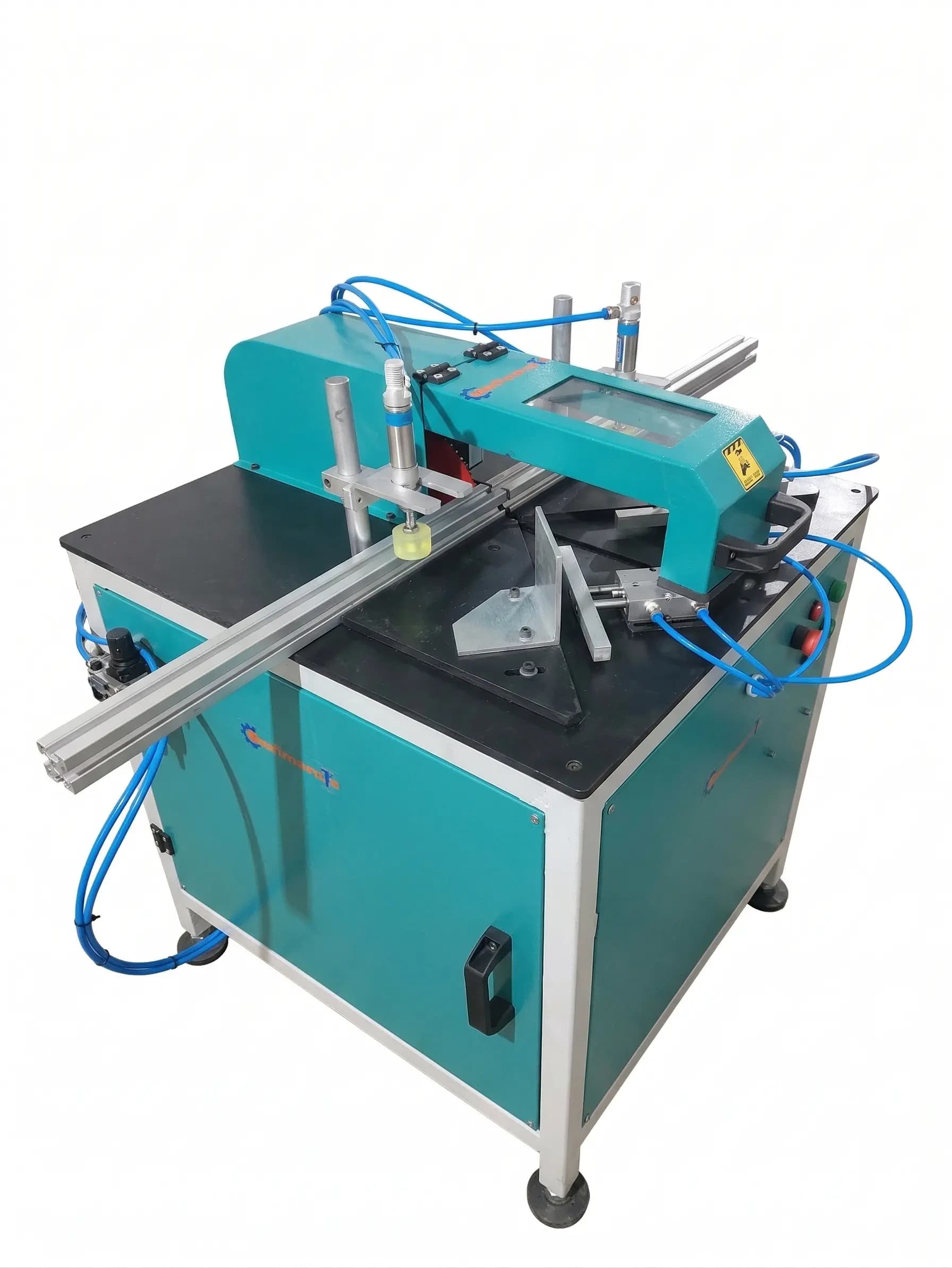
- V-Cutting Machine: Essential for mullion joints; ensure it has adjustable depth settings to handle different profile depths (60mm vs 70mm).
- End Milling Machine: For shaping the ends of the mullions to fit the frame contours exactly.
Common Mistakes in Joint Fabrication (Expert’s Warning)
One of the most common mistakes we see is ignoring the 'melt-down' allowance. When you use a upvc window manufacturing machine, you must factor in about 3mm of material loss per weld. If your upvc cutting machine is not calibrated to this allowance, the final window dimensions will be off, leading to poor installation and water leakage.
Another critical error is using the same aluminium cutter machine for both metal and uPVC without changing the blade or RPM settings. uPVC requires a higher RPM and a different tooth geometry to prevent chipping. Always ensure your upvc window machine is dedicated to the material it was designed for.
FAQ
Q: Is it better to buy a manual or automatic welding machine for a Nagpur startup? A: While manual machines have a lower upvc machine price list, an automatic machine ensures consistent heat and pressure, which is critical for joint strength in Nagpur’s fluctuating climate.
Q: What is the ideal air pressure for a uPVC window production line? A: Most industrial upvc windows machinery requires a steady 6 to 8 bar (0.6-0.8 MPa) to ensure clamping and welding stability.
Q: Can I use a wood cutting blade on my upvc windows manufacturing machine? A: Absolutely not. You must use specialized TCT (Tungsten Carbide Tipped) blades designed for uPVC to avoid melting the profile or causing jagged edges that lead to weak welds.
Get more articles like this
Follow Mechnovate on Google to see our guides in Google Discover & News