uPVC Window Plant Cost & Layout Guide: Mumbai Workshop Optimization
In Mumbai’s industrial hubs like Sakinaka, Goregaon, and Rabale, floor space is the most expensive raw material. If you are planning to scale your production, you do not need a 5,000 sq. ft. warehouse; you need a precision-engineered layout and the right uPVC window manufacturing machine configuration. For high-volume output of 60-80 frames per 8-hour shift, an automatic line is no longer optional—it is a necessity to maintain the ±0.2mm tolerances required by modern developers. This guide breaks down the actual automatic uPVC window plant cost India and provides a blueprint for optimizing throughput in constrained urban workshops.
Realizing High-Volume Output: Automatic uPVC Window Plant Cost India
A common mistake I see among Mumbai fabricators is under-budgeting for the air delivery system. While the Automatic Double Head Cutting Machine is the heart of your plant, it requires a stable 6-8 bar pressure to ensure the pneumatic clamps don't slip during a 45-degree cut. A professional-grade automatic plant in 2024 typically ranges from ₹18 Lakhs to ₹35 Lakhs, depending on the level of automation in the welding and cleaning stages.
Here is a breakdown of the core investment components:
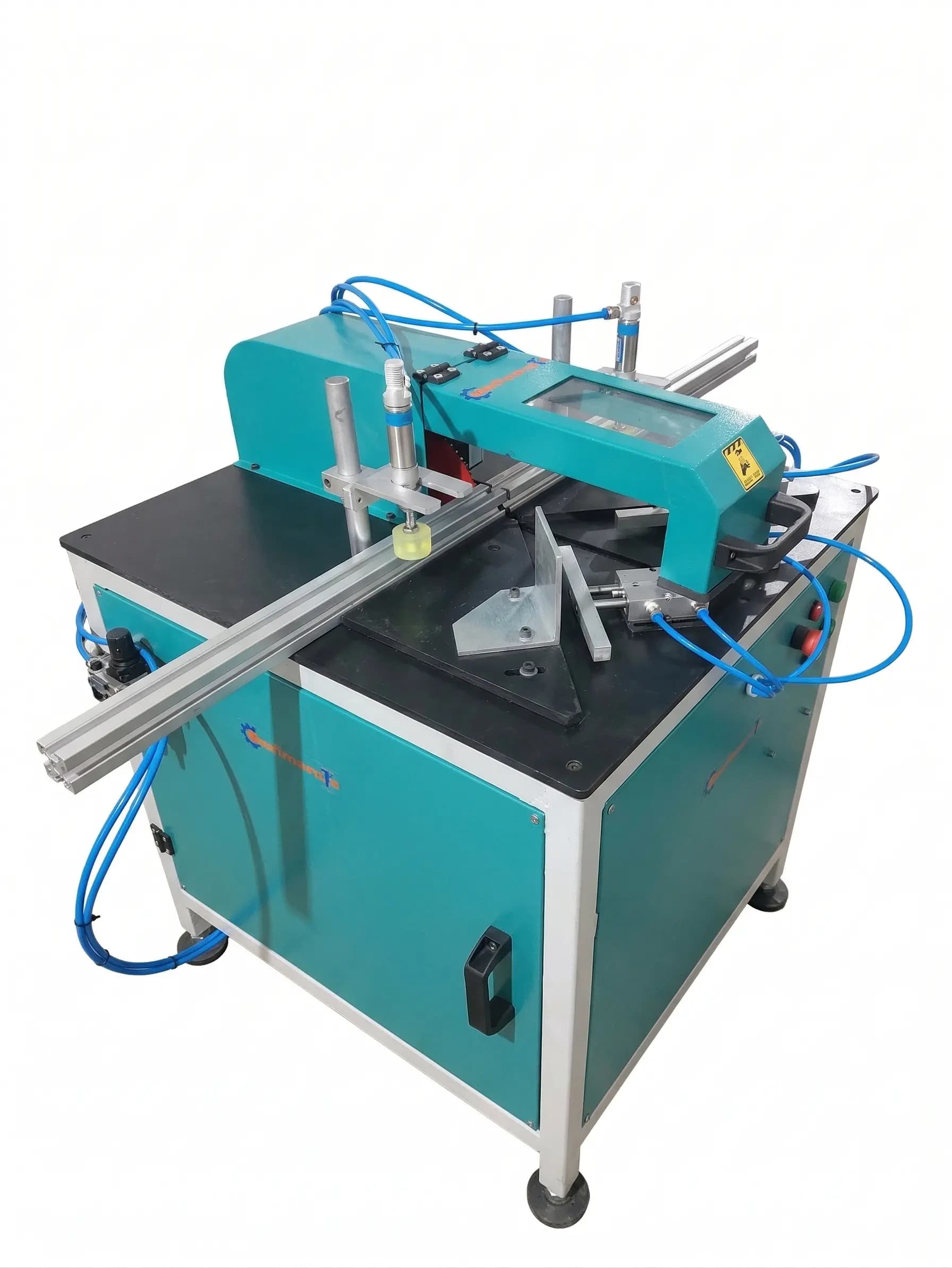
- High-Precision Cutting: An automatic double head cutting machine price India fluctuates based on the blade diameter (450mm vs 500mm) and the presence of a digital display for length positioning. Expect to pay between ₹6L and ₹10L for a reliable CNC-integrated unit.
- Welding Technology: For high-volume production, a Four-Head Seamless Welding Machine is essential. It eliminates the need for manual corner cleaning on the outer face, saving roughly 4 minutes per frame.
- Corner Processing: A CNC Corner Cleaning Machine ensures that even with high-speed production, the structural integrity of the joint meets IS 1285 standards. This typically costs between ₹5L and ₹9L.
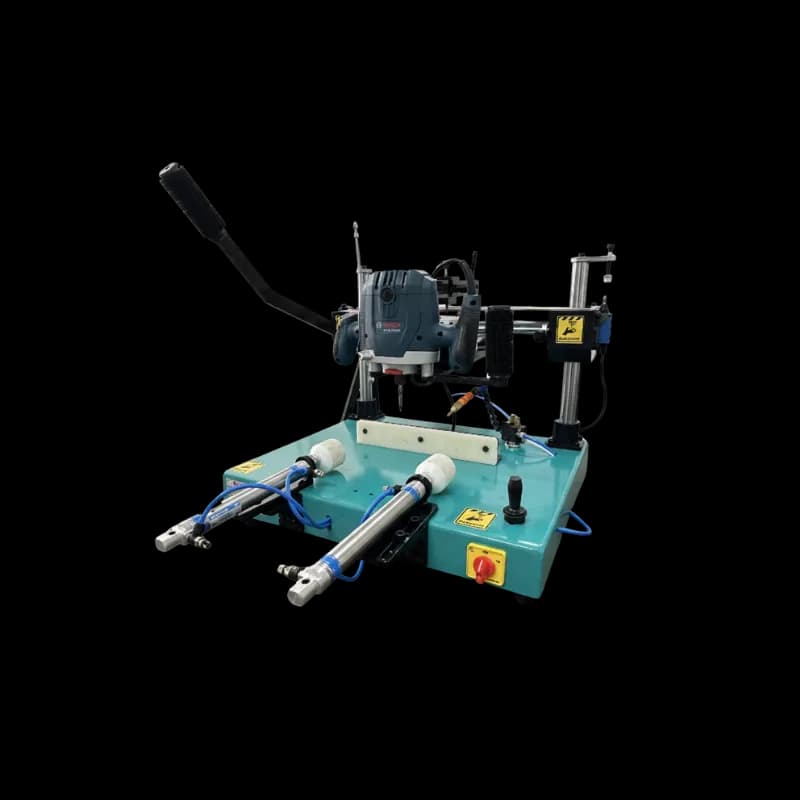
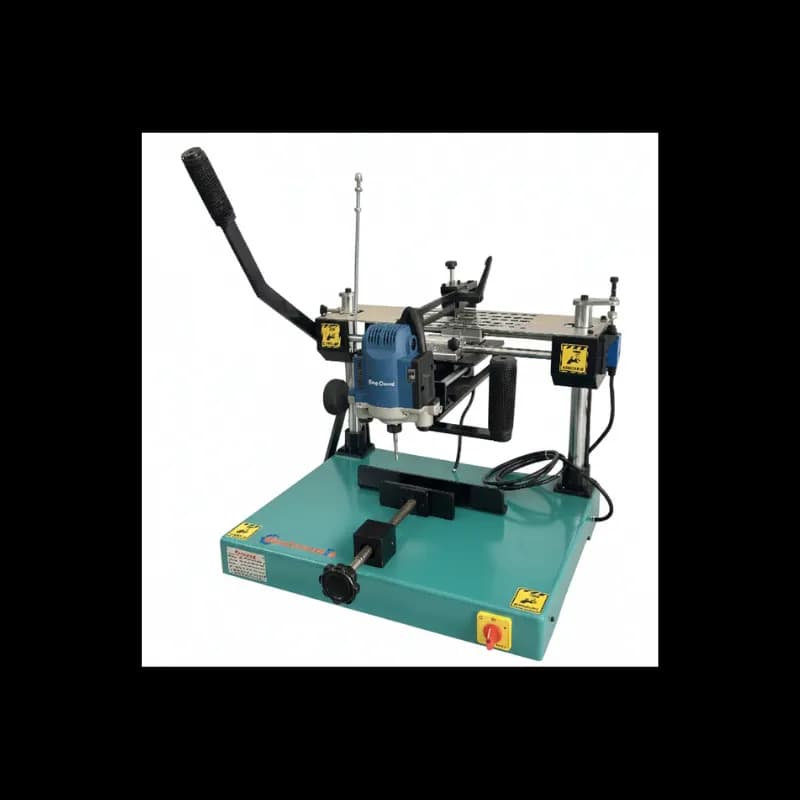
- Ancillary Equipment: Do not overlook the copy router machine, end milling machine, and glazing bead saw, which add approximately ₹3L to the total plant cost.
The Mumbai Layout: Strategic Floor Planning for a uPVC Window Manufacturing Machine
In a 1,200 sq. ft. Mumbai workshop, a linear layout often fails because it creates bottlenecks at the welding station. In our 15 years of workshop consulting, we have found that a 'U-shaped' flow is 22% more efficient for uPVC machinery setups. The material enters at one end of the 'U' for the aluminium profile cutting machine or uPVC cutter and exits as a finished, glazed product at the other end.
To optimize your layout, follow these technical constraints:
- The 3-Meter Rule: Ensure there is at least 3,500mm of clearance on both sides of your double head cutting machine to accommodate standard 6-meter profile lengths.
- Pneumatic Ring Main: Avoid long rubber hoses. Install a fixed 1-inch PPR or aluminum ring main around the workshop perimeter with drop-down points for each upvc windows machine to prevent pressure drops.
- Waste Management: Position your uPVC window manufacturing machinery near the scrap collection bins. In our recent Pune facility audit, we reduced floor clutter by 30% simply by integrating under-table scrap chutes.
Engineering Specifications and Precision Standards
To compete with Tier-1 manufacturers, your output must adhere to global standards like BS EN 12020. This requires your upvc windows making machine to be calibrated for thermal expansion. Mumbai's humidity can also impact the solenoid valves in your pneumatic systems. We recommend using a refrigerated air dryer to prevent moisture from corroding the internal seals of your head cutting machine.
Technical benchmarks for your QC team:
- Cutting Accuracy: Length tolerance must be ±0.5mm; angle tolerance must be ±0.1°.
- Welding Temperature: 245°C to 260°C depending on the profile brand (e.g., Deceuninck, Kommerling).
- Cooling Time: Minimum 25 seconds before the frame is moved to the cleaning station to prevent joint misalignment.
Case Study: Scaling a 1,200 sq. ft. Workshop in Sakinaka
Last year, we worked with a fabricator in Sakinaka who was struggling with a 15% wastage rate using manual machinery. They upgraded to an automatic double head cutting saw for aluminium profiles and uPVC, paired with a CNC corner cleaner. Over 6 weeks, we implemented a digital optimization software that synced with their uPVC windows machinery.
The results were measurable:
- Waste Reduction: Dropped from 15% to 3.2% by utilizing off-cut management software.
- Labor Efficiency: Increased output from 15 frames/day to 55 frames/day with the same headcount.
- Quality Consistency: Rejection rate at the installation site dropped to nearly zero because of the precision of the automatic welding cycle.
Avoiding Fatal Errors in uPVC Window Machinery Selection
Many new entrants are tempted by the low aluminium cutter machine price of unbranded imports. However, as an engineer, I warn you: the hidden cost lies in the lead time for spare parts. If a PLC board fails on your upvc welding machine during the peak monsoon renovation season, a 3-week wait for a part from overseas will cost you more than the machine itself.
What to watch out for:
- Motor Insulation: Ensure motors are Class F insulated to handle the voltage fluctuations common in Mumbai industrial estates.
- Linear Guides: Look for HIWIN or equivalent square rail guides rather than round shafts for long-term accuracy in your upvc window manufacturing machine.
- Safety Standards: Every cutting machine automatic or manual must have dual-hand safety triggers and emergency stop loops that kill the pneumatic feed instantly.
Frequently Asked Questions from Fabricators
Q: Can I use an aluminium cutting machine 12 inch for uPVC profiles? A: While it is possible for small-scale DIY, professional uPVC fabrication requires a 450mm or 500mm blade to handle multi-chamber profiles without cracking the internal webs. An aluminium profile cutting machine is designed for different RPMs; uPVC requires a specific feed rate to prevent melting.
Q: What is the power requirement for a fully automatic uPVC window manufacturing unit cost? A: A standard automatic line requires a 15-20 kW connected load. We recommend a 15 HP screw compressor with a 500-liter tank to maintain the 8-bar pressure required by the multi-head welders.
Q: Is it better to buy a portable uPVC window making machine price list for a startup? A: Portable machines are excellent for site-work and repairs. However, for a production unit in Mumbai looking to supply developers, they lack the clamping rigidity needed for repeatable accuracy. Investing in a stationary upvc window machine is always better for long-term ROI.
Get more articles like this
Follow Mechnovate on Google to see our guides in Google Discover & News