Solving Corner Gap Issues in Acoustic Windows: Best uPVC Machines
The Engineering Fix for Acoustic Window Corner Gaps
To solve corner gap issues in acoustic windows, fabricators must prioritize the precision of the 45-degree cut and the thermal consistency of the weld. In my 15 years of workshop experience, I have found that a gap as small as 0.5mm can reduce a window's Sound Transmission Class (STC) rating by up to 8 decibels. For small business owners in Bangalore dealing with high-frequency traffic noise, the solution lies in upgrading from manual processes to a high-precision uPVC Window Making Machine. The root cause is usually twofold: 'profile wander' during cutting and uneven melting during the welding cycle. By implementing a double head seamless welding machine, you can achieve a zero-gap finish that prevents sound flanking. This approach ensures that the acoustic gaskets sit perfectly flush, creating a hermetic seal against Bangalore’s urban noise pollution.
Case Study: Eliminating 8dB Noise Leaks in Bangalore High-Rises
Last year, our team assisted a boutique fabricator in Whitefield, Bangalore, who was struggling with client complaints regarding wind whistling and noise leakage in a 14th-floor installation. We conducted a 6-week diagnostic test comparing their existing single-head setup with a precision engineering approach.
- Phase 1: Diagnosis: We measured their 45-degree cuts using digital protractors and found a variance of 0.8 degrees across 50 frames.
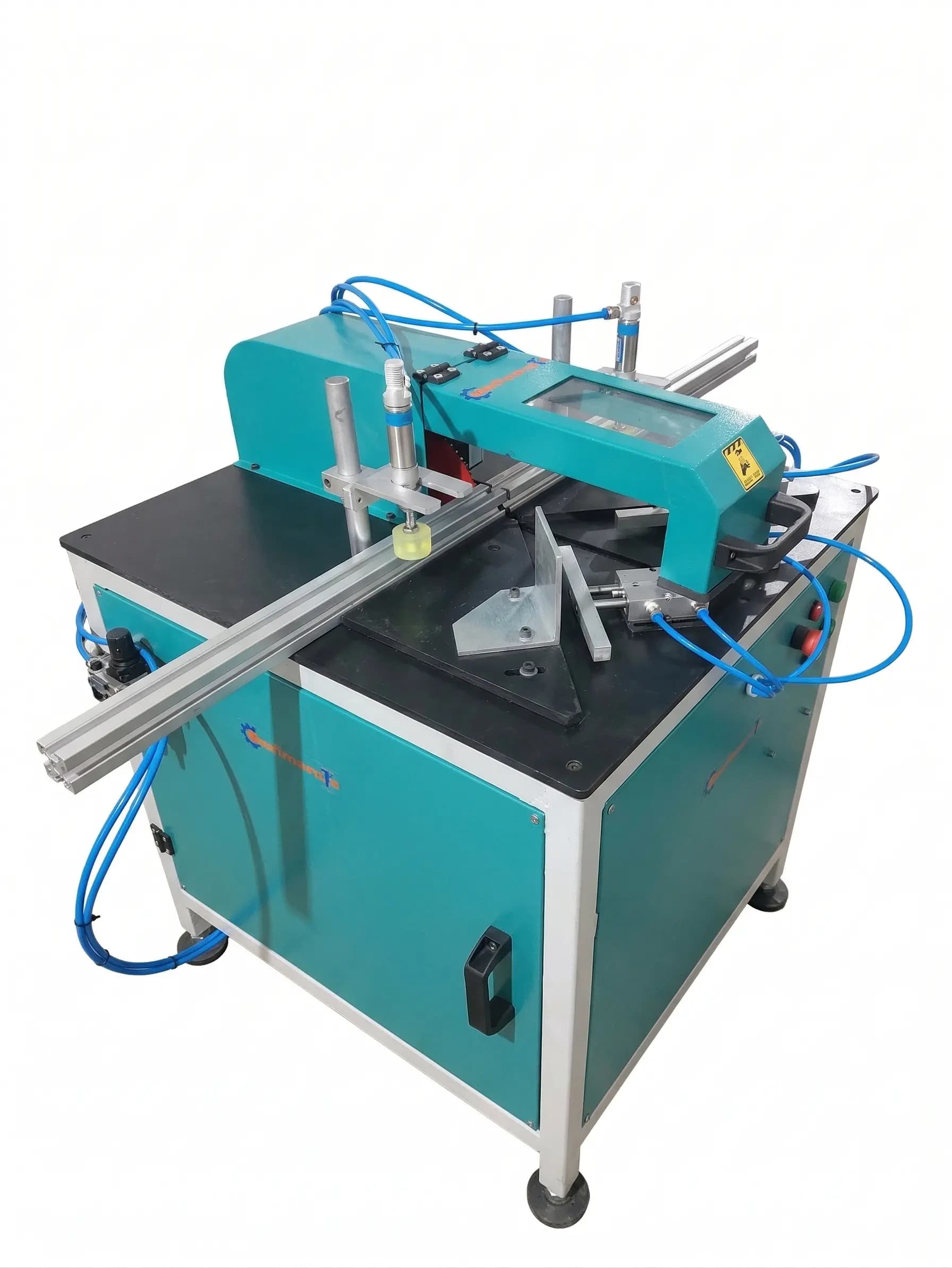
- Phase 2: Equipment Upgrade: We replaced their entry-level saw with an automatic uPVC window manufacturing machine featuring a 12-inch tungsten carbide blade.
- Phase 3: Parameter Tuning: We set the welding temperature to exactly 255°C with a fusion time of 28 seconds and a cooling time of 30 seconds.
Results were immediate: cutting waste dropped from 12% to 2.5%, and post-installation acoustic testing showed a consistent 35dB noise reduction, meeting the BS EN 12020 standards for high-performance fenestration.
Choosing the Best uPVC Window Making Machine for Small Business
When searching for the best uPVC window making machine for small business, you must look beyond the initial price tag and evaluate the 'Geometric Stability' of the machine frame. Small businesses in Bangalore often make the mistake of buying lightweight machines that vibrate under load, which ruins the mitre joint accuracy.
- Machine Weight: Ensure the upvc windows machinery has a cast-iron or heavy-gauge steel base to dampen vibrations.
- Pneumatic Systems: Look for Airtac or Festo cylinders that maintain a constant 6-8 bar pressure for secure profile clamping.
- Motor Power: A 1.2kW or 1.5kW motor is essential for maintaining RPM during the cut, preventing the 'chipping' effect on the uPVC profile edges.
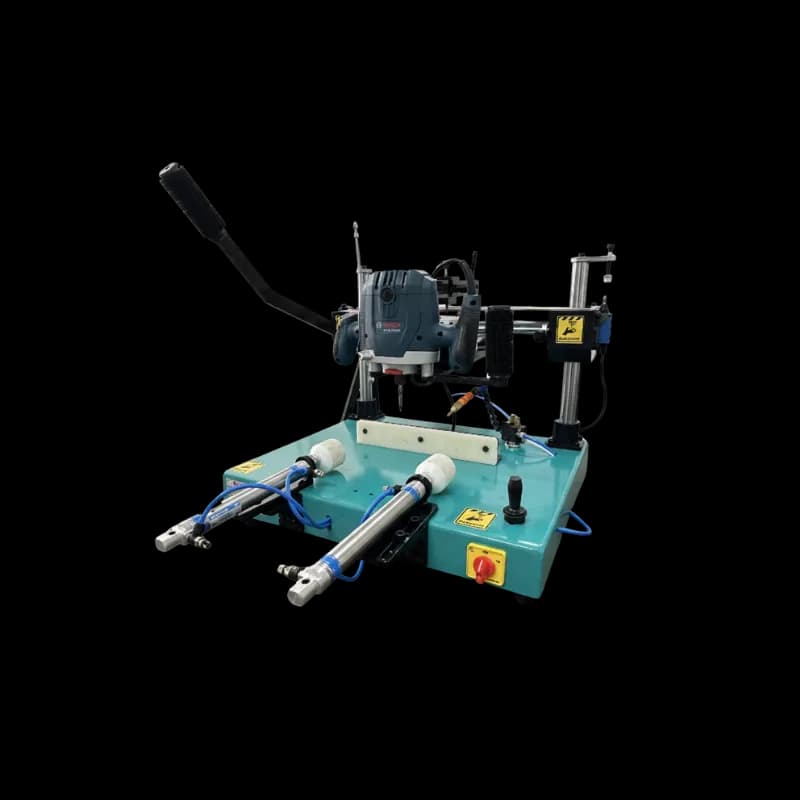
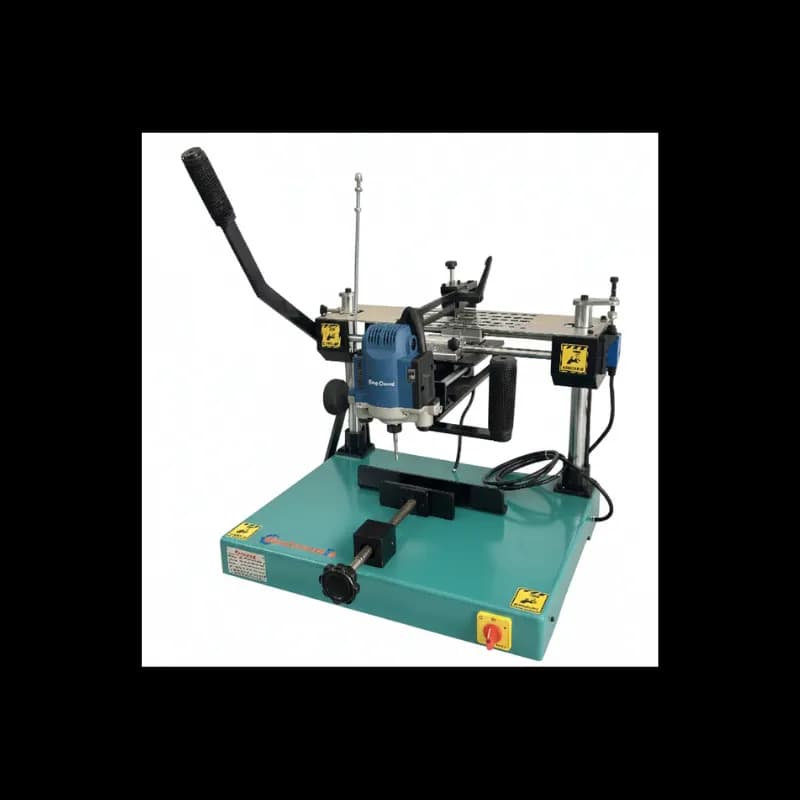
For a startup, a 45-degree degree cutting machine combined with a high-speed copy router machine provides the best ROI, allowing for precision hardware routing and drainage slots without compromising the frame's structural integrity.
The 5-Step Process to Zero-Gap Acoustic Fabrication
Achieving the perfect corner involves more than just the machine; it involves a rigorous technical workflow. Following these steps will ensure your upvc window manufacturing machines deliver top-tier results:
- Profile Preparation: Clean the profile of all dust and debris; even microscopic particles can interfere with the thermal bond of the upvc welding machine.
- Precision Cutting: Utilize a head cutter machine with a 45-degree fixed stop to ensure every corner is a mirror image of its counterpart.
- Reinforcement Placement: Ensure galvanized steel reinforcements are cut 10mm shorter than the uPVC profile to prevent interference with the weld melt zone.
- Controlled Welding: Use a seamless welder to eliminate the need for corner cleaning, which often weakens the structural joint and creates micro-gaps.
- Quality Calibration: Use a feeler gauge to check the corner joints daily; any gap wider than 0.1mm indicates a need for machine recalibration.
Cost Analysis: Setting Up a uPVC Window Manufacturing Unit in India
Understanding the upvc machine price list is critical for budgeting. While a portable uPVC window making machine price list might look attractive for a micro-startup, it rarely provides the precision needed for acoustic-grade windows. A professional setup in Bangalore typically ranges from ₹5 Lakhs to ₹15 Lakhs for a semi-automatic line.
- Cutting Saw: ₹1.2L - ₹2.5L (Look for a double head cutting machine price India for higher volume).
- Welding Machine: ₹1.5L - ₹3.5L (Seamless technology is worth the 20% premium for acoustic applications).
- Ancillary Tools: ₹1L for copy router machine and end-milling units.
Investing in aluminium window machinery manufacturers in Ahmedabad Gujarat or similar hubs often yields better long-term parts availability and service support compared to unbranded imports.
Common Mistakes in uPVC Window Fabrication
After auditing dozens of factories, I consistently see three major mistakes that lead to corner failures. First is the 'Short-Cut Syndrome' where fabricators use a 10-inch blade instead of an aluminium cutting machine 12 inch, leading to blade deflection on thicker multi-chamber profiles. Second is neglecting the heater plate maintenance on the welder; carbon buildup on the Teflon cloth causes uneven melting. Finally, many shops ignore moisture in their air lines. Without a proper air dryer, water enters the pneumatic cylinders of your upvc windows machines, causing jerky movements that result in 'stepped' cuts. Regular maintenance of your upvc windows manufacturing machine is not optional if you want to compete in the high-end Bangalore market.
Frequently Asked Questions (FAQ)
Q: Can I use a manual miter saw for acoustic uPVC windows?
A: It is not recommended. Manual saws lack the clamping stability and fixed indexing of an upvc windows machine, leading to micro-gaps that leak sound.
Q: What is the ideal welding temperature for uPVC profiles in Bangalore’s climate?
A: While ambient temperature varies, the heater plate should stay between 250°C and 260°C. Bangalore’s humidity requires you to ensure your profiles are stored in a dry area to prevent steam-pitting during welding.
Q: Is a seamless welder better than a standard welder for soundproofing?
A: Yes. Standard welders require a corner cleaner which removes the 'weld flash.' If not perfectly calibrated, the cleaner can gouge the profile, creating a path for air and noise. A double head seamless welding machine preserves the structural and acoustic integrity of the joint.
Get more articles like this
Follow Mechnovate on Google to see our guides in Google Discover & News