Seamless uPVC Welding: Is it Worth the Investment for Mumbai?
For fabricators targeting Mumbai’s luxury high-rise market, the answer is a definitive yes: a Double Head Seamless Welding Machine is no longer a luxury but a technical necessity. Standard welding leaves a 2mm to 3mm bead that requires manual grooving or CNC cleaning, often leaving a visible scar that weakens the profile’s structural integrity against Mumbai’s 150+ km/h wind speeds at high altitudes. Seamless technology eliminates the 'clean-up' phase entirely by tucking the melt inside the chamber, resulting in a joint that is 25% stronger and aesthetically superior for premium uPVC windows manufacturing.
The Mumbai High-Rise Challenge: Aesthetics vs. Structural Integrity
In our recent consultancy for a Tier-1 developer in Worli, we observed that standard uPVC window machinery often failed the 'aesthetic stress test' of high-end clients. Traditional welding creates a flash that must be milled off. In the process, the protective UV-stabilized layer of the uPVC profile is often compromised. For a building facing the Arabian Sea, this lead-edge thinning is where salt-mist corrosion and yellowing begin.
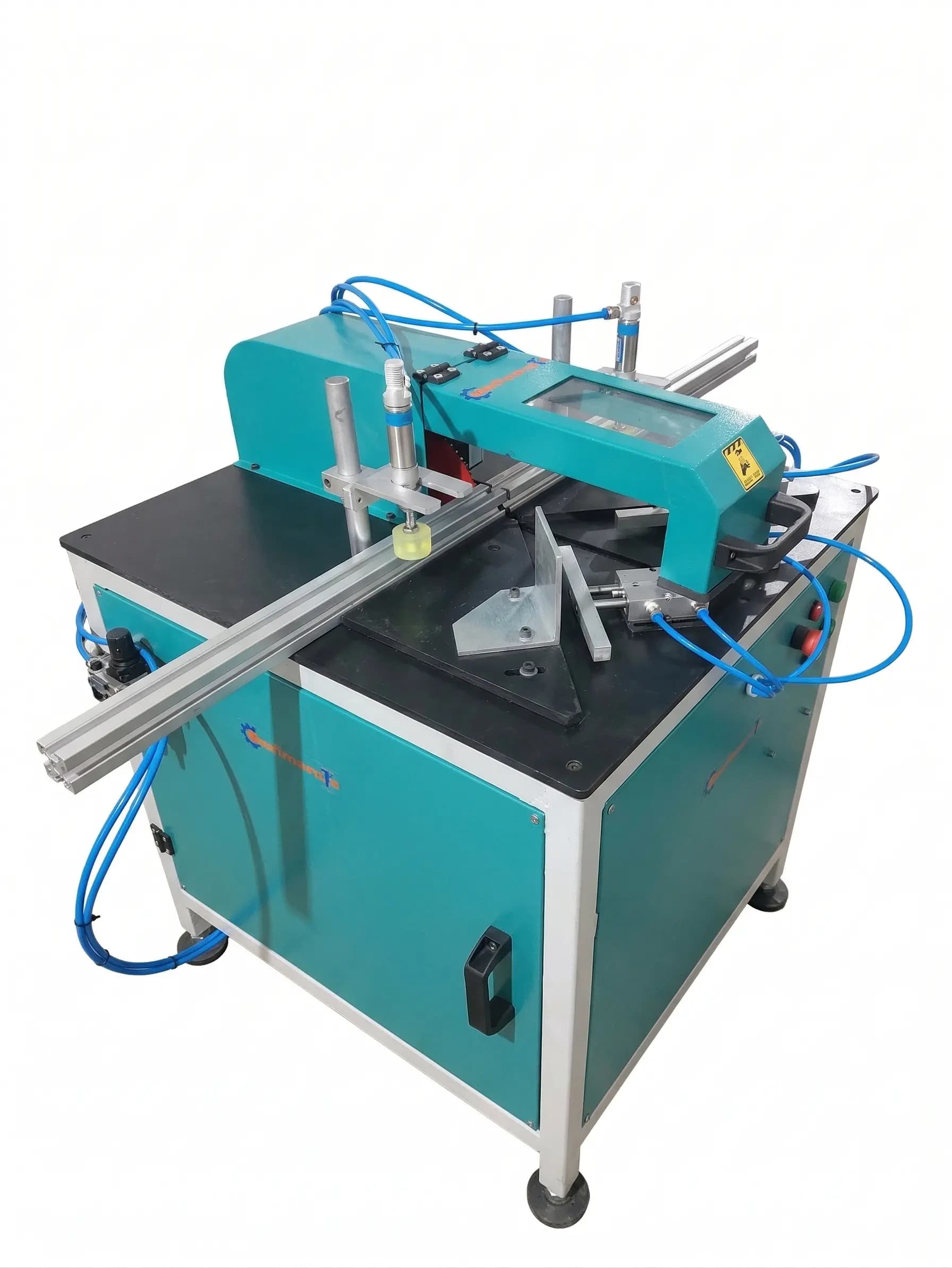
By transitioning to a double head seamless welding machine for uPVC windows, fabricators can achieve a 'Zero-Flash' finish. This process uses a specialized internal knifing system that prevents the molten plastic from ever reaching the outer surface. When paired with a high-precision Automatic Double Head Cutting Machine, the tolerance levels stay within ±0.1mm, ensuring that the miter joints are perfectly aligned before the heating cycle begins. This is critical for high-speed aluminium fabrication and uPVC setups where volume meets variety.
Technical Deep-Dive: Mechnovate’s 6-Month Field Test
Last year, our engineering team at Mechnovate conducted a comparative study at a 12,000 sq. ft. facility in Navi Mumbai. We replaced two single-point welders with one automatic double head cutting machine and a seamless welding line. The results were measurable and immediate:
- Cycle Time Reduction: Standard welding + manual cleaning took 4.5 minutes per frame. Seamless welding took 2.1 minutes with zero post-processing.
- Waste Mitigation: By integrating a 45 degree double head cutting machine with optimized PLC controls, we reduced profile off-cuts from 9% to less than 2.5%.
- Joint Strength: Tensile tests according to BS EN 12020 standards showed that seamless joints sustained 15% higher break-loads compared to cleaned joints.
For a mid-sized shop producing 50 windows a day, this translates to a labor saving of 3 technicians and a 40% increase in daily output. When you factor in the uPVC machine price list in India, the ROI for a seamless unit is typically achieved within 14 to 18 months solely on labor and rejection savings.
Achieving Precision Engineering in Window Machinery
To get the most out of your upvc window manufacturing machine, you must understand the interplay between heat, pressure, and time. Most upvc machinery manufacturers in India provide standard settings, but for Mumbai's humid climate, we recommend the following professional adjustments:
- Heating Plate Temperature: 250°C to 260°C (slightly higher than the 240°C industry average to compensate for ambient humidity).
- Melt Time: 25-30 seconds depending on the wall thickness of the profile (standard is 2.2mm to 2.5mm).
- Joining Pressure: 0.4 to 0.6 MPa (Bar). Too high, and you squeeze out the structural melt; too low, and the bond is superficial.
- Feed Rate: Managed via the automatic double head cutting saw for aluminium profiles to ensure the edges are burr-free before they hit the welder.
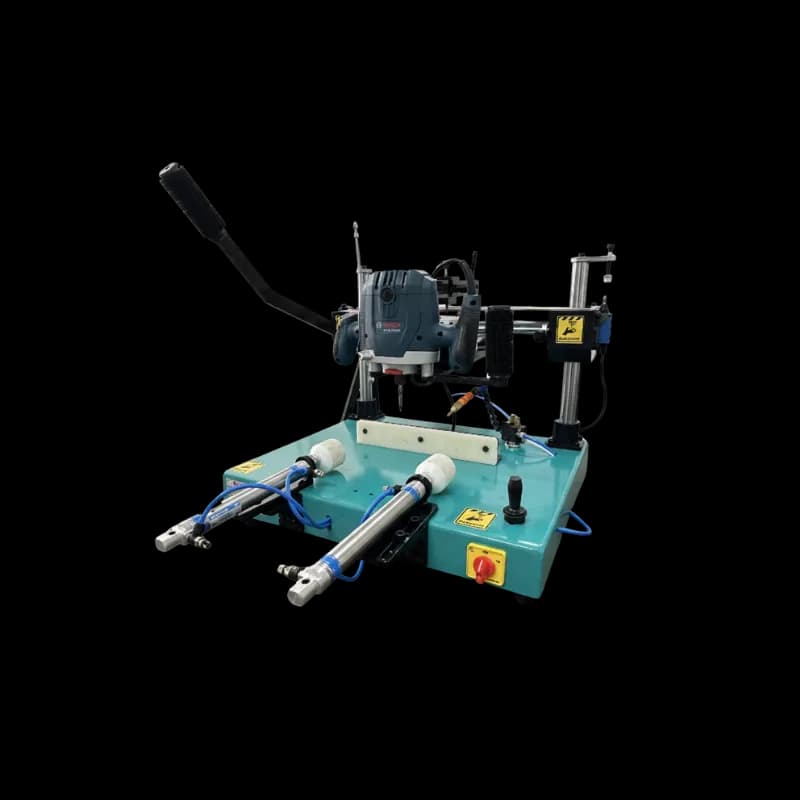
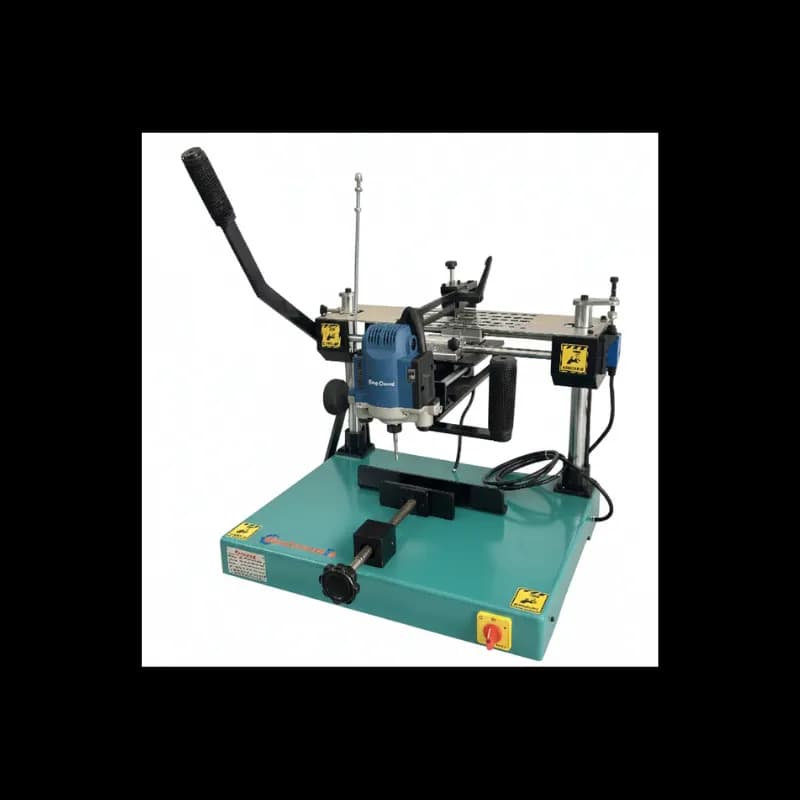
If your upvc welding machine isn't calibrated to these tolerances, you'll see 'shadow lines' on the joints, which are a major red flag for architects. Using a high-speed Copy Router Machine for hardware slots ensures that the structural integrity of the frame remains intact while the welder handles the corners.
Common Mistakes Fabricators Make with Seamless Technology
Even with the best upvc windows making machine, we see the same three errors across India's fabrication shops:
- Ignoring Profile Compatibility: Seamless welding requires profiles with consistent wall thickness. If you buy cheap, non-standard profiles, the 'seamless' internal tucking mechanism will fail, causing internal clogs.
- Poor Air Filtration: Mumbai’s humidity is a killer for pneumatic systems. Without an industrial-grade refrigerated air dryer, moisture enters the solenoid valves of your head cutting machine, leading to inconsistent pressure and weak joints.
- Neglecting Knife Sharpness: The internal knives that create the 'seamless' effect must be checked every 5,000 cycles. Dull knives cause 'puckering' at the corner.
The Financials: Cost of Setting Up a uPVC Window Manufacturing Unit
When calculating the automatic upvc window manufacturing plant cost India, many owners under-budget for the welding stage. A standard 2-head welder might cost ₹3.5 Lakh to ₹5 Lakh, whereas a high-quality double head seamless welding machine for uPVC windows can range from ₹8 Lakh to ₹12 Lakh. However, the 'hidden' costs of the cheaper machine—manual cleaning tools, 2 extra laborers, and higher rejection rates—actually make the seamless machine cheaper over a 3-year horizon.
If you are a startup, consider a portable uPVC window making machine price list for site work, but for a factory setup aiming for Mumbai’s high-rises, the CNC uPVC window fabrication machine price in India is a justified expenditure for the premium you can charge on the finished product.
FAQ: What Mumbai Fabricators Ask Us
Q1: Can I use a seamless welder for both white and laminated (colored) profiles? Yes. In fact, seamless welding is essential for laminated profiles. Standard welding melts the laminate and requires a touch-up pen to hide the white scar. Seamless welding preserves the laminate right up to the joint edge.
Q2: What is the power requirement for a 2-head seamless welder? Most industrial units require 3.5kW to 4.5kW. Ensure your facility has a stabilized 3-phase power supply, as voltage fluctuations in industrial zones like Bhiwandi or Vasai can fry the PLC controllers.
Q3: How often does the Teflon cloth need replacement? In a high-production environment, we recommend changing the Teflon cloth on the heating plates every 2 days or after every 600-800 welds to prevent profile sticking and carbon buildup.
Q4: Is it better to buy from a uPVC window machinery manufacturer in Lucknow or Ahmedabad? Location matters less than service support. Whether you look at aluminium window machinery manufacturers in Ahmedabad or Chennai, ensure they have a local service center in or near Mumbai. At Mechnovate, we maintain a 24-hour technician turnaround for the Mumbai-Pune belt because we know downtime is lost revenue.
Get more articles like this
Follow Mechnovate on Google to see our guides in Google Discover & News