Preventing Weld Failures: Jaipur uPVC Welding Machine Guide
In Rajasthan’s extreme climate, where ambient workshop temperatures frequently cross 45°C, standard operating procedures for uPVC fabrication often fail. Heat is the enemy of precision. In Jaipur’s industrial hubs like Vishwakarma Industrial Area (VKI) or Sitapura, we’ve observed that the primary cause of corner cracking isn't poor profile quality, but rather uncompensated thermal variables in the uPVC welding machine. To maintain a structural weld that meets ISO 9001 standards, your machine’s heating cycle and clamping pressure must be adjusted dynamically to the environment. This guide provides the technical protocols required to ensure your uPVC window manufacturing machinery delivers consistent results even in 48°C heat.
The Technical Impact of Heat on uPVC Welding
uPVC (Unplasticized Polyvinyl Chloride) is highly sensitive to temperature deltas. In a controlled 25°C environment, a standard upvc windows making machine operates at a heating plate temperature of 245°C to 255°C. However, in Jaipur’s summer, the 'soak time'—the duration the profile stays in contact with the heater—must be reduced by 10-15% to prevent over-melting and 'burning' of the material. Over-melting leads to brittle weld beads and reduced tensile strength at the corners.
Case Study: Jaipur Workshop Efficiency Audit (2023)
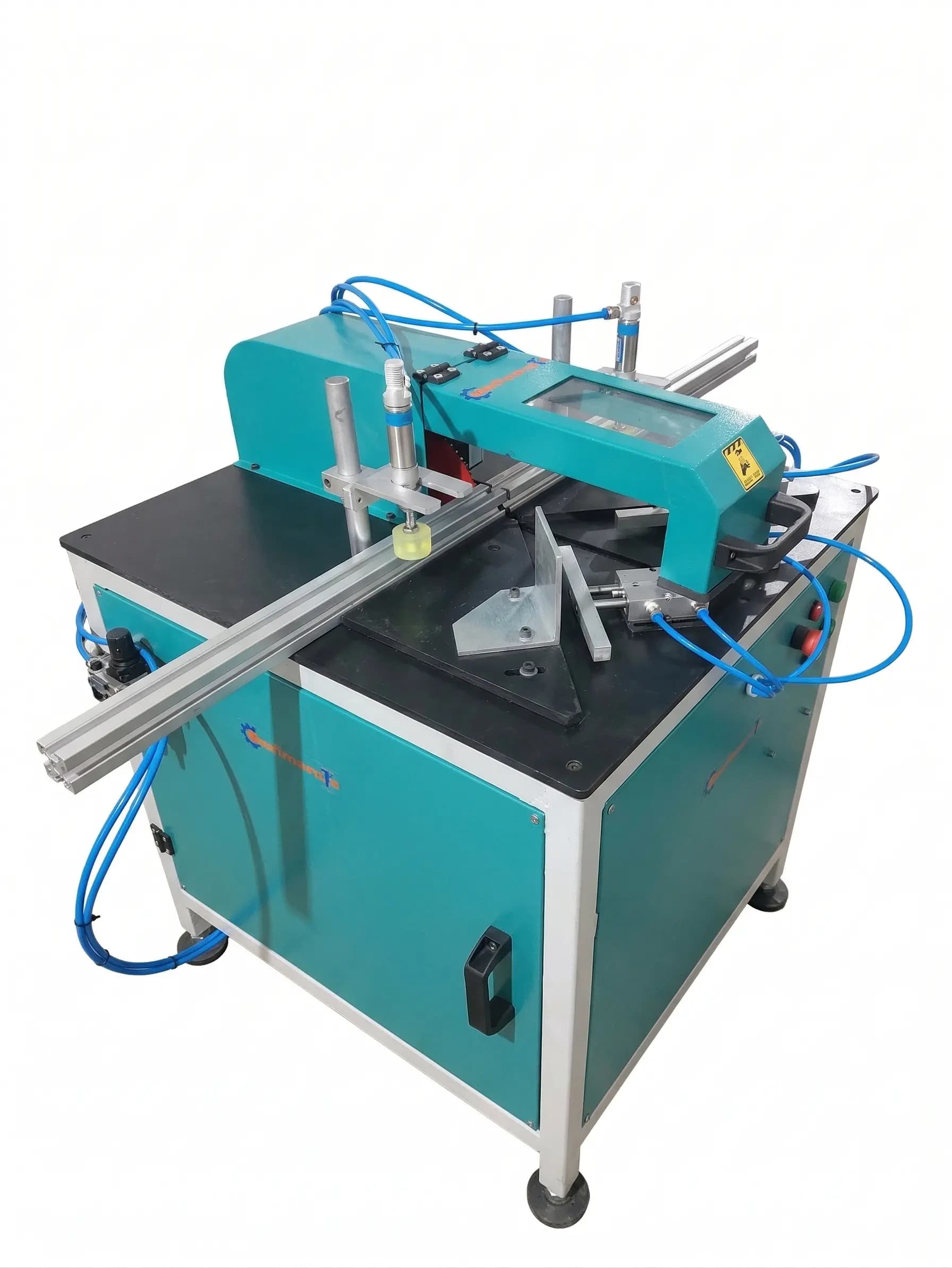
In May 2023, we audited a mid-sized facility in Jaipur that was experiencing a 15% rejection rate on 45-degree mitre welds. Our senior engineers performed a 4-week calibration test. By adjusting the melt time from 28 seconds down to 23 seconds and increasing the cooling cycle by 5 seconds, we reduced corner failures to less than 1.5%. We also identified that the 12-inch aluminium cutting machine price considerations often lead fabricators to ignore blade cooling, which results in jagged edges that don't fuse properly during welding. Ensuring a clean 45-degree cut with a sharp aluminium cutter machine 12 inch is the first step to a perfect weld.
5 Critical Maintenance Steps for Rajasthan Workshops
- Heating Plate Decarbonization: Carbon buildup on the Teflon cloth acts as an insulator. In high-dust areas like Jaipur, clean the plate every 4 hours using a soft cotton cloth. Replace the Teflon sheet every 15 days during peak season to ensure even heat distribution.
- Pneumatic Pressure Stabilization: High heat reduces air density. Ensure your compressor is delivering a steady 6-8 bar pressure to the upvc welding machine. Fluctuating pressure leads to uneven melting depths (melt-in) between the two profiles.
- Thermocouple Calibration: Ambient heat can cause sensors to drift. Use a digital surface thermometer once a week to verify that the 'set temperature' on the PLC matches the 'actual temperature' on the heating plate surface.
- Profile Pre-Conditioning: Never weld profiles that have been sitting in direct sunlight. The internal temperature of the uPVC can reach 60°C, causing the upvc windows manufacturing machine to over-melt the edge instantly. Store profiles in a shaded, ventilated area for at least 4 hours before fabrication.
- Mechanical Alignment of the Head: For those using a double head seamless welding machine for uPVC windows, ensure the parallel alignment of both heads is within a 0.2mm tolerance. Heat causes metal expansion; check the guide rails for lubrication every morning.
Optimizing the Production Line
A common mistake among upvc windows manufacturers machine operators is rushing the cooling process. While it is tempting to increase throughput, the internal molecular bond of the uPVC corner only stabilizes during the cooling phase. For a upvc window manufacturing machine, the cooling time should be no less than 30 seconds when the workshop temperature exceeds 35°C.
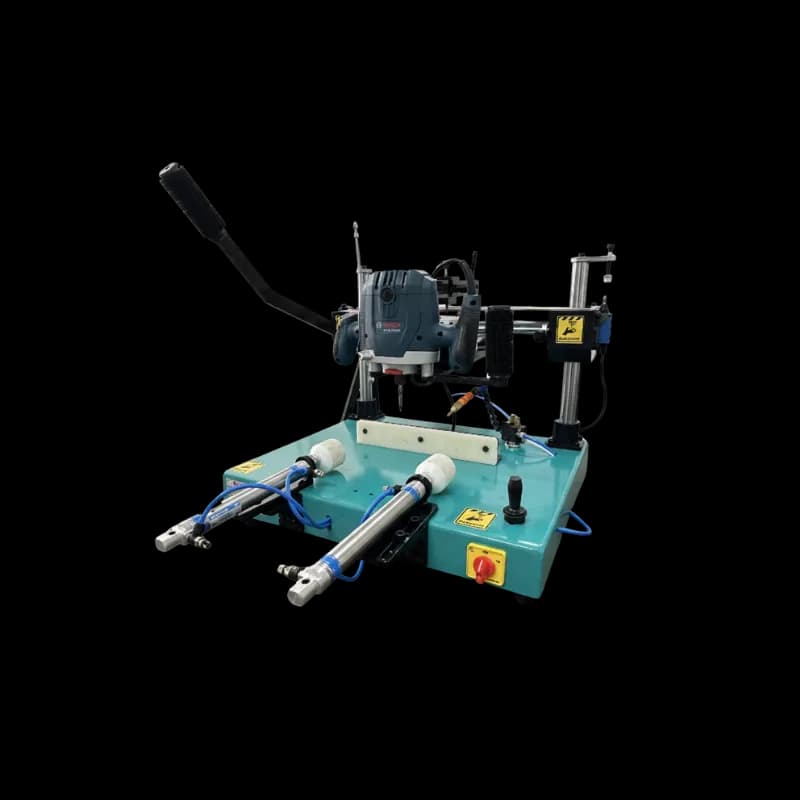
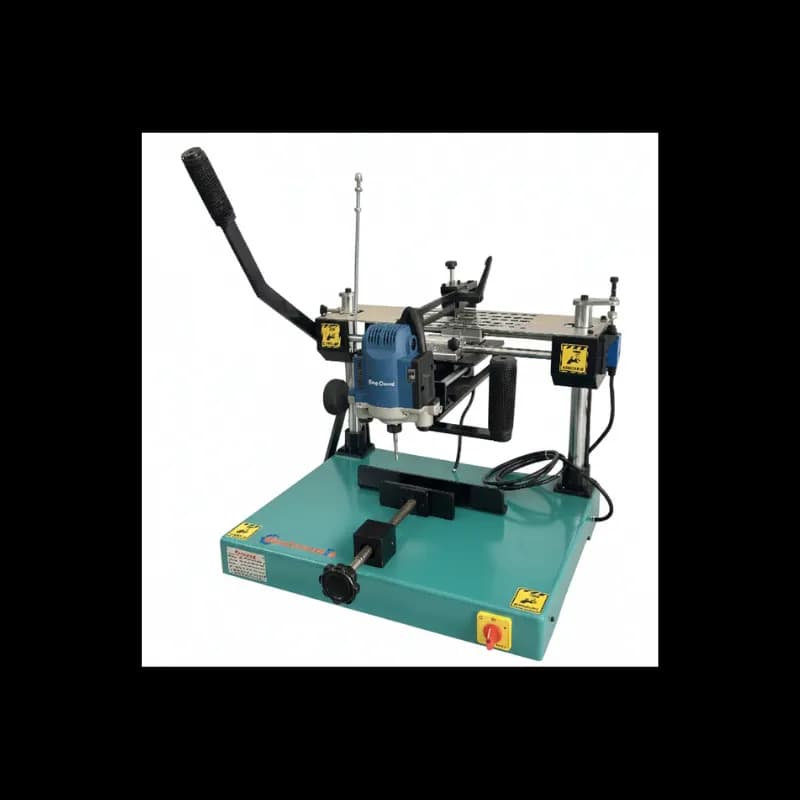
If you are expanding your facility, consider the automatic double head cutting machine price India and how it integrates with your welding station. A precision cut from a high speed copy router for aluminium windows or a copy router machine ensures that the profile chambers are not deformed, allowing for a 100% surface area contact during the welding stroke.
Troubleshooting Common Weld Failures
| Problem | Technical Cause | Expert Solution |
|---|---|---|
| Yellowish/Brownish Weld Bead | Overheating or dirty Teflon | Reduce temp by 5°C; change Teflon cloth. |
| Brittle Corner Breakage | Insufficient melt depth | Increase melt-in pressure to 2.5 bar. |
| Misaligned Corners | Worn out guide bushes | Replace linear bearings on the welder head. |
| Visible Gaps in Joint | Poor cutting angle | Calibrate your 45 degree double head cutting machine. |
FAQ: uPVC Machinery Maintenance in High Temperatures
Q1: What is the ideal temperature for welding uPVC profiles in summer? While 250°C is the industry standard, in Jaipur’s heat, we recommend starting at 240°C and testing the break-strength. If the weld bead is too thick (over 3mm), reduce the melt time rather than the temperature.
Q2: How often should I lubricate my automatic upvc window plant? In dusty Rajasthan environments, standard grease attracts abrasive particles. Use a dry silicone-based lubricant for the pneumatic cylinders and guide rails of your upvc window manufacturing machines twice daily.
Q3: Can I use a portable uPVC window welding machine for large projects? A portable uPVC window welding machine for startups is excellent for site work, but for high-volume Jaipur workshops, a stationary single-head or double-head machine is required for the clamping force needed to prevent warping in heat.
Get more articles like this
Follow Mechnovate on Google to see our guides in Google Discover & News