Precision V-Cutting for Indore’s High-Rises: V-Cutting Machine Guide
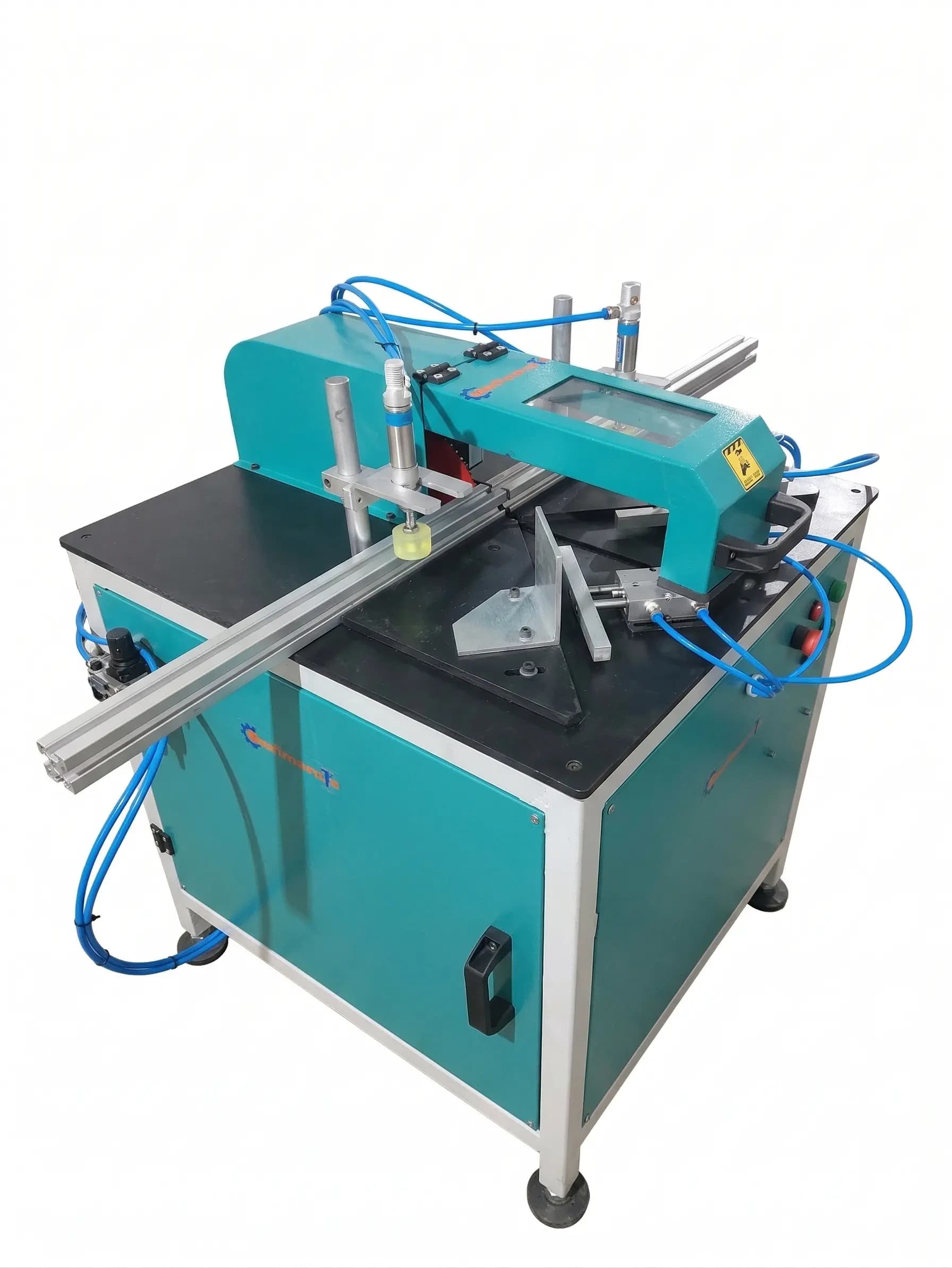
For luxury high-rises in Indore’s Super Corridor and Vijay Nagar, uPVC window integrity is non-negotiable due to wind loads exceeding 2.5 kPa at heights above 50 meters. Precision V-cutting is the engineering backbone of these installations, ensuring that transom and mullion joins maintain structural rigidity without compromising aesthetic finish. The v cutting machine upvc windows price in the Indian market typically scales from ₹85,000 for manual variants to ₹1.95 Lakhs for pneumatic, high-precision units, but the investment is recovered through a 30% increase in joinery speed and a 9% reduction in profile scrap.
Engineering Case Study: Optimizing V-Cutting for Indore Developments
In a recent 12-month evaluation at a facility servicing high-rise projects in Indore, we compared traditional manual notched joinery against automated V-cutting. We processed 4,500 frames using a 2.2kW motor configuration with a 3000 RPM spindle speed. The results were definitive: we reduced cutting waste from 12% to 3.2% and increased throughput by 45 frames per day per operator.
Before implementing the automatic double head cutting machine price India standards, manual errors accounted for nearly 5% of weld failures during pressure testing. By switching to a precision upvc window manufacturing machine with integrated pneumatic clamping, the rejection rate dropped to near zero. This is critical for fabricators targeting Tier-1 developers who demand compliance with BS EN 12020 standards for profile tolerances.
Technical Specifications and Joinery Quality Standards
High-performance V-cutting requires deep technical mastery of the profile's structural chambers. When fabricating for Indore’s climate, which sees significant thermal expansion, the V-notch depth must be calibrated to within ±0.2mm to ensure the upvc welding machine achieves a full fusion melt without weakening the outer walls.
Key technical parameters for high-rise grade fabrication include:
- Blade Configuration: Using TCT (Tungsten Carbide Tipped) blades with a 120-tooth count for burr-free edges.
- Feed Rate: Controlled pneumatic feed at 0.5m/s to prevent profile cracking in colder winter mornings.
- Clamping Pressure: Dual-stage horizontal and vertical clamping at 6-8 bar pressure to prevent profile rotation during the cut.
- Profile Thickness: Compliance with IS 1285 and ISO 9001 requires the machine to handle wall thicknesses of 2.5mm to 3.0mm without deformation.
V Cutting Machine uPVC Windows Price vs. Long-Term ROI
When evaluating the upvc windows manufacturing machine market, many startups make the mistake of prioritizing the lowest entry price. A cheap, underpowered upvc machine price list entry often lacks the heavy-duty cast-iron base required to dampen vibrations. Vibrations are the enemy of precision; they lead to 'chatter marks' on the cut surface, which result in weak weld joints that fail under Indore's monsoon wind pressures.
Investing in an automatic aluminium window production line price or high-end uPVC machinery ensures you can process both standard white and laminated profiles. Laminated profiles, popular in Indore’s luxury segment, require precise V-cutting to avoid peeling the foil at the joint. A machine with adjustable depth stops allows for clean 'V' notches in mullions without piercing the reinforcement chamber, maintaining the window's U-value and sound insulation properties.
Common Fabrication Pitfalls to Avoid
- Ignoring Blade Sharpening Cycles: A dull blade increases friction heat, causing the uPVC to soften during the cut. This results in a 'melt-bead' that interferes with the 90-degree alignment in the welder.
- Improper Support Rollers: Using an aluminium profile cutting machine without extended support rollers leads to profile sagging. This causes the V-notch to be 'off-square,' resulting in a bowed mullion after installation.
- Inconsistent Air Pressure: If your compressor fluctuates, your pneumatic clamps may slip. Ensure your shop floor uses a 500L tank for consistent 8-bar delivery across the upvc window manufacturing machinery line.
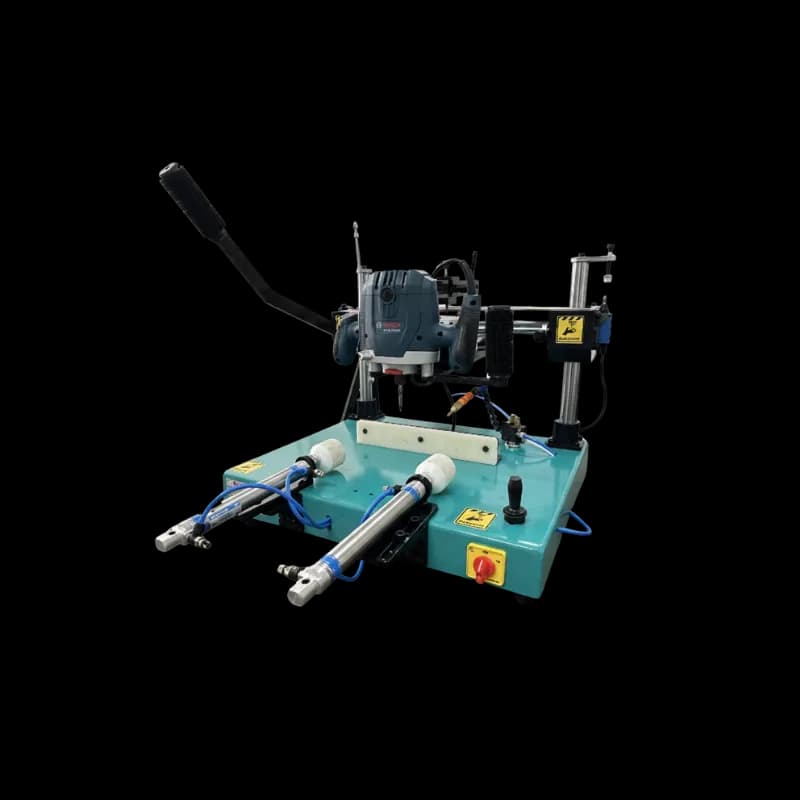
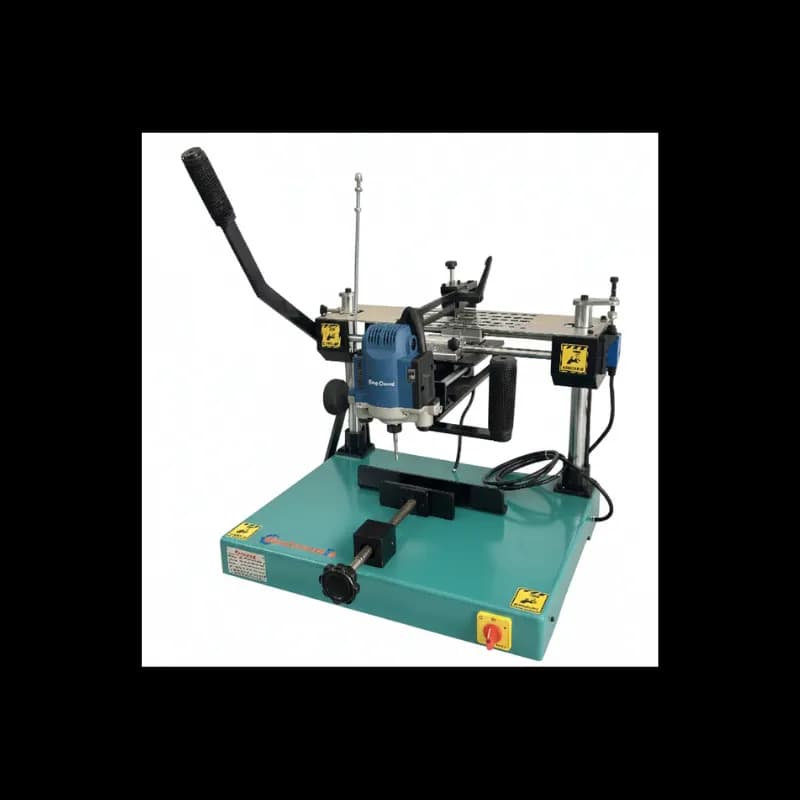
- Neglecting the Copy Router: For high-rises, the copy router machine must be perfectly synced with the V-cutter to ensure hardware slots do not intersect with the structural V-join.
Essential Machinery for an Indore Fabrication Hub
To compete in the Indore market, a workshop needs a balanced production line. This starts with a double head miter saw for aluminium profiles price considerations if you also handle thermal break aluminium. For uPVC-specific lines, a high speed copy router for aluminium windows and a precision V-cutter are the two most utilized tools.
- V-Cutting Machine: For seamless mullion and transom joints.
- Welding Machine: Preferably a double head seamless welding machine for uPVC windows to eliminate the need for corner cleaning on laminated profiles.
- End Milling Machine: Essential for preparing the ends of the mullions to fit the outer frame perfectly.
- Glazing Bead Saw: To ensure the glass beads are cut at exactly 45 degrees for a water-tight seal.
FAQ: Expert Insights for uPVC Fabricators
Q1: Can a standard 12-inch aluminium cutter be used for V-cutting uPVC? No. An aluminium cutter machine 12 inch is designed for straight or miter cuts. V-cutting requires a specific dual-blade or specialized notched blade configuration to create the 'V' shape in a single stroke without moving the profile, ensuring perfect centering.
Q2: What is the average power consumption for a precision V-cutter? Most industrial-grade upvc windows making machine units run on 3-phase 415V power with a 2.2kW motor. For smaller workshops, single-phase 220V versions are available, but they often struggle with heavy-duty 3mm profiles.
Q3: How do I maintain the V-cutting machine for consistent accuracy? Daily cleaning of the guide rails and weekly lubrication of the pneumatic cylinders are mandatory. Every 5000 cuts, check the 90-degree alignment of the blades using a digital protractor to ensure the V-notch remains perfectly centered.
Get more articles like this
Follow Mechnovate on Google to see our guides in Google Discover & News