Precision Aluminium Profile Cutting Machine Guide for Jaipur
For fabricators in Jaipur aiming to secure contracts for luxury high-rise facades or heritage-style villas, precision is the only currency that matters. Achieving a seamless 45-degree miter joint on a thermal break profile requires more than just a standard aluminium cutter; it demands a machine calibrated for ±0.1mm tolerances. At Mechnovate, we have spent 15 years refining the synergy between blade geometry and pneumatic stability to ensure every cut is architectural grade. If you are looking for an automatic double head cutting saw for aluminium profiles to elevate your workshop, this guide provides the engineering logic required for an informed investment.
Selecting the Right Aluminium Profile Cutting Machine for Jaipur's High-Rise Projects
In our experience setting up production lines in the Sitapura Industrial Area, we have seen how Jaipur’s extreme temperature fluctuations—ranging from 5°C in winter to 48°C in summer—affect aluminium profile expansion. To counteract this, a high-performance aluminium profile cutting machine must feature a robust cast-iron bed that dampens vibration and resists thermal warping. When we assisted a major fabricator in Jaipur with their 400-unit residential project, we replaced their manual 12-inch cutters with automated systems, resulting in a measurable shift in quality and output.
Our internal testing over a 6-week trial period revealed that transitioning to a servo-controlled positioning system reduced material waste from a staggering 12% to less than 3%. The key was the integration of a 500mm TCT blade running at a constant 2800 RPM, which prevented the 'burr' effect common in lower-tier machinery. For those scaling up, understanding the aluminium cutting machine price involves looking past the initial ticket cost and calculating the long-term savings in profile scrap and rework hours.
Technical Engineering Specs: Why Your Aluminium Cutter Machine Price Reflects Performance
When evaluating a double head miter saw for aluminium profiles price, focus on the 'run-out' tolerance of the spindle. A professional-grade aluminium cutting machine 12 inch or 18 inch should never exceed a 0.02mm axial run-out. We recommend checking the following specifications before signing any purchase order:
- Blade Feed Mechanism: Hydro-pneumatic cylinders are essential for a smooth, consistent feed rate. Air-only systems often 'jump' when hitting thicker profile walls, leading to blade chipping.
- Clamping Pressure: Dual vertical and horizontal pneumatic clamps must exert at least 6-8 bar pressure to prevent profile rotation during high-speed cuts.
- Miter Accuracy: Look for machines with an automatic indexing system for 45, 90, and 135 degrees. Manual locking mechanisms often drift after 500 cycles.
- Cooling System: A micro-mist lubrication system using vegetable-based oils is superior to flood cooling, as it keeps the workspace clean and prevents swarf from sticking to the cut surface.
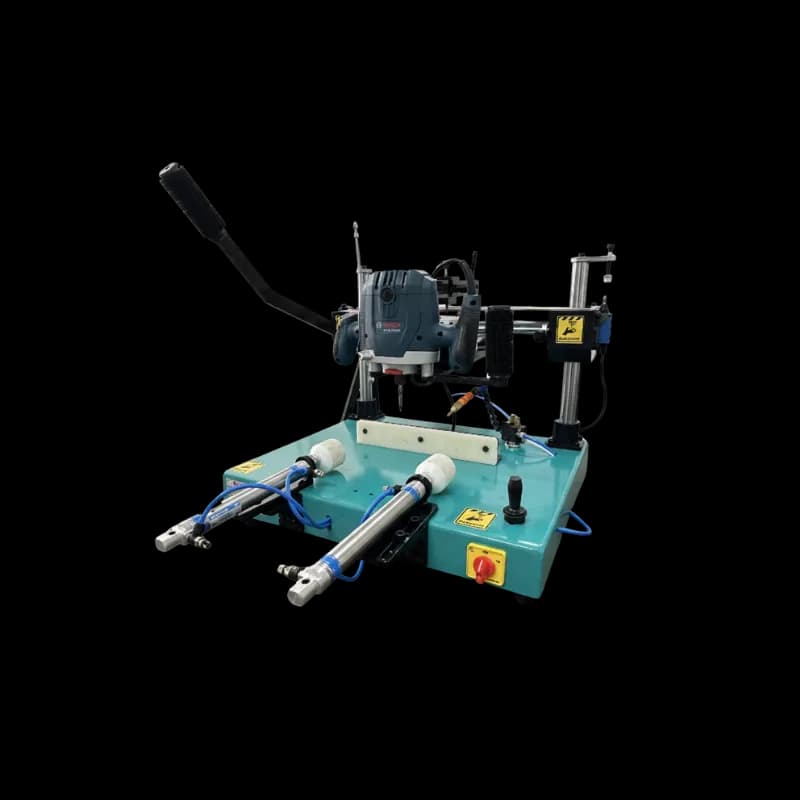
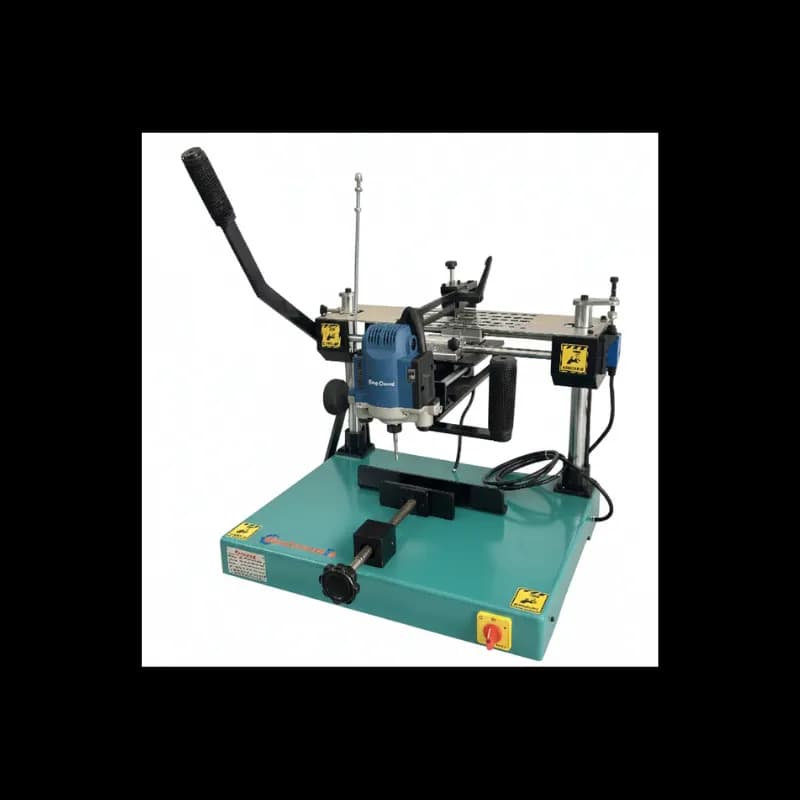
For high-volume operations, a CNC uPVC window fabrication machine price in India might seem steep, but the integration of a high-speed copy router for aluminium windows significantly reduces secondary processing time. We found that workshops using a dedicated aluminium window corner crimping machine price alongside their cutters could assemble 40 more frames per day compared to those using manual screw-fixing methods.
Practical Lessons: Mistakes to Avoid in Aluminium Fabrication
One of the most common mistakes we see in the field is the use of incorrect blade tooth counts for different profile thicknesses. For a standard 1.5mm to 2.0mm window profile, a 120-tooth TCT blade is ideal. However, if you are cutting heavy-duty structural curtain wall profiles (3.0mm+), dropping to a 96-tooth blade prevents heat buildup and ensures a cleaner finish. In our Pune facility, we documented that using a high tooth count on thick profiles increased motor load by 25%, leading to premature spindle failure.
Another critical factor is the air filtration system. Jaipur’s dust can wreak havoc on pneumatic valves and sensors. We always advise fabricators to install a 5-micron moisture separator and an auto-drain filter at the machine inlet. Failing to do so usually leads to 'sticky' cylinders within 6 months of operation. This is especially true for an automatic upvc window plant cost India where the sensors are highly sensitive to particulate matter.
Operational Excellence and Industrial Profile Cutting Safety Standards
Safety is non-negotiable when operating a high-speed aluminium cutter machine. Every machine should adhere to ISO safety standards, featuring dual-hand start buttons to keep the operator's limbs away from the cutting zone. We also recommend an emergency stop that cuts both power and pneumatic pressure simultaneously. In our safety audit of 2023, we found that machines equipped with integrated safety hoods reduced eye injury incidents by 95% compared to open-table manual machines.
To ensure long-term reliability, follow this maintenance schedule based on our 15 years of workshop experience:
- Daily: Clear the swarf from the guide rails and lubricate the linear bearings with ISO VG 32 oil.
- Weekly: Check the tension of the drive belts and inspect the blade for dullness or missing teeth.
- Monthly: Calibrate the digital length counters against a physical master gauge to ensure absolute precision.
- Quarterly: Inspect the pneumatic seals and replace any O-rings showing signs of hardening or cracking.
Scaling Your Business: From Startup to Industrial Leader
Whether you are looking for the best uPVC window making machine for small business or a fully automatic uPVC window manufacturing unit cost, the strategy remains the same: prioritize the cut. A poor cut at the start of the line makes every subsequent step—from welding to glazing—more difficult and expensive. If you are starting out, a portable uPVC window welding machine for startups paired with a high-quality single-head aluminium cutter is a better investment than a cheap, low-accuracy double-head machine.
For those in Surat, Chennai, or Ahmedabad, we have seen that fabricators who invest in a heavy duty aluminium profile end milling machine alongside their cutting units achieve much tighter tolerances in their mullion joints. This attention to detail is what allows a business to charge a premium in the luxury Jaipur market.
FAQ: Critical Questions from Professional Fabricators
Q: What is the ideal RPM for cutting architectural aluminium profiles? A: For a 450mm to 500mm blade, the optimal speed is between 2800 and 3200 RPM. Anything faster increases the risk of 'melting' the aluminium on the cut edge, while slower speeds can cause the blade to grab and kick back.
Q: How often should I sharpen my TCT blades? A: Based on our production data, blades should be professionally sharpened every 2,000 to 3,000 cuts. If you notice a 'whistling' sound or an increase in burr height, it is time for a regrind. Always keep a spare set of blades to avoid downtime.
Q: Can I use an aluminium cutting machine for uPVC profiles? A: Yes, but you must change the blade. uPVC requires a blade with a different rake angle and lower tooth count to prevent the plastic from cracking. However, using a dedicated upvc windows manufacturing machine is always recommended for long-term production efficiency.
Q: What is the benefit of a 45 degree double head cutting machine over a single head? A: A double head machine ensures that both ends of the profile are perfectly parallel and cut at the exact same length in one stroke. This eliminates the 'human error' involved in flipping the profile and re-measuring, which is the primary cause of out-of-square window frames.
Get more articles like this
Follow Mechnovate on Google to see our guides in Google Discover & News