Perfect uPVC Corner Joints: Chennai V Cutting Machine Guide
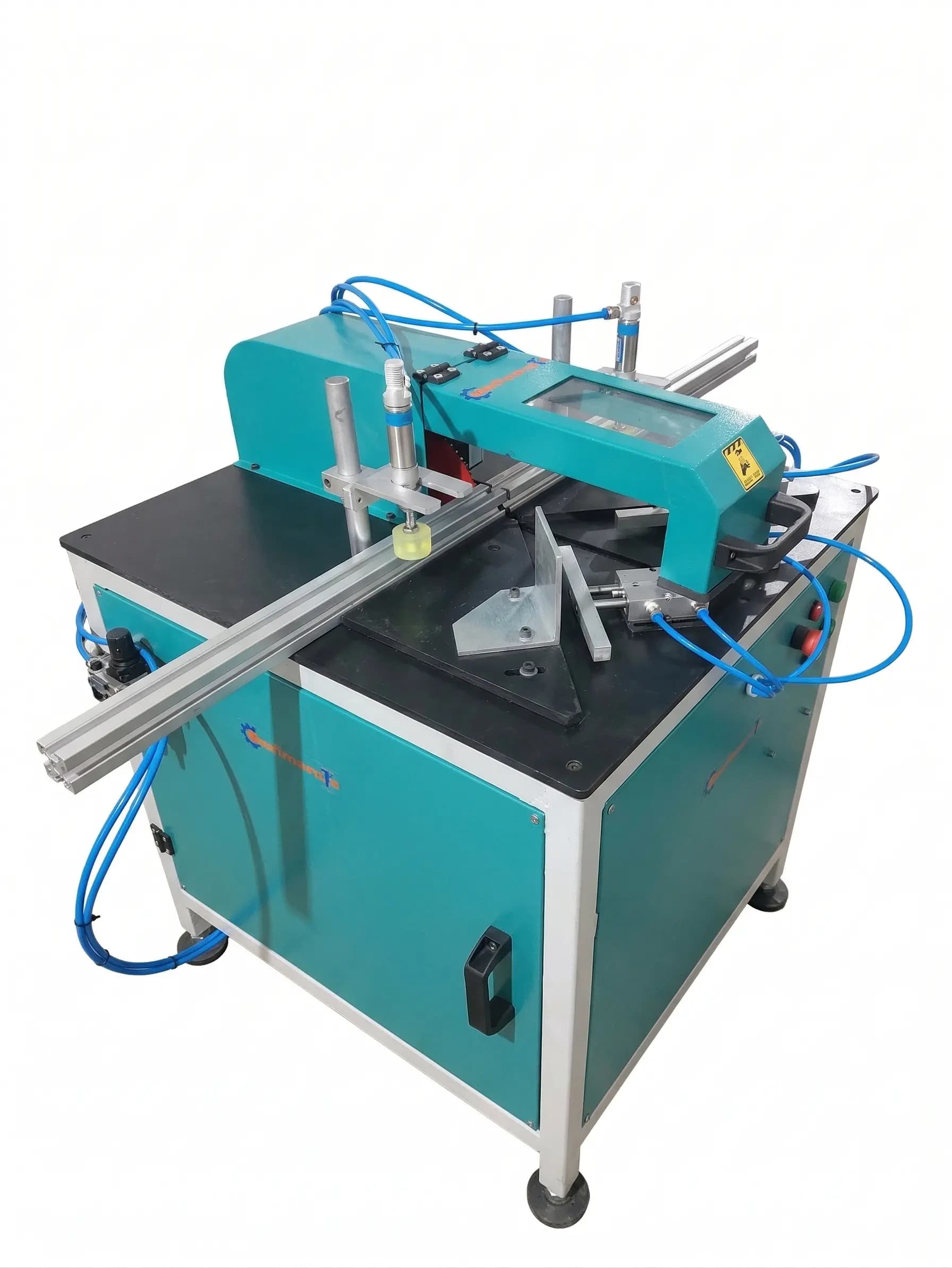
Achieving a hermetic seal in uPVC mullion joints is non-negotiable for fabricators operating in Chennai’s corrosive coastal environment. In high-humidity zones, even a 0.5mm deviation in your V-notch can lead to air infiltration, whistling windows, and premature weld failure due to salt-air penetration. As a senior engineer at Mechnovate with 15 years in the field, I’ve seen how improper cutting equipment destroys the profitability of otherwise skilled fabrication shops. The current v cutting machine upvc windows price in India typically ranges from ₹65,000 for entry-level pneumatic models to over ₹1.95 Lakhs for high-speed automatic systems, depending on the blade diameter and motor kW rating.
Engineering Precision: Why V-Cutting Dictates Window Longevity
The V-cutting process—specifically for mullions and transoms—requires a machine that maintains absolute rigidity under load. In coastal cities like Chennai, the uPVC profiles often have specific chemical stabilizers to resist UV degradation, which can make the material slightly more brittle during high-speed cutting. If your uPVC window making machine isn't calibrated for these specific profile densities, you risk micro-fractures at the joint root. We recommend a spindle speed of 2800 to 3200 RPM to ensure a clean finish without melting the profile edges.
To achieve the structural integrity required by IS 1285 standards, your V-cutting depth must be precise to within ±0.2mm. Any deeper, and you weaken the outer wall of the frame; any shallower, and the mullion will not seat flush, leading to gaps that Chennai’s monsoon rains will inevitably exploit. High-quality upvc windows manufacturing machine setups utilize pneumatic clamping systems that hold the profile at three distinct points to prevent vibration-induced chatter during the blade's pass.
Case Study: Optimizing Production in Coastal Tamil Nadu
Last year, we worked with a fabrication unit in Ambattur that was struggling with a 12% scrap rate on their mullion joints. Their existing manual setup was producing inconsistent notches, leading to hours of manual filing and rework. We replaced their legacy equipment with an automatic V cutting machine and a high-performance aluminium cutting machine for their reinforced sections.
- Baseline Metrics: Before the upgrade, the facility produced 25 frames per day with a 12% waste factor.
- Implementation: We installed a precision-engineered V-cutter with carbide-tipped blades and calibrated the feed rate to 4.5 meters/minute.
- Measurable Results: Within six weeks, the waste rate dropped from 12% to 3%, and output increased to 65 frames per day.
- Long-term Impact: The unit reported zero customer complaints regarding joint gaps over the following monsoon season, proving the value of precision engineering.
V Cutting Machine uPVC Windows Price and Selection Factors
When evaluating the v cutting machine upvc windows price, don't just look at the upfront cost. You must consider the Total Cost of Ownership (TCO), which includes blade sharpening intervals and air consumption rates. A cheaper machine often uses low-grade solenoid valves that leak air, increasing your compressor's duty cycle and electricity bill. In Chennai’s salt-heavy air, we specify stainless steel internal components and moisture separators for all pneumatic lines to prevent internal corrosion.
- Manual V-Cutters (₹55k - ₹75k): Best for small workshops or startups. Requires significant operator skill to maintain consistency.
- Pneumatic V-Cutters (₹80k - ₹1.2L): The industry standard for medium-scale fabricators. Offers repeatable accuracy and reduced fatigue.
- Automatic CNC V-Cutters (₹1.5L+): Necessary for high-volume factories. These integrate directly with window design software to minimize human error.
Essential Features for Chennai Fabricators
- Heavy-Duty Cast Iron Table: Unlike sheet metal frames, cast iron absorbs vibrations, which is critical for the 45-degree precision required in V-notches.
- Adjustable Cutting Depth: Look for machines that allow for quick-change depth stops to accommodate different profile brands without recalibration.
- Tungsten Carbide Tipped (TCT) Blades: Essential for cutting through uPVC and the thin protective films without tearing.
- Integrated Dust Extraction: Chennai’s humidity makes uPVC dust stick to machine ways; a strong vacuum system prevents this buildup.
- Safety Interlocks: Ensure the machine follows ISO safety standards, requiring two-handed operation to prevent accidents.
Common Mistakes in Mullion Fabrication
The most frequent error I see in the field is neglecting the 'back-fence' alignment. Even a 1-degree tilt in the profile support will result in a 'smiling' or 'frowning' joint where the mullion meets the frame. Another mistake is using the same blade for uPVC and aluminium profile cutting machine tasks. The tooth geometry for uPVC is designed for chip clearance, whereas aluminium blades are designed for heat dissipation; mixing them will ruin both the blade and the material.
Many fabricators also overlook the importance of air pressure stability. A V-cutter requires a consistent 6-8 bar pressure. If your shop's air pressure fluctuates because other tools like a copy router machine are pulling from the same line, your clamping force will vary, leading to shifted cuts. We always recommend a dedicated surge tank for the cutting line to maintain pressure equilibrium.
The Role of V-Cutting in the Full Production Line
A V-cutting machine is just one part of a balanced upvc window manufacturing machine lineup. For a startup in Chennai, your core kit should also include a single head cutting machine, a welding unit, and a corner cleaner. If you are scaling up, an automatic double head cutting machine price India reflects the efficiency gains of cutting two ends simultaneously, which is the gold standard for high-output facilities in industrial hubs like Sriperumbudur.
When we consult on a cost of setting up uPVC window manufacturing unit in India, we highlight that the cutting section is where 60% of your quality is determined. Investing in a high-grade V-cutter ensures that your mullions fit the first time, every time. This reduces the load on your welding team and ensures the final window meets the structural requirements for high-rise buildings along the East Coast Road (ECR).
FAQ: Expert Answers for Fabricators
Q1: How often should I sharpen the blades on my V-cutting machine? In a standard 8-hour shift environment, TCT blades should be inspected weekly. Usually, sharpening is required every 3,000 to 5,000 cuts. If you notice smoke or 'burring' on the uPVC edges, stop immediately, as the heat can warp the profile wall.
Q2: Can I use a V-cutter for 90-degree cross-cuts? While some machines are marketed as multi-purpose, a dedicated V-cutting machine is optimized for the specific 45-degree notch. Using it for standard 90-degree cuts often leads to faster guide-way wear and is less efficient than using a standard aluminium cutter machine 12 inch or a dedicated upvc saw.
Q3: Why is my V-cut showing a gap on one side after welding? This is usually due to 'clamping deflection.' If the pneumatic cylinder is applying too much pressure on a thin-walled profile, it deforms the shape during the cut. When the pressure is released, the profile springs back, but the cut is now angled. Adjust your regulator to the minimum pressure required to hold the profile firmly without bowing the walls.
Q4: Is it worth buying a used V-cutting machine in Chennai? Given the coastal humidity, used machines often have hidden rust in the pneumatic cylinders and bearings. Unless the machine is a premium brand with a documented service history, the v cutting machine upvc windows price for a new unit with a warranty is generally a safer investment for long-term reliability.
Get more articles like this
Follow Mechnovate on Google to see our guides in Google Discover & News