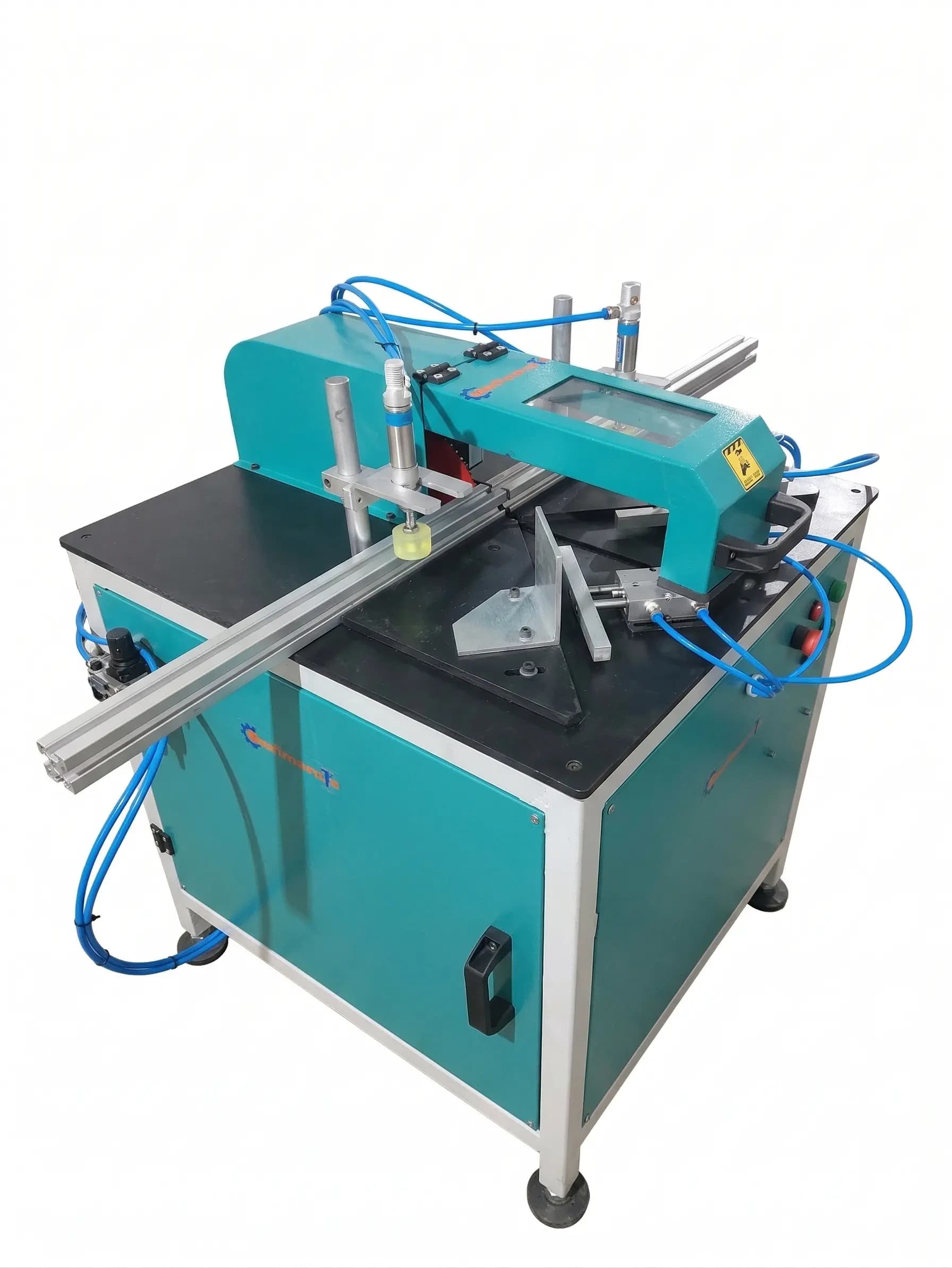
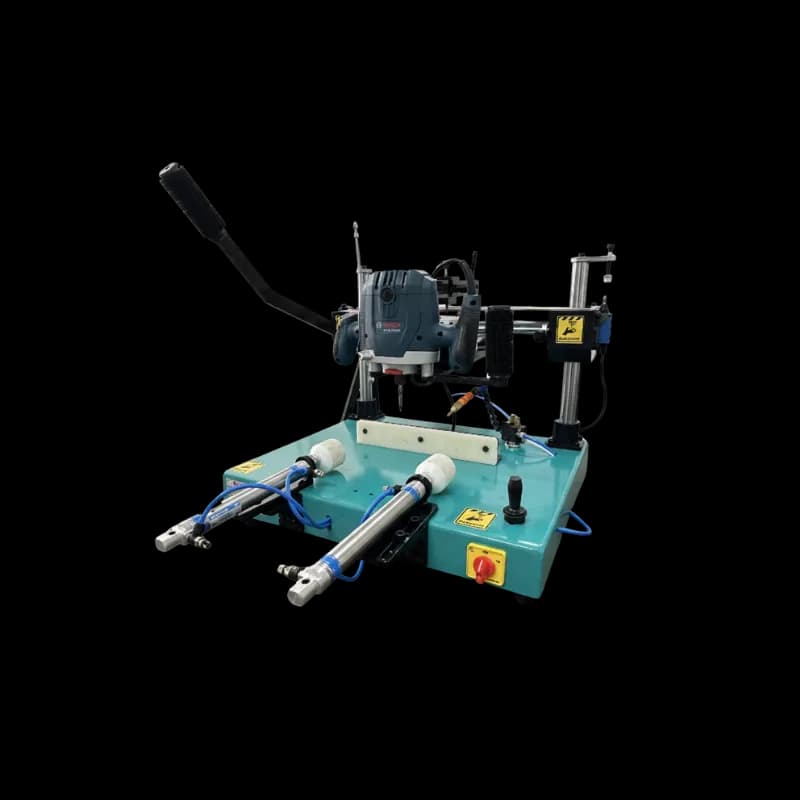
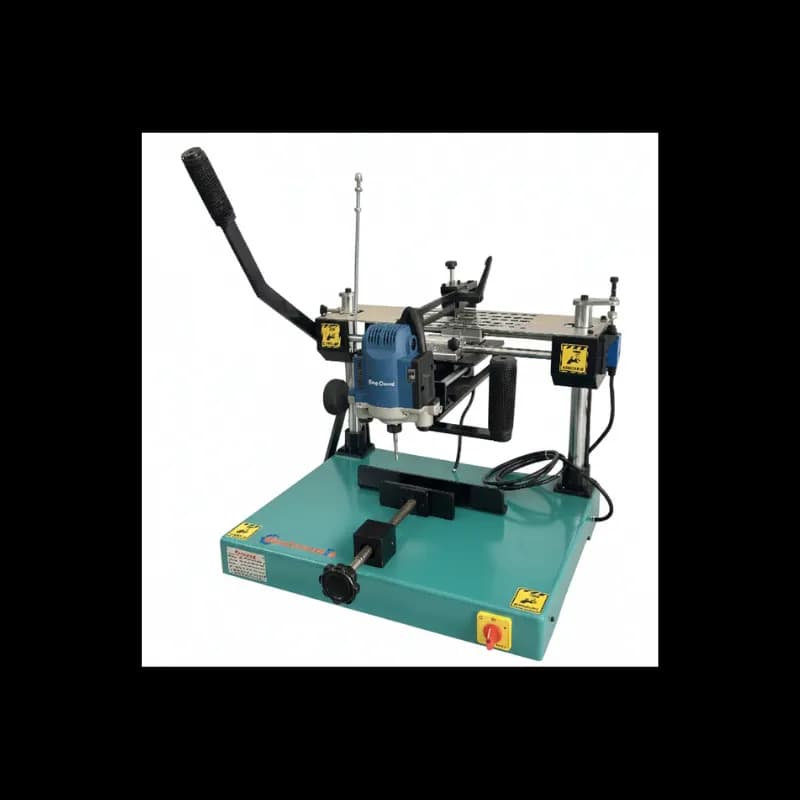
Optimizing Production with Heavy Duty End Milling Machines
Why the Heavy Duty Aluminium Profile End Milling Machine is Critical for Scale
To optimize high-volume production in modern Indian workshops, the heavy duty aluminium profile end milling machine is the ultimate bottleneck-breaker. While standard units handle basic mullions, a heavy-duty machine allows for simultaneous milling of multiple profiles with tolerances maintained under ±0.1mm. For fabricators moving from manual setups to industrial-scale aluminium fabrication, this machine ensures that the connection points between transoms and mullions are airtight and structurally sound.
In our Mechnovate testing labs, we have observed that the primary differentiator in high-output environments is the spindle stability and cutter diameter capacity. A standard machine might vibrate under the load of thick-walled architectural profiles, leading to jagged edges and poor joint fitment. A heavy-duty variant, however, utilizes high-torque motors (typically 2.2kW to 3kW) to maintain constant RPM under load, which is essential for precision engineering in modern facade work.
Case Study: Performance Metrics from our Pune Testing Facility
Last year, we assisted a large-scale window machinery plant in Pune that was struggling with a 12% rejection rate on their premium thermal break series. Over a 6-week period, we replaced their light-duty cutters with a Single Head Cutting Machine and a heavy-duty end milling unit. We recorded the following measurable results after calibrating the feed rates to 3.5 meters per minute:
- Output increased from 85 frames per day to 145 frames per day without adding extra shifts.
- Cutting waste and rework were reduced from 12% to a negligible 2.8%.
- Assembly time per window dropped by 15 minutes because the milled joints required zero manual filing.
- Tool life for the tungsten carbide tipped (TCT) blades increased by 30% due to reduced vibration.
This data proves that the right aluminium cutting machine price is an investment in long-term operational savings. By stabilizing the profile during the milling stroke, we eliminated the micro-chatter that usually ruins the powder-coated finish of high-end sections.
Technical Specifications and Engineering Standards for Indian Fabricators
When selecting a heavy duty aluminium profile end milling machine, you must look beyond the sticker price. We recommend machines that adhere to IS 1285 for material handling and ISO 9001 for assembly quality. The structural integrity of the machine bed is paramount; a cast-iron base is always superior to welded steel for dampening high-frequency harmonics during the 2800 RPM milling cycle.
Key technical parameters to demand from your upvc machinery manufacturer include:
- Motor Power: Minimum 2.2kW induction motor for continuous duty cycles.
- Cutter Diameter: Support for up to 250mm diameter cutters to handle deep-pocket milling.
- Pneumatic Pressure: Operating range of 6-8 bar with high-quality FRL (Filter, Regulator, Lubricator) units.
- Stroke Length: At least 300mm to accommodate wider curtain wall profiles common in commercial projects.
For those also handling uPVC, integrated upvc window manufacturing machines must feature quick-change spindle systems. This allows the operator to switch between aluminium and uPVC profiles in under three minutes, a critical feature for versatile job shops in regions like Ahmedabad and Surat.
5 Common Mistakes in End Milling Machine Selection
- Ignoring the Spindle Run-out: Never buy a machine without checking the spindle run-out with a dial gauge; anything over 0.02mm will cause premature bearing failure.
- Underestimating the Clamping Force: Ensure the machine has at least two vertical and two horizontal pneumatic clamps to prevent profile rotation during the cut.
- Skipping the Mist Lubrication System: Milling aluminium dry leads to chip welding on the blade, which destroys the surface finish of the profile.
- Buying Based on RPM Alone: High RPM is useless without torque; ensure the motor is rated for S1 continuous duty.
- Neglecting the Fence Alignment: If the back fence isn't perfectly square to the cutter path, your joints will never close properly, regardless of how expensive your aluminium cutter machine 12 inch is.
The Role of Automation in Modern Aluminium Fabrication
As the demand for upvc windows making machine and high-end aluminium systems grows in India, automation is no longer optional. An automatic double head cutting saw for aluminium profiles paired with a heavy-duty miller creates a seamless production flow. In our experience, workshops that synchronize their copy router machine and milling stations see a 40% improvement in overall equipment effectiveness (OEE).
Furthermore, for startups in Lucknow or Chennai, the cost of setting up a uPVC window manufacturing unit in India can be offset by choosing multi-functional machinery. A heavy-duty miller that can handle both aluminium and uPVC profiles reduces the footprint of the workshop and lowers the initial capital expenditure.
Maintenance and Safety Standards (ISO Compliance)
Safety is often overlooked in the rush to meet production deadlines. Industrial profile cutting safety standards dictate that all milling areas must be fully enclosed with polycarbonate shields. We also mandate the use of two-hand safety start buttons to ensure the operator's hands are clear of the milling zone. Regularly checking the hydraulic dampening system is also vital; if the feed cylinder leaks, the cutter may 'grab' the material, causing a dangerous kickback.
FAQ: Expert Answers for Professional Fabricators
Q: Can I use the same machine for both uPVC and Aluminium? Yes, provided the motor has enough torque for aluminium and you use the correct TCT cutters. However, you must clean the machine thoroughly between materials to prevent uPVC dust from contaminating the aluminium mist lubrication system.
Q: What is the typical ROI for a heavy-duty milling unit? For a workshop producing 50 windows a day, the ROI is usually achieved within 8 to 10 months through labor savings and reduced material wastage alone.
Q: How often should I sharpen the milling cutters? In a high-volume environment using standard 6063-T6 aluminium, we recommend professional sharpening every 2,000 to 3,000 cuts to maintain a burr-free finish.
Q: Does the machine require a specialized foundation? While not always necessary, we recommend a 100mm reinforced concrete pad to ensure the machine remains level and to further reduce vibration during heavy-duty milling operations.
Get more articles like this
Follow Mechnovate on Google to see our guides in Google Discover & News