Nagpur Fabricator’s Guide: Reducing Aluminium Profile Waste
Improving Yield in Nagpur’s Competitive Aluminium Fabrication Market
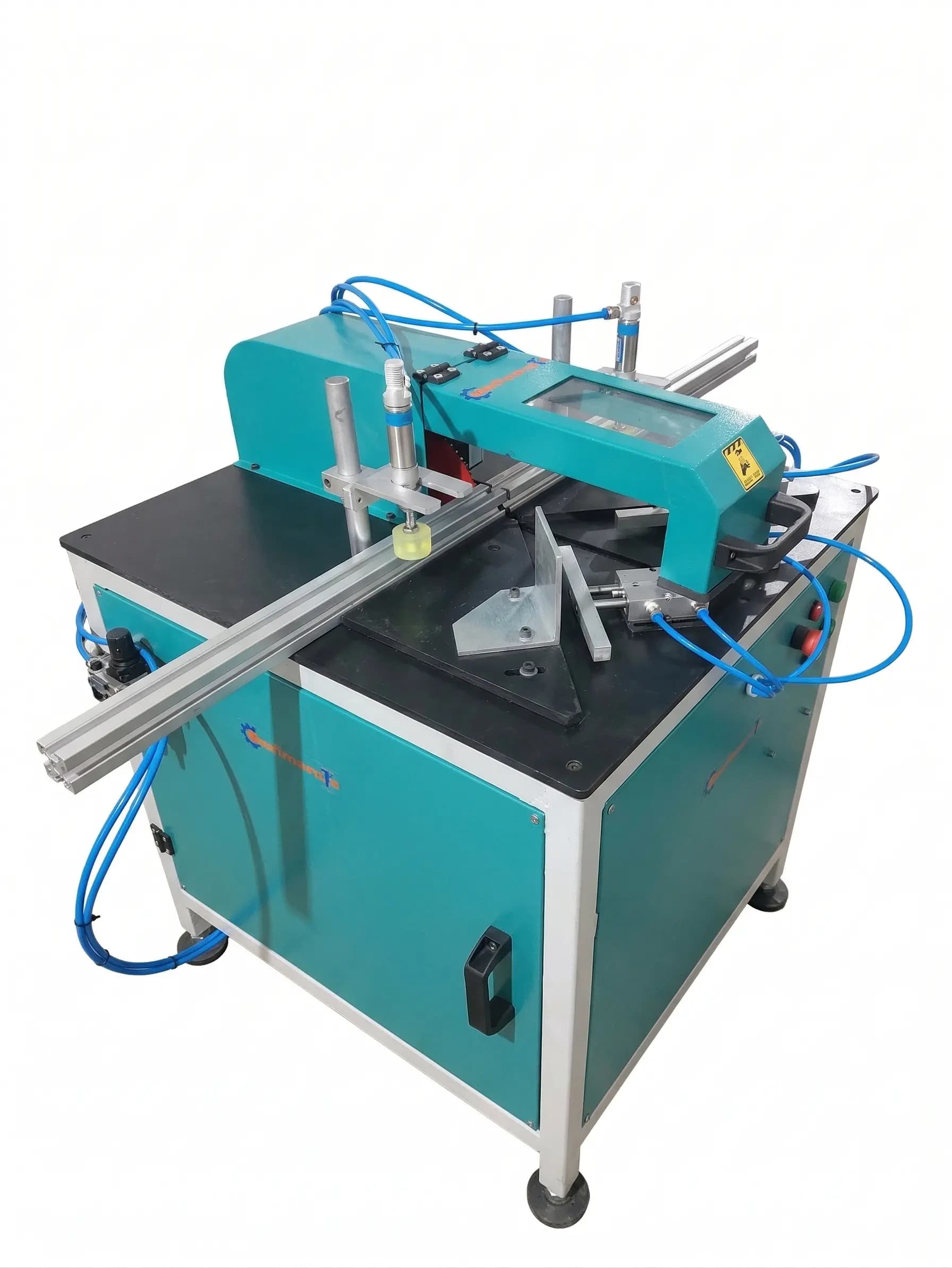
For fabricators in Nagpur’s MIDC industrial zones, reducing material waste is the fastest way to increase profit margins. Most workshops using a single head upvc cutting machine or manual 12-inch aluminium cutters face waste rates as high as 12% due to human error and kerf loss. By transitioning to an automatic double head cutting saw for aluminium profiles, you can mathematically reduce this waste to under 3% through precision engineering and optimized cutting sequences. This guide breaks down the technical transition from manual methods to automated systems specifically for the Nagpur manufacturing climate.
Technical Advantages of the Automatic Double Head Cutting Saw
The core of waste reduction lies in the machine's ability to execute simultaneous 45-degree cuts on both ends of a profile with sub-millimeter accuracy. A high-grade Automatic Double Head Cutting Machine typically utilizes 450mm to 500mm TCT (Tungsten Carbide Tipped) blades with Triple Chip Grind (TCG) geometry. These blades are driven by 2.2kW motors at 2800-3200 RPM, ensuring a burr-free finish that meets ISO 9001 precision standards. In my 15 years of workshop experience, the most critical factor is the pneumatic clamping system that operates at 6-8 bar pressure to prevent profile vibration during the feed.
- Precise length setting using digital readouts (DRO) or CNC controllers eliminates 'measuring tape creep' errors.
- Simultaneous cutting of both ends removes the need for profile flipping, which is where most 'wrong-side' cutting mistakes occur.
- Integrated mist lubrication systems cool the blade, preventing thermal expansion of the aluminium profile during high-volume production runs.
- Automatic angle indexing between 45 and 90 degrees ensures perfect miters for every frame.
Case Study: Waste Reduction in Butibori, Nagpur
In early 2023, we worked with a window manufacturer in Butibori who was processing roughly 2,500kg of aluminium profiles monthly. Their existing setup relied on a manual aluminium cutter machine 12 inch and a basic copy router machine. Upon auditing their scrap bins, we found that 280kg of material was being lost to 'short-offs' and incorrect angle cuts. We replaced their line with a heavy-duty 45 degree double head cutting machine and implemented an optimization software routine.
Within six weeks, their waste dropped to 70kg per month, saving them approximately ₹48,000 in raw material costs monthly. The return on investment for the machine was realized in less than 14 months just from material savings alone. Furthermore, their output increased from 15 frames per day to 42 frames per day without adding additional labor. This efficiency is critical for meeting the surge in demand from Nagpur's growing residential real estate sector.
Essential Specifications for Nagpur Fabricators
When evaluating an automatic aluminium window production line price, do not look at the sticker price alone; look at the technical tolerances. A high-quality machine must adhere to BS EN 12020 standards for profile tolerances. Here is what a senior engineer looks for in a professional-grade saw:
- Blade Diameter: 500mm is the industry standard for handling multi-chambered thermal break profiles.
- Cutting Range: The machine should handle lengths from 400mm to 4200mm in a single stroke.
- Feed Speed: Stepless speed regulation is essential to prevent 'chatter marks' on thinner 1.2mm profiles.
- Safety Standards: Look for magnetic safety locks on the protective hoods and emergency stop circuits that meet CE compliance.
Common Mistakes in Aluminium Profile Cutting
A common mistake I see in Nagpur workshops is the use of standard wood-cutting blades on an aluminium profile cutting machine. Wood blades have the wrong rake angle for non-ferrous metals, leading to hazardous kickbacks and poor edge quality. Another error is neglecting the 'kerf' (the width of the blade cut); an automatic saw compensates for the 4mm blade thickness, whereas manual cutting often forgets this, leading to frames that are 4mm too short. Lastly, fabricators often skip the use of an Aluminium Corner Crimping Machine after cutting, relying instead on screws, which compromises the structural integrity of the window.
- Ignoring Blade Sharpening: Dull TCT blades increase motor load and create friction heat that warps the profile ends.
- Inconsistent Air Pressure: If your compressor drops below 6 bar, the pneumatic clamps may slip, causing a ruined cut.
- Poor Floor Leveling: If the machine bed isn't perfectly level on your workshop floor, the long-axis rail will wear unevenly, leading to 0.5-degree errors over time.
Frequently Asked Questions (FAQ)
Q1: What is the typical automatic double head cutting machine price in India for a startup? A: For a reliable, entry-level automatic double head saw, prices typically range from ₹4.5 Lakhs to ₹8 Lakhs. While cheaper imports exist, they often lack local service centers in cities like Nagpur or Pune, leading to weeks of downtime for simple parts.
Q2: Can I use the same machine for both aluminium and uPVC profiles? A: Yes, but you must change the blade geometry and RPM. uPVC requires a different tooth count to prevent melting the plastic, while aluminium needs high-speed TCG blades with constant lubrication. Many Nagpur fabricators use our dual-purpose upvc windows making machine setups for this reason.
Q3: How much space is required for an automatic double head cutting saw? A: You need a linear space of at least 6 meters to accommodate the machine bed (usually 4.5m) plus the profile overhang. It is best to position the machine near the raw material rack to minimize handling damage to the powder-coated surfaces.
Get more articles like this
Follow Mechnovate on Google to see our guides in Google Discover & News