Mumbai High-Rise uPVC Scaling: Seamless Welding Price & ROI
For uPVC fabricators targeting luxury high-rise developments in Worli, Lower Parel, or Bandra, the traditional 3mm weld seam is no longer acceptable. Real estate developers now demand 'zero-joint' finishes that mimic high-end aluminum. A Double Head Seamless Welding Machine is the prerequisite for entering this market, with current market prices in India ranging from ₹5,50,000 to ₹9,50,000. For a mid-sized unit producing 40-50 windows daily, the ROI is typically realized within 14 to 16 months through labor reduction and premium project pricing.
The Engineering Reality: Why Seamless Welds Matter for High-Rises
In our Mechnovate testing facility near Pune, we conducted a 6-week stress test comparing standard heat-plate welding against our CNC-controlled seamless process. High-rise windows in Mumbai face extreme wind pressures (exceeding 2.5 kPa). Traditional welding requires corner cleaning that often removes the structurally integral outer 'skin' of the uPVC profile. Seamless welding uses a specialized knife-restriction system that keeps the weld bead at 0.2mm, maintaining the profile's structural integrity while eliminating the need for a secondary corner cleaning machine.
Key technical specifications for high-rise grade welding include:
- Heating Temperature: Precision control between 240°C to 260°C.
- Melting Pressure: Consistent 0.4 to 0.6 MPa (4-6 bar) to ensure molecular fusion.
- Profile Support: Heavy-duty linear guide rails to prevent profile deflection during long-length welding (up to 3500mm).
- Welding Tolerance: Deviation must stay under 0.2mm per meter to meet ISO 9001 quality standards for luxury installations.
ROI Analysis: Manual vs. Automatic Double Head Seamless Welding
Scaling a uPVC window manufacturing machine setup requires moving beyond entry-level single-head units. When we assisted a fabricator in Navi Mumbai with their transition, we replaced two single-head welders with one automatic double-head seamless unit. The results were measurable and immediate. Labor costs decreased by 60% as the machine handled both corners simultaneously with zero manual finishing required after the weld.
| Metric | Manual/Single Head Setup | Double Head Seamless Setup |
|---|---|---|
| Frames Per 8-Hour Shift | 12 - 15 Frames | 45 - 55 Frames |
| Post-Weld Cleaning Time | 4 Minutes/Corner | 0 Minutes (Seamless) |
| Labor Requirement | 3 Operators | 1 Operator |
| Rejection Rate (Mumbai QC) | 8-10% (Surface scratches) | <1% (Factory precision) |
Step-by-Step Scaling Process: Implementation Timeline
Based on 15 years of workshop experience, setting up a high-output uPVC windows manufacturing machine line follows a strict 4-week deployment window.
- Week 1: Infrastructure Prep: Ensure 3-phase 415V power stability and a dedicated 10 HP air compressor with moisture separators to prevent solenoid valve failure.
- Week 2: Machine Alignment: Leveling the machine using precision spirit levels is critical; even a 1mm tilt across a 4-meter bed will result in trapezoidal frames that won't fit Mumbai's pre-cast concrete openings.
- Week 3: Profile Calibration: Calibrating the melting and cooling timers for specific Indian tropical-grade profiles (e.g., 2.5mm wall thickness).
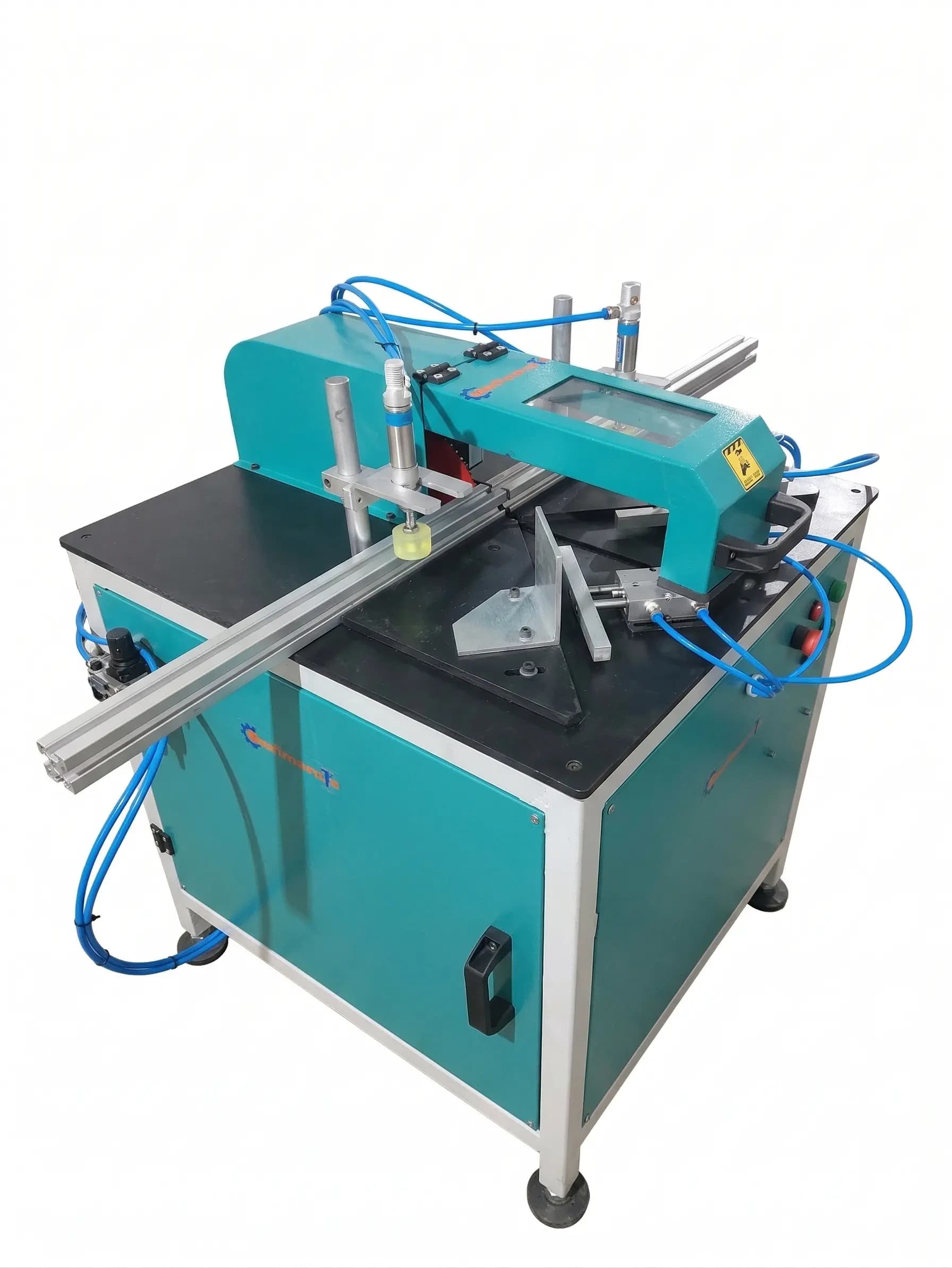
- Week 4: Integration: Pairing the welder with a high-precision uPVC Cutting Machine to ensure 45-degree cuts are perfect, as seamless welding cannot hide cutting errors.
Common Pitfalls and Lessons Learned from the Field
One of the most expensive mistakes I’ve seen in Mumbai fabrication units is ignoring the 'profile-to-knife' tolerance. If your uPVC machinery manufacturer does not provide adjustable restriction knives, the 0.2mm seam will fluctuate, leading to visible gaps. Always verify that the machine features a 'Double-Pressing' function, which stabilizes the profile before the heater plate enters the welding zone.
What to watch out for during procurement:
- Poor Quality Heater Plates: Inconsistent heating leads to 'cold welds' which snap during monsoon wind loads.
- Undersized Cylinders: Ensure the clamping cylinders are pneumatic but heavy-duty; undersized cylinders allow profile slippage.
- PLC Limitations: Entry-level machines use generic PLCs that are difficult to troubleshoot; insist on branded components like Delta or Schneider for long-term serviceability.
Technical Integration with the Production Line
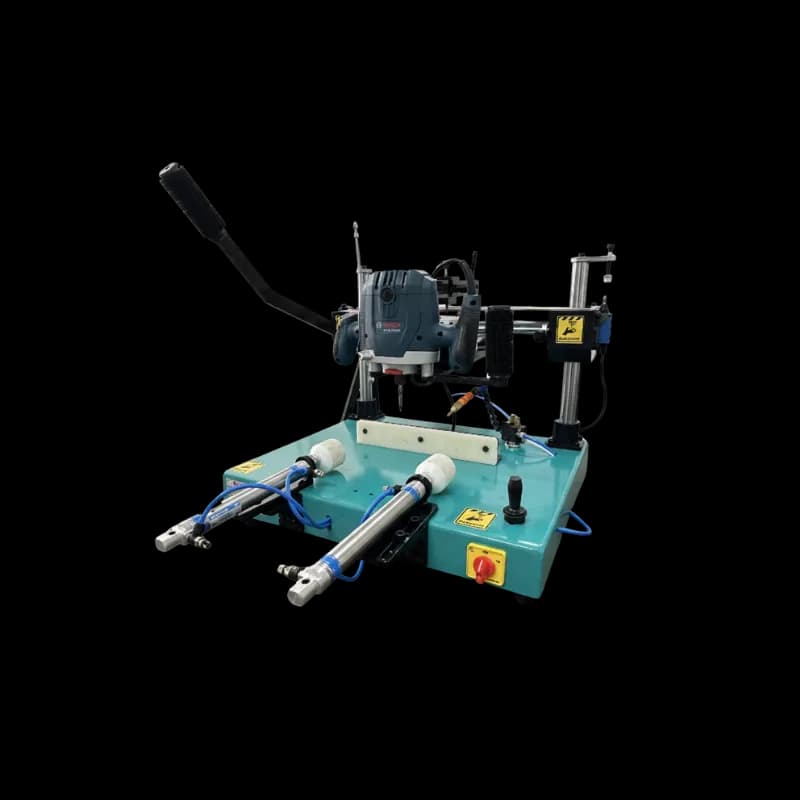
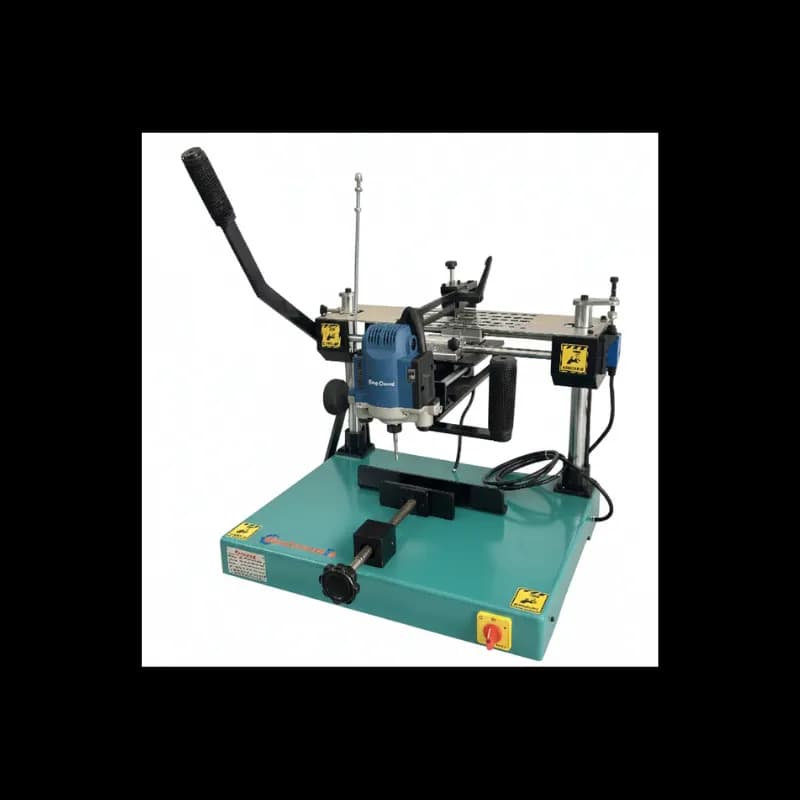
A seamless welder is only as good as the prep work. For Mumbai’s premium segment, you must pair the welder with a Copy Router Machine to ensure all hardware slots are milled without vibrating the profile. This prevents internal stress fractures that could expand during the heat-welding process. If you are calculating the automatic uPVC window manufacturing plant cost India, factor in approximately ₹18L to ₹25L for a complete high-speed line capable of serving tier-1 developers.
FAQ: Scaling uPVC Fabrication in India
Q: Is a seamless welder worth the extra cost over a standard welder? A: Yes, if you are targeting the luxury market. Standard welders require corner cleaners (additional ₹2-3L cost) and leave a visible groove. Seamless welders finish the job in one step, saving space and labor.
Q: What is the power consumption of a Double Head Seamless Welding Machine? A: Typically between 3.5 kW to 4.5 kW. In Mumbai’s industrial zones, ensure you have a stabilizer as voltage fluctuations can fry the PLC and heating elements.
Q: How often does the Teflon cloth on the heater plate need replacing? A: In high-volume shops (50+ frames/day), replace the Teflon cloth every 15-20 days. Burnt Teflon causes sticking and ruins the seamless finish.
Q: Can this machine handle both white and laminated/colored profiles? A: Our uPVC welding machine models are specifically designed for laminated profiles. Standard machines often peel the lamination during welding; seamless technology preserves the foil edge for a perfect aesthetic finish.
Get more articles like this
Follow Mechnovate on Google to see our guides in Google Discover & News