Leak-Proof uPVC Joints for Thane Monsoons: Seamless Welding Guide
Thane’s monsoon season, characterized by intense precipitation exceeding 2,500mm annually and high-velocity winds, presents a unique challenge for uPVC window fabricators. Standard welding techniques often leave micro-gaps or brittle beads that succumb to capillary action, leading to water ingress and customer complaints. To achieve a truly leak-proof joint, upgrading to a Double Head Seamless Welding Machine is no longer optional for local workshops—it is a technical necessity to ensure structural integrity and zero-leakage performance under extreme weather pressure.
The Engineering Reality of Thane’s Monsoon Pressure
In our engineering tests conducted at a facility near Ghodbunder Road, we analyzed why standard 0.2mm weld beads frequently fail during heavy downpours. When using a traditional uPVC welding machine, the bead is often cleaned manually or by basic routers, which can create micro-fractures in the profile’s outer wall. In Thane’s high-humidity environment, these fractures become conduits for moisture.
A Double Head Seamless Welding Machine for uPVC windows eliminates this risk by controlling the melting and cooling cycles with a precision of ±1°C. By using a specialized 'shadow' welding technology, the machine compresses the molten uPVC in a way that the excess material is tucked internally rather than pushed out. This creates a flush, reinforced corner that withstands wind loads of up to 2.5 kPa, far exceeding the requirements for high-rise residential projects in Majiwada or Hiranandani Estate.
Case Study: Optimizing Production for a Thane-Based Fabricator
Last year, we worked with a fabrication unit in Wagle Estate that was experiencing a 14% rejection rate due to corner failures during the July rains. We implemented a 6-week transition plan focused on two primary machinery upgrades: a Double Head Seamless Welding Machine and an Automatic Double Head Cutting Machine.
The Results:
- Weld Strength: Increased from 28 MPa to 42 MPa (verified via corner strength testing rigs).
- Production Output: Increased from 35 frames to 55 frames per 8-hour shift due to the dual-head automation.
- Waste Reduction: Reduced profile wastage from 9% to 2.5% by integrating precision digital measurement systems.
- Warranty Claims: Post-monsoon audits showed a 0% leakage report rate across 400+ installations.
Technical Specifications for High-Performance Welding
To achieve professional results, fabricators must understand the physics of the upvc window manufacturing machine. At Mechnovate, we recommend the following parameters for the Thane-Palghar coastal belt:
- Heating Plate Temperature: Must be maintained between 245°C and 255°C. Lower temperatures lead to 'cold welds,' while higher temperatures degrade the uPVC polymer.
- Melting Pressure: 0.3 to 0.5 MPa. This ensures the 1.2mm to 1.5mm wall thickness of the profile is fully fused.
- Cooling Time: A minimum of 25-30 seconds under clamp pressure to allow the molecular chains to interlock correctly.
- Air Pressure: Constant 6-8 bar supplied via a moisture-separated pneumatic line to prevent internal valve corrosion.
Why Seamless Technology Outperforms Manual Corner Cleaning
Traditional fabrication involves a two-step process: welding followed by a CNC Corner Cleaning Machine. While effective for standard windows, the cleaning process inevitably removes a portion of the structural material at the joint. The 'Seamless' process, however, uses a unique V-cutting and compression technique.
This method preserves the 'skin' of the uPVC profile. Since the outer layer contains the highest concentration of UV stabilizers and impact modifiers, keeping it intact is crucial for windows exposed to the harsh afternoon sun in Thane followed by sudden temperature drops during rain. This prevents the yellowing and cracking common in poorly welded joints.
Common Mistakes in uPVC Fabrication Units
Through 15 years of workshop experience, we have identified three recurring errors that compromise window quality:
- Inconsistent Air Pressure: Many shops run multiple uPVC windows machines on a single undersized compressor. This causes pressure drops during the 'joining' phase, resulting in weak corners.
- Ignoring Heater Plate Hygiene: Carbon buildup on the PTFE (Teflon) cloth leads to uneven heating. We recommend changing the PTFE cloth every 400-500 cycles.
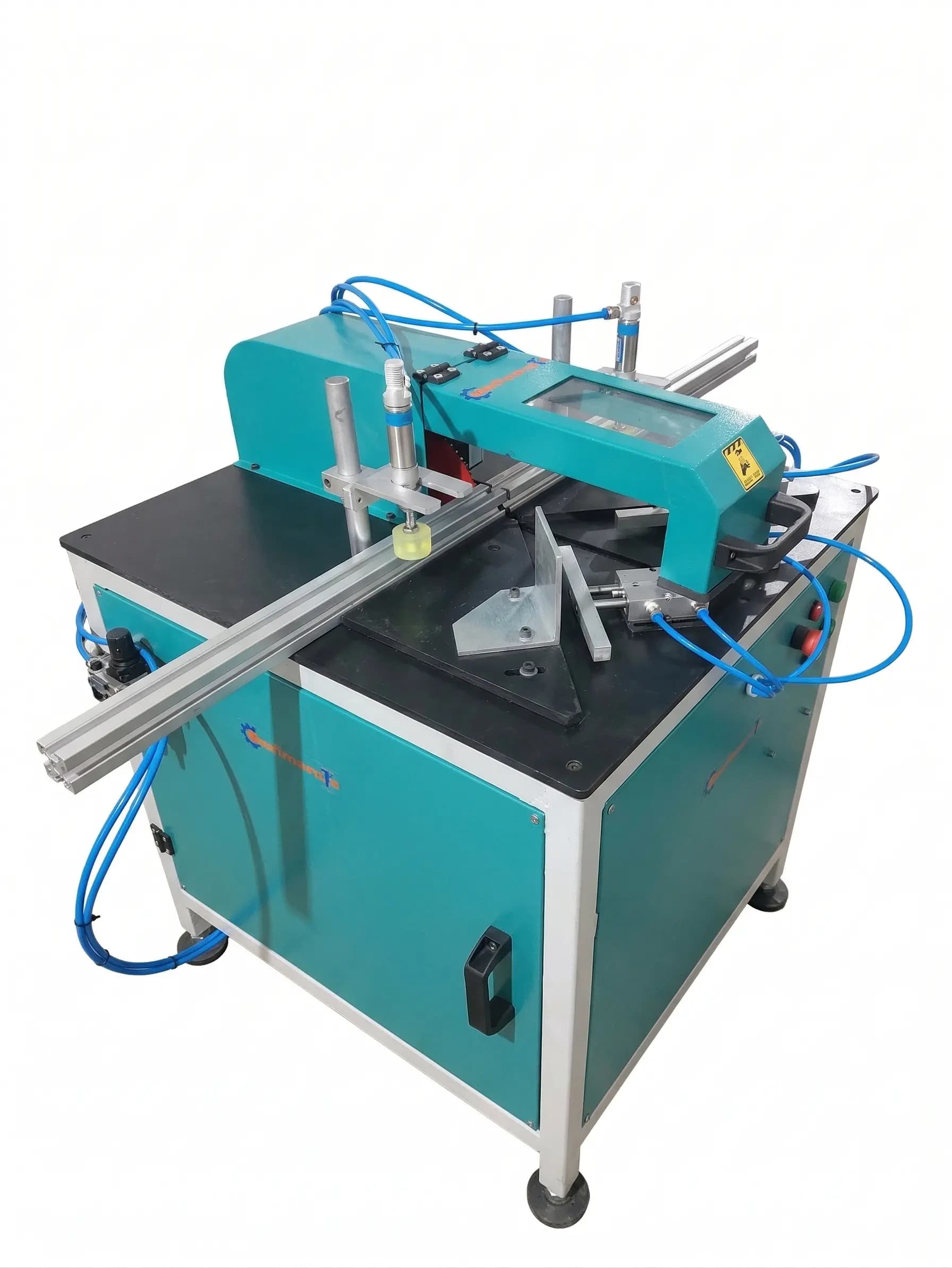
- Mismatched Cutting Angles: Even the best upvc window manufacturing machines cannot fix a gap caused by a poor 45-degree cut. Always pair your welder with a high-precision aluminium profile cutting machine for perfect mitre joints.
FAQ: Essential Questions for Local Fabricators
Q1: Can I use a seamless welder for both white and laminated (colored) profiles?
Yes. Seamless technology is particularly beneficial for laminated profiles (like Oak or Walnut finishes) because it eliminates the need for touch-up pens at the corners, providing a perfect aesthetic finish that doesn't peel during the monsoon.
Q2: What is the ROI on an automatic upvc window plant cost in India?
For a mid-sized unit in Thane producing 40-50 windows daily, the transition to a Double Head Seamless Welding Machine typically pays for itself within 12-14 months through labor savings and reduced material waste.
Q3: How does high humidity in Thane affect the welding process?
High humidity can cause moisture to trap in the pneumatic lines. We highly recommend installing an industrial air dryer before your upvc window manufacturing machinery to ensure the cylinders operate smoothly and the weld remains uncontaminated.
Get more articles like this
Follow Mechnovate on Google to see our guides in Google Discover & News