High-Rise Window Safety: Automatic Double Head Cutting Saw Guide
Solving Structural Weakness in High-Rise Windows: A Thane Fabricator's Guide to the Automatic Double Head Cutting Saw for Aluminium Profiles
In the high-density residential corridors of Thane, from Ghodbunder Road to Pokhran, high-rise developments are facing an invisible enemy: wind-induced structural fatigue. For an aluminium fabrication workshop, the difference between a window that whistles at the 30th floor and one that remains hermetically sealed lies in the precision of the miter joint. If your cutting tolerance exceeds 0.2mm, you are not just losing material; you are compromising the structural integrity of the entire building envelope. As a senior engineer at Mechnovate, I have seen dozens of Thane-based projects struggle with water seepage and air infiltration simply because they relied on single-head manual saws for high-volume orders. The solution for modern high-rise requirements is the integration of an Automatic Double Head Cutting Saw.
The Engineering Reality: Why Precision Cuts Save Lives
When we talk about precision engineering in window machinery, we are specifically looking at the 45-degree miter. In a high-rise profile, often with wall thicknesses exceeding 2.5mm to meet IS 1285 standards, a manual cut often results in 'blade deflection.' This deflection creates a gap in the corner joint that even the best Aluminium Corner Crimping Machine cannot fix. An automatic double head cutting saw for aluminium profiles uses synchronized hydro-pneumatic feeding to ensure both ends of the profile are cut simultaneously. This eliminates the cumulative error found in single-cutting processes. By maintaining a constant feed rate and using 450mm or 500mm carbide-tipped blades, the machine ensures that the profile's structural chambers align perfectly for the crimping process.
Case Study: 40% Efficiency Gain in a Thane Fabrication Unit
Last year, we overhauled a facility in the Wagle Estate industrial area that was struggling with a 15% rejection rate on a luxury high-rise project. They were using a manual 12-inch aluminium cutter machine for large-span sliding windows. Over six weeks, we replaced their workflow with a CNC-integrated automatic system. The results were measurable and immediate:
- Waste Reduction: Cutting waste dropped from 12% to 2.8% due to precision length-setting and optimized nesting software.
- Output Increase: The workshop went from 45 frames per day to 110 frames per day without adding extra labor.
- Joint Integrity: Corner pull-tests showed a 35% increase in load-bearing capacity because the 45-degree angles were true to 0.1 degrees.
This transition proves that the automatic double head cutting machine price in India is an investment that pays for itself within 8-10 months of high-rise project work.
Technical Specifications and ISO Standards
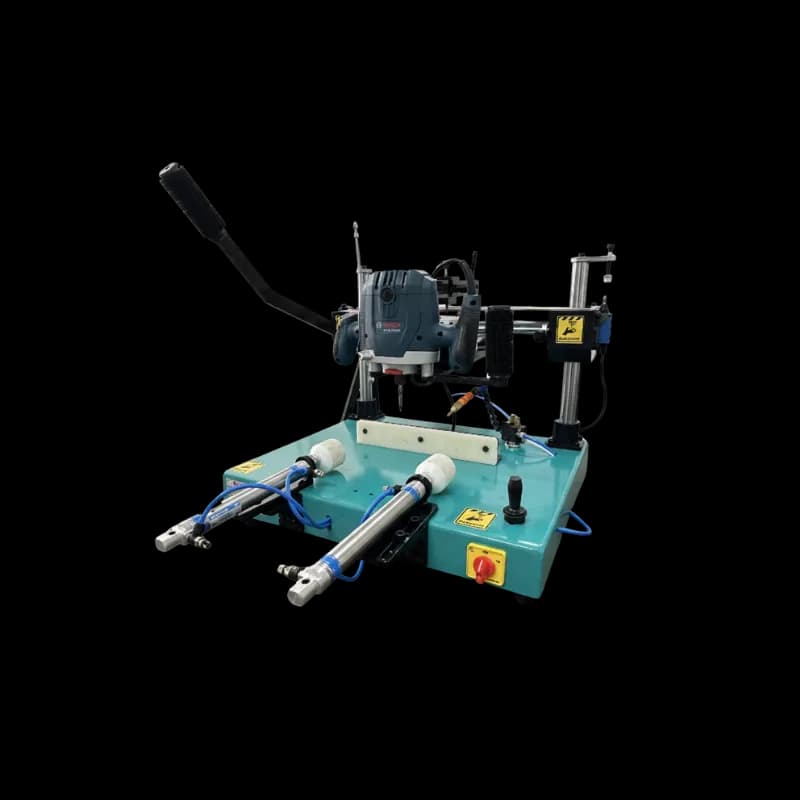
To achieve professional-grade results, fabricators must look beyond the basic aluminium cutting machine price. You need to evaluate the technical architecture of the machine. A high-performance double head miter saw for aluminium profiles should feature:
- Blade Diameter: Minimum 450mm to handle wider architectural profiles.
- Motor Power: At least 2.2kW to 3.0kW per head to maintain RPM under load.
- Feed System: Hydro-pneumatic cylinders for smooth, vibration-free blade travel.
- Safety Standards: Full guarding in compliance with industrial profile cutting safety standards and ISO 9001 quality management.
- Angle Range: Automatic switching between 45, 90, and 135 degrees.
For those also handling uPVC, the same principles apply. Investing in a high-quality uPVC Window Manufacturing Machine ensures that the multi-chambered profiles are not crushed during the cut, preserving the thermal break properties required for modern green building certifications.
Avoiding Common Fabrication Mistakes
In my 15 years on the shop floor, I have noticed three recurring mistakes that destroy the value of even the most expensive machinery:
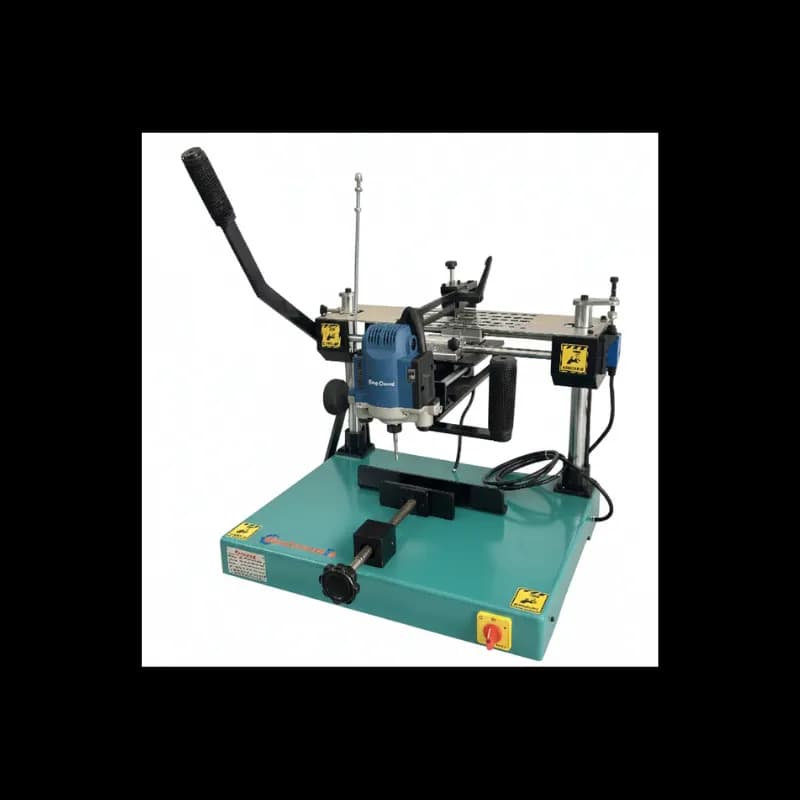
- Ignoring Blade Cooling: Cutting dry on a high-speed copy router for aluminium windows or a double head saw leads to micro-cracks in the profile edge. Always use a mist-spray lubrication system.
- Improper Clamping Pressure: Too much pressure deforms the profile; too little leads to 'chatter.' Automatic machines use adjustable pneumatic clamps to hold the profile without marring the finish.
- Neglecting Calibration: A machine is only as good as its last calibration. We recommend a weekly check using a digital protractor to ensure the 45-degree angle hasn't drifted due to floor vibrations.
If you are also diversifying into uPVC, remember that a uPVC Welding Machine requires perfectly clean cuts to create a seamless fusion. Any dust or unevenness from a dull blade will result in a weak weld that will crack under high-altitude wind pressure.
ROI: Is the Automatic Double Head Cutting Saw Worth It?
When calculating the cost of setting up a uPVC window manufacturing unit or an aluminium plant, the cutting station is your biggest bottleneck. While a single cutting manual saw might seem cheaper initially, the labor cost and material wastage make it the most expensive option in the long run. An automatic unit allows you to bid for larger contracts in Thane and Mumbai where developers demand documented precision and adherence to BS EN 12020 standards.
FAQ: Expert Answers for Fabricators
Q1: Can I use the same machine for both aluminium and uPVC? Technically, yes, but it is not recommended. Aluminium requires higher RPM and lubrication, while uPVC needs specific blade geometries to prevent melting. For a professional setup, use a dedicated aluminium cutting machine and separate uPVC machinery.
Q2: What is the maintenance schedule for an automatic double head saw? Daily cleaning of the guide rails and chip collection is mandatory. Monthly checks on the pneumatic seals and quarterly blade sharpening or replacement will ensure the machine lasts 10+ years.
Q3: How do I handle very short profiles? Most automatic double head saws have a minimum cutting length (usually around 400mm). For shorter pieces, you will need to use a single head mode or a dedicated short-cutting jig to ensure operator safety.
Q4: Is it hard to train staff on CNC-based machines? No. Modern interfaces are designed for shop-floor workers. At Mechnovate, we provide a 3-day training module that covers operation, safety, and basic troubleshooting, making the transition from manual to automatic seamless.
Get more articles like this
Follow Mechnovate on Google to see our guides in Google Discover & News