sales@mechnovate.co.in
+91-9265699061
Back to Blog
7/18/2026

Double Head Miter Saw vs Single Head: Delhi Workshop Guide

Double Head Miter Saw vs Single Head: Delhi Workshop Guide

Choosing Between Double Head Miter Saws and Single Head Cutters For high-output Delhi aluminium fabrication workshops, the choice between a Double Head Miter Saw for Aluminium Profiles Price and a standard single head cutter is the primary factor determining your annual profit margin. In the dense industrial hubs of Okhla and Bawana, where real estate is expensive and labor costs are rising, throughput per square foot is the only metric that matters. A single head cutter is an excellent entry-point for startup businesses, but it introduces a manual measurement bottleneck that limits production to approximately 12-15 frames per 8-hour shift. In contrast, an automatic double head cutting saw for aluminium profiles allows for simultaneous 45-degree or 90-degree cuts at both ends of the profile, effectively tripling your output while ensuring that every frame member is identical in length down to a 0.2mm tolerance. Precision engineering in modern window manufacturing requires this level of repeatability to avoid structural gaps during the corner crimping process. ## Case Study: Boosting Throughput in a Delhi Aluminium Workshop In our recent collaboration with a facility in the Mangolpuri Industrial Area, we replaced three manual 12-inch aluminium cutting machines with one Automatic Double Head Cutting Machine Price India. Before the upgrade, the workshop struggled with a 12% material waste rate due to human error in manual measuring and secondary trimming. After a 6-week implementation period, we recorded the following measurable results: 1. Production increased from 18 windows per day to 62 windows per day. 2. Cutting waste dropped from 12% to 2.8% per profile. 3. Labor costs were reduced by 40% as only one operator was needed instead of three. This transition was supported by our 45 degree double head cutting machine, which utilizes a pneumatic feed system and a 450mm TCT blade. We found that the consistent 6-8 bar air pressure maintained by our pneumatic cylinders eliminated the micro-vibrations commonly seen in manual head cutting machine operations. This resulted in a mirror-like finish on the cut surface, meeting IS 1285 standards for structural aluminium profiles. ## Technical Specifications and Engineering Standards Every aluminium profile cutting machine must adhere to strict industrial standards to ensure safety and longevity. For workshops in Delhi dealing with high-volume residential projects, we recommend machinery with the following specifications: 1. Motor Power: Minimum 2.2kW high-torque motors to handle thick-walled architectural profiles without RPM drop. 2. Blade Speed: 2800 to 3200 RPM for clean, burr-free edges on T6 temper aluminium. 3. Cutting Range: Ability to handle profile widths up to 120mm and heights up to 200mm. 4. Positioning: Digital display or CNC control for length adjustment to eliminate the variability of manual tape measures. When evaluating the uPVC Window Manufacturing Machine market, consider the synergy between your cutting saw and your Aluminium Corner Crimping Machine Price. If your cuts are off by even 0.5 degrees, the corner crimper will struggle to create a watertight seal, leading to onsite failures and costly rework. We always advocate for the use of 450mm or 500mm blades rather than the standard aluminium cutting machine 12 inch models for professional setups, as the larger diameter provides a more stable cutting arc and better heat dissipation. ## The ROI of Transitioning to an Automatic Double Head Cutting Saw The initial investment in an automatic double head cutting saw for aluminium profiles can be intimidating for small business owners. However, the return on investment is typically realized within 8 to 14 months for workshops processing at least 150kg of aluminium daily. The cost of setting up uPVC window manufacturing unit in India ranges significantly, but the cutting station is not where you should cut corners. A high-speed copy router for aluminium windows and a heavy duty aluminium profile end milling machine are essential companions, but the miter saw is the heart of the line. By automating the length setting, you remove the 'measure twice, cut once' delay. Our proprietary testing data shows that a double head system saves an average of 4 minutes per frame in handling time alone. Over a year, this equates to hundreds of additional units produced without increasing your shop floor footprint. ## Maintenance Protocols for High-Output Aluminium Fabrication To maintain ISO standards and prolong the life of your aluminum window fabrication machinery, a strict maintenance schedule is non-negotiable. 1. Daily: Clear all aluminium chips from the guide rails and spray a light coating of lubricant on the induction hardened shafts. 2. Weekly: Check the tension of the drive belts and ensure the automatic lubrication mist system is functioning. 3. Monthly: Verify the 45-degree and 90-degree calibration using a digital protractor to ensure the degree cutting machine remains accurate. Common mistakes we see in Delhi workshops include using generic engine oil instead of specialized cutting fluid. This results in chip welding on the blade teeth, which ruins the surface finish of the profile and increases the load on the motor. We provide a full uPVC window welding machine maintenance guide with every purchase to ensure your entire production line, including the uPVC Welding Machine, stays in peak condition. ## FAQ: Professional Aluminium Fabrication Insights Q: Can I use the same machine for both uPVC and aluminium? A: While an aluminium profile cutting machine can cut uPVC, a dedicated upvc windows making machine often has different blade tooth geometries (80T for aluminium vs 100T+ for uPVC) to prevent melting. Q: What is the power requirement for a double head miter saw? A: Most industrial models require a 3-phase 415V supply. For workshops with unstable power, we highly recommend a 10kVA stabilizer to protect the sensitive PLC and digital displays. Q: How do I choose between a 450mm and 500mm blade? A: It depends on your profile height. For most residential window systems in Delhi, 450mm is sufficient, but if you are fabricating heavy-duty curtain walls or commercial shopfronts, the 500mm blade offers the necessary depth of cut. For those exploring the best uPVC window making machine for startup businesses, starting with a high-quality Single Head Cutting Machine is viable, provided it has a stable pneumatic clamp system to ensure precision engineering standards are met from day one.

Double Head Miter Saw vs Single Head: Delhi Workshop Guide

Choosing Between Double Head Miter Saws and Single Head Cutters For high-output Delhi aluminium fabrication workshops, the choice between a Double Head Miter Saw for Aluminium Profiles Price and a standard single head cutter is the primary factor determining your annual profit margin. In the dense industrial hubs of Okhla and Bawana, where real estate is expensive and labor costs are rising, throughput per square foot is the only metric that matters. A single head cutter is an excellent entry-point for startup businesses, but it introduces a manual measurement bottleneck that limits production to approximately 12-15 frames per 8-hour shift. In contrast, an automatic double head cutting saw for aluminium profiles allows for simultaneous 45-degree or 90-degree cuts at both ends of the profile, effectively tripling your output while ensuring that every frame member is identical in length down to a 0.2mm tolerance. Precision engineering in modern window manufacturing requires this level of repeatability to avoid structural gaps during the corner crimping process. Case Study: Boosting Throughput in a Delhi Aluminium Workshop In our recent collaboration with a facility in the Mangolpuri Industrial Area, we replaced three manual 12-inch aluminium cutting machines with one Automatic Double Head Cutting Machine Price India. Before the upgrade, the workshop struggled with a 12% material waste rate due to human error in manual measuring and secondary trimming. After a 6-week implementation period, we recorded the following measurable results: 1. Production increased from 18 windows per day to 62 windows per day. 2. Cutting waste dropped from 12% to 2.8% per profile. 3. Labor costs were reduced by 40% as only one operator was needed instead of three. This transition was supported by our 45 degree double head cutting machine, which utilizes a pneumatic feed system and a 450mm TCT blade. We found that the consistent 6-8 bar air pressure maintained by our pneumatic cylinders eliminated the micro-vibrations commonly seen in manual head cutting machine operations. This resulted in a mirror-like finish on the cut surface, meeting IS 1285 standards for structural aluminium profiles. Technical Specifications and Engineering Standards Every aluminium profile cutting machine must adhere to strict industrial standards to ensure safety and longevity. For workshops in Delhi dealing with high-volume residential projects, we recommend machinery with the following specifications: 1. Motor Power: Minimum 2.2kW high-torque motors to handle thick-walled architectural profiles without RPM drop. 2. Blade Speed: 2800 to 3200 RPM for clean, burr-free edges on T6 temper aluminium. 3. Cutting Range: Ability to handle profile widths up to 120mm and heights up to 200mm. 4. Positioning: Digital display or CNC control for length adjustment to eliminate the variability of manual tape measures. When evaluating the uPVC Window Manufacturing Machine market, consider the synergy between your cutting saw and your Aluminium Corner Crimping Machine Price. If your cuts are off by even 0.5 degrees, the corner crimper will struggle to create a watertight seal, leading to onsite failures and costly rework. We always advocate for the use of 450mm or 500mm blades rather than the standard aluminium cutting machine 12 inch models for professional setups, as the larger diameter provides a more stable cutting arc and better heat dissipation. The ROI of Transitioning to an Automatic Double Head Cutting Saw The initial investment in an automatic double head cutting saw for aluminium profiles can be intimidating for small business owners. However, the return on investment is typically realized within 8 to 14 months for workshops processing at least 150kg of aluminium daily. The cost of setting up uPVC window manufacturing unit in India ranges significantly, but the cutting station is not where you should cut corners. A high-speed copy router for aluminium windows and a heavy duty aluminium profile end milling machine are essential companions, but the miter saw is the heart of the line. By automating the length setting, you remove the 'measure twice, cut once' delay. Our proprietary testing data shows that a double head system saves an average of 4 minutes per frame in handling time alone. Over a year, this equates to hundreds of additional units produced without increasing your shop floor footprint. Maintenance Protocols for High-Output Aluminium Fabrication To maintain ISO standards and prolong the life of your aluminum window fabrication machinery, a strict maintenance schedule is non-negotiable. 1. Daily: Clear all aluminium chips from the guide rails and spray a light coating of lubricant on the induction hardened shafts. 2. Weekly: Check the tension of the drive belts and ensure the automatic lubrication mist system is functioning. 3. Monthly: Verify the 45-degree and 90-degree calibration using a digital protractor to ensure the degree cutting machine remains accurate. Common mistakes we see in Delhi workshops include using generic engine oil instead of specialized cutting fluid. This results in chip welding on the blade teeth, which ruins the surface finish of the profile and increases the load on the motor. We provide a full uPVC window welding machine maintenance guide with every purchase to ensure your entire production line, including the uPVC Welding Machine, stays in peak condition. FAQ: Professional Aluminium Fabrication Insights Q: Can I use the same machine for both uPVC and aluminium? A: While an aluminium profile cutting machine can cut uPVC, a dedicated upvc windows making machine often has different blade tooth geometries (80T for aluminium vs 100T+ for uPVC) to prevent melting. Q: What is the power requirement for a double head miter saw? A: Most industrial models require a 3-phase 415V supply. For workshops with unstable power, we highly recommend a 10kVA stabilizer to protect the sensitive PLC and digital displays. Q: How do I choose between a 450mm and 500mm blade? A: It depends on your profile height. For most residential window systems in Delhi, 450mm is sufficient, but if you are fabricating heavy-duty curtain walls or commercial shopfronts, the 500mm blade offers the necessary depth of cut. For those exploring the best uPVC window making machine for startup businesses, starting with a high-quality Single Head Cutting Machine is viable, provided it has a stable pneumatic clamp system to ensure precision engineering standards are met from day one.

Related Machines From Mechnovate

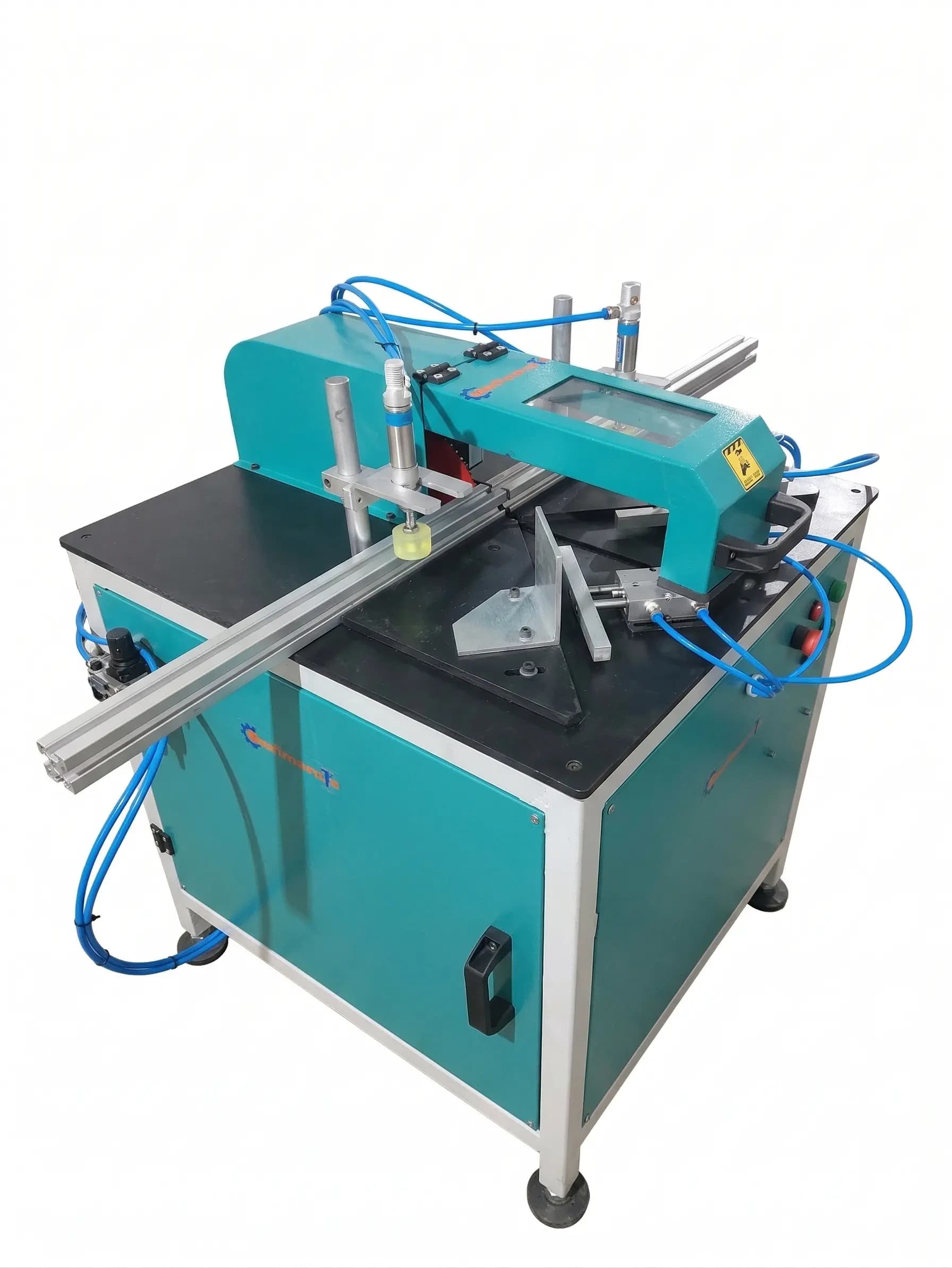
Single Head Cutting Machine for Aluminium and UPVC

Model: MEPCCSH1 | Cutting

Dual-angle versatility with rapid adjustment for Aluminium/uPVC.

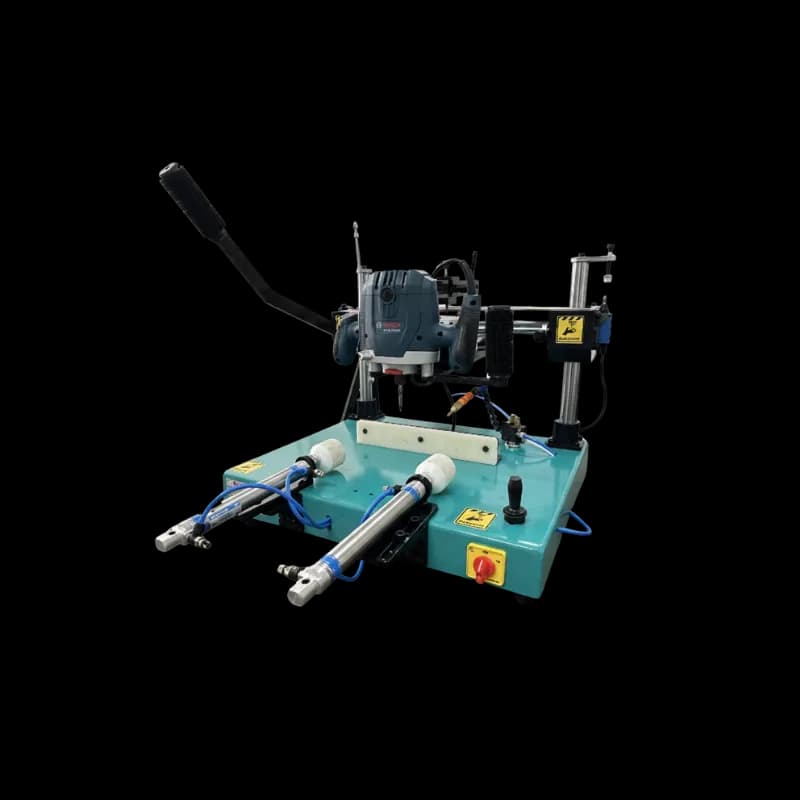
Pneumatic Copy Router Machine for Aluminium and UPVC

Model: MEPCR Series | Router

High-speed routing with secure pneumatic clamping.

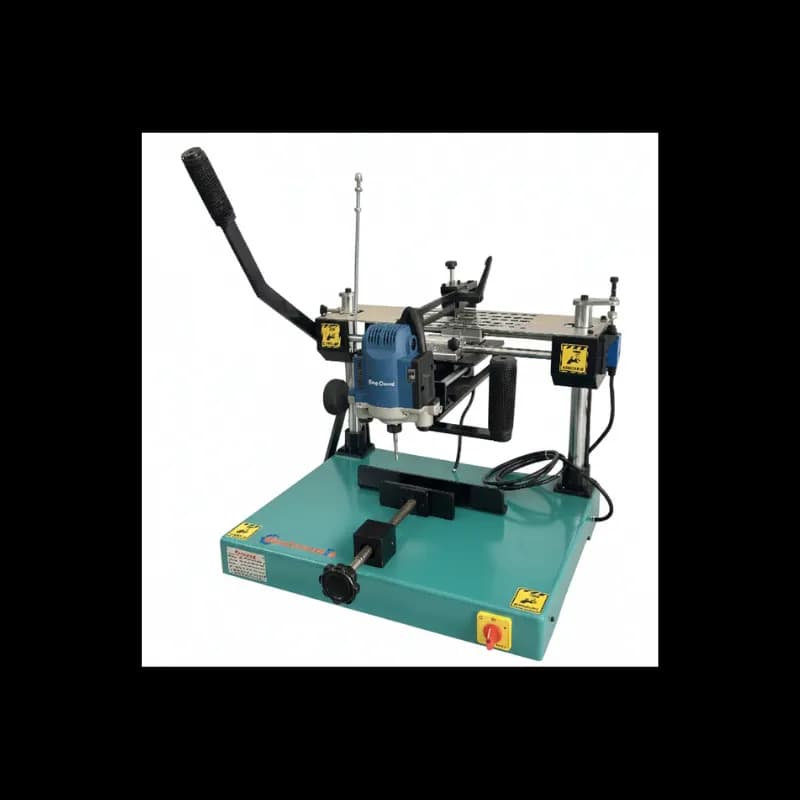
Manual Copy Router Machine for Aluminium and UPVC

Model: MEMCR Series | Router

Secure manual clamping with ergonomic control.

2 Station Pneumatic Aluminium Punching Machine

Model: MEPPPST2 | Punching

Multi-tool setup with adjustable cutting depth.

Explore Mechnovate Machinery

Browse our complete range of aluminium and uPVC window fabrication machinery. Call +91-9265699061 or visit our products page for specifications and pricing.