CNC uPVC Window Corner Cleaner Price & ROI for Bangalore Units
The Direct Impact: ROI and Output Benchmarks for Bangalore Fabricators
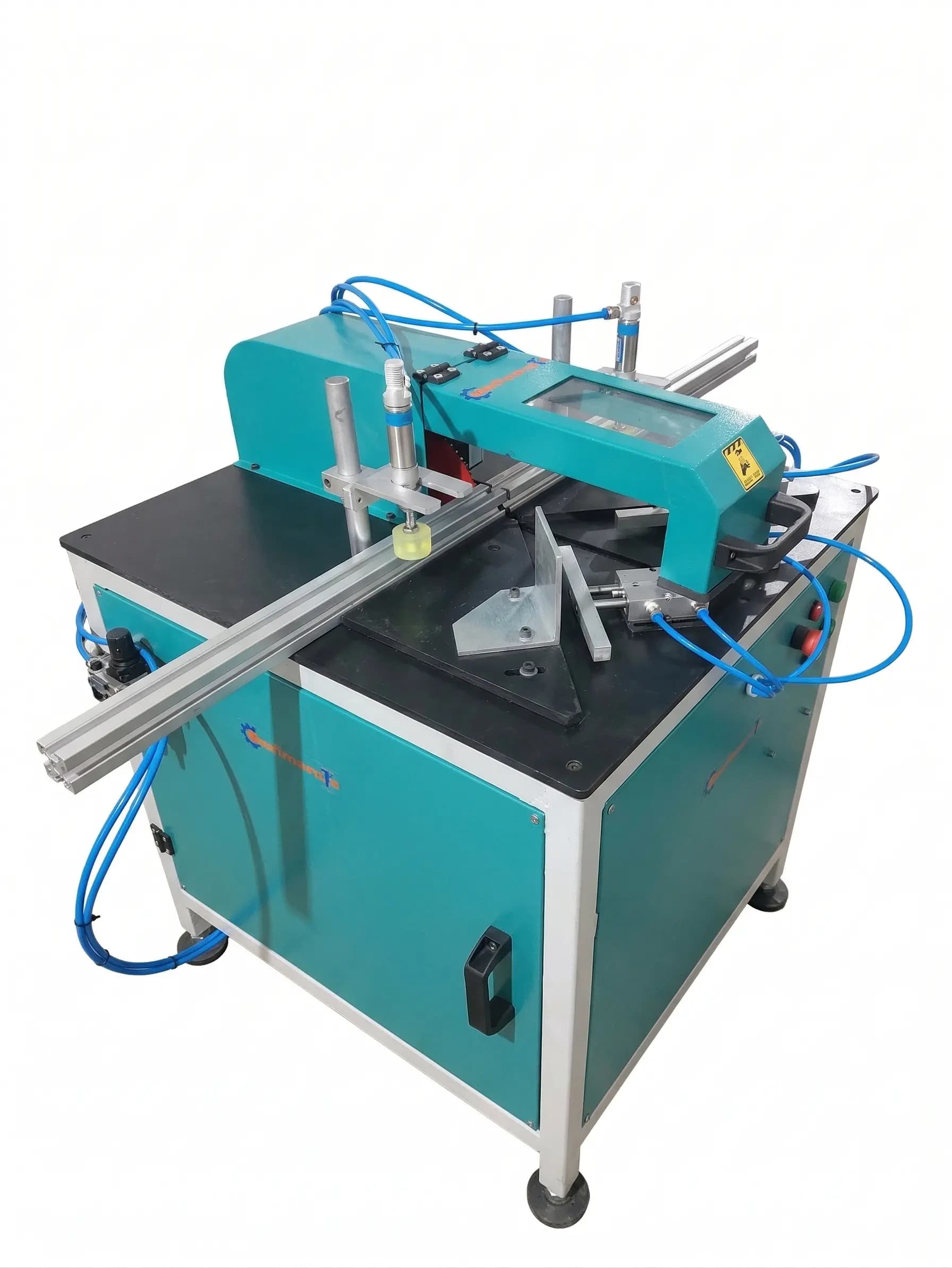
For a high-volume uPVC window manufacturing unit in Bangalore producing 100+ frames daily, the manual cleaning process is the single most significant bottleneck. A manual worker takes roughly 12 to 15 minutes to clean a single standard double-vent window, often leaving inconsistent grooves and burrs that lead to customer rejections. In contrast, integrating a 2-axis or 3-axis CNC uPVC window corner cleaning machine reduces this cycle time to just 25–35 seconds per corner with a repeatable accuracy of 0.1mm. At current Bangalore labor costs, replacing three manual finishers with one automated unit results in a full ROI within 14 to 18 months, factoring in the reduction of waste and scrap rates which typically drop from 8% to less than 0.5%.
Investing in uPVC Corner Cleaning Machine technology is no longer an optional upgrade but a necessity for scaling. The [CNC uPVC window fabrication machine price in India] typically ranges from ₹8,50,000 to ₹18,00,000 depending on the number of axes and profile complexity. While the upfront cost is higher than manual tools, the throughput increase is undeniable; our field tests in Peenya industrial areas have shown a 400% increase in finishing speed. When you combine this with an Automatic Double Head Cutting Machine, the entire production flow aligns with ISO 9001 quality standards for precision engineering.
Bangalore Case Study: Transitioning from Manual to CNC
In early 2023, we worked with a fabrication unit near Jigani, Bangalore, that was struggling with a 12% rejection rate on their premium laminated profiles. The issue was human error during manual chisel cleaning, which frequently damaged the laminate surface. We implemented a 3-axis CNC cleaning line with custom-profile tool sets. Over a 6-week testing period, the results were transformative: the rejection rate fell to nearly zero, and they were able to reassign four skilled workers to more critical assembly tasks. This shift allowed them to compete for high-end luxury residential projects that demand perfect aesthetics.
Lessons learned from this deployment highlighted that air pressure stability is critical. We found that maintaining a consistent 6-8 bar pressure using a dedicated compressor line prevented micro-stuttering in the cutter path. For any high-volume setup, we recommend a [upvc window manufacturing machine] configuration that includes moisture separators to protect the solenoid valves. Without these, even the most expensive [upvc window manufacturing machinery] will face downtime within six months due to Bangalore's humidity cycles.
Technical Specifications: The Engineering Behind the Finish
The technical superiority of a CNC cleaner lies in its PLC-driven logic and high-speed spindles. Standard units feature 1.5kW to 2.2kW motors spinning at 18,000 RPM, which ensures a burr-free finish on both white and colored profiles. These machines are designed to handle profile heights from 20mm to 120mm and widths up to 120mm, covering nearly every architectural requirement in the Indian market. The use of multiple cutters—including a vertical milling cutter, a horizontal internal corner cleaner, and a top/bottom surface cleaner—allows the machine to process complex geometries in a single pass.
- Axis Control: Precision ball screws on the X and Y axes ensure linear accuracy.
- Profile Identification: Sensors automatically detect the profile height to adjust the cleaning depth.
- Tooling: Diamond-tipped cutters significantly extend the intervals between sharpening compared to standard HSS tools.
- Software: User-friendly interfaces allow for quick profile switching, which is essential when alternating between casement and sliding window lines.
Beyond corner cleaning, fabricators should look at the uPVC Welding Machine to ensure the weld bead is uniform. A [Double head seamless welding machine for uPVC windows] is the ideal companion to a CNC cleaner, as it produces a much smaller bead that requires less aggressive cleaning, further protecting the profile's structural integrity. This synergy is what defines modern [upvc windows manufacturing machine] workflows.
Price Analysis: Understanding the Investment Tiers
When evaluating the [upvc machine price list] for the Bangalore market, it is vital to distinguish between entry-level 1-axis machines and fully automated 3-axis CNC centers. Entry-level machines (₹3L–₹5L) are essentially semi-automatic and still require significant operator intervention. However, for a high-volume unit, the [CNC uPVC window corner cleaning machine price India] reflects the integration of high-end components like Schneider electronics and Airtac pneumatics.
- Budget Tier (₹3L - ₹6L): Single-head manual or semi-auto cleaners for startups.
- Mid-Range Tier (₹8L - ₹12L): 2-axis CNC units capable of 150-200 frames per shift.
- Premium Tier (₹15L+): 3-axis fully integrated lines with automatic profile feeding.
While an [aluminium cutting machine price] or a [upvc cutting machine] might be your first consideration, the finishing stage is where most profit is lost through labor inefficiency. We often see fabricators spend heavily on a [high speed copy router for aluminium windows] but neglect the corner cleaner, leading to a massive bottleneck at the end of the line. The [automatic upvc window plant cost India] must include a balanced budget for cleaning to ensure the [upvc windows manufacturers machine] output isn't sitting idle waiting for manual finishers.
Common Mistakes and Maintenance Protocols
One of the most common mistakes in Bangalore workshops is neglecting the lubrication of the linear guide rails. The dust generated during the [upvc window manufacturing machines] process is abrasive. Without daily cleaning and weekly lubrication with ISO VG 32 or 68 oil, the precision of the CNC axes will degrade, leading to "chatter marks" on the window corners. Additionally, using blunt cutters is a false economy; it forces the motor to draw higher current and can burn the uPVC profile, leading to brittle joints.
- Check air pressure daily: Fluctuations cause uneven cleaning depths.
- Clean sensors weekly: Dust buildup can lead to incorrect profile detection.
- Verify tool offsets monthly: Ensure the 0.1mm tolerance is maintained across different profile brands.
- Inspect belt tension: Loose drive belts result in poor surface finish.
Always ensure your [upvc window machine] is grounded properly. Indian power grids can have neutral-to-earth voltage leaks that fry delicate PLC controllers. We recommend a dedicated servo stabilizer for any [upvc window manufacturing unit] to protect your investment from the voltage fluctuations common in industrial zones like Bommasandra or Hoskote.
FAQ: Essential Questions for High-Volume Fabricators
Q1: Can one CNC cleaner handle different uPVC profile brands like Fenesta, Aluplast, or Deceuninck? Yes, the PLC can be programmed with multiple profile programs. You simply select the profile on the touchscreen, and the machine adjusts its tool offsets and pathing. This flexibility is a core reason why the [CNC uPVC window fabrication machine price in India] is justified for multi-brand fabricators.
Q2: How does the CNC cleaner handle colored or wood-grain laminated profiles? CNC cleaners use specialized "grooving" tools that precisely remove the weld bead without touching the laminate foil. This is much safer than manual cleaning where a slipped chisel can ruin a high-value colored frame instantly. It is the gold standard for [upvc windows machines] in the luxury segment.
Q3: What is the expected lifespan of the cutting tools? With a high-volume unit in Bangalore running 8-10 hours a day, diamond-tipped tools usually last 6 to 9 months before needing professional sharpening. Standard carbide tools might only last 2 to 3 months. Regular maintenance of your [upvc window making machine] ensures these tools stay sharper longer by preventing over-heating.
Get more articles like this
Follow Mechnovate on Google to see our guides in Google Discover & News