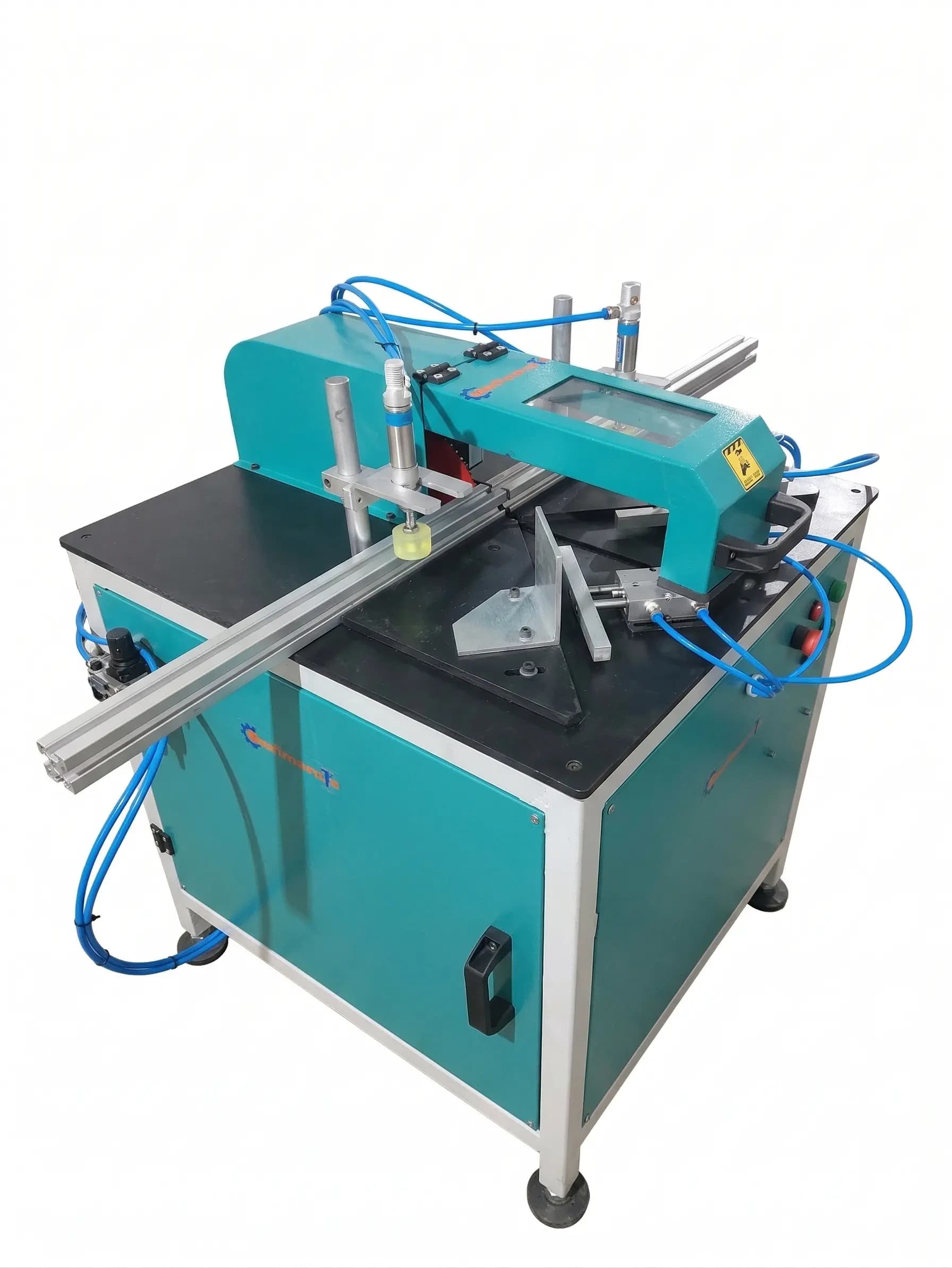
Automatic Double Head Cutting Machine Price & Efficiency Guide
Direct Impact: Automatic Double Head Cutting Machine Price and ROI in Delhi
In the competitive fabrication hubs of Okhla and Mayapuri, the automatic double head cutting machine price India typically starts at ₹4,50,000 for pneumatic models and can reach ₹14,00,000 for fully CNC-integrated systems. For a workshop processing 50+ windows daily, the ROI is usually realized within 8 to 11 months due to a 60% reduction in labor costs and a significant decrease in profile wastage. Moving from a single cutting setup to a synchronized double-head system allows for simultaneous 45-degree miter cuts at both ends, ensuring that the profile length is accurate to within ±0.2mm, which is critical for the subsequent welding or crimping stages. In our 15 years of experience at Mechnovate, we have seen that high-volume production in Delhi fails not because of slow labor, but because of cumulative measurement errors inherent in manual cutting processes.
The Okhla Case Study: Scaling from 20 to 100 Frames Per Day
Last year, we assisted a mid-sized uPVC windows manufacturer in West Delhi who was struggling with a 12% rejection rate during the corner cleaning phase. Upon auditing their floor, we found they were using a manual upvc cutting machine for every joint, leading to misaligned 45-degree angles. We implemented a Double Head Cutting Machine with 500mm TCT blades and an automatic tilting head mechanism.
Over a 6-week observation period, the results were transformative:
- Rejection rates dropped from 12% to 1.5% because the synchronized heads eliminated the 'human factor' in measuring the second cut.
- Throughput increased from 22 frames per shift to 98 frames per shift with the same two-person team.
- Profile waste, which was previously at 350mm per average window due to 'safety margins,' was reduced to just 15mm of trim-off.
This upgrade proved that the best uPVC window making machine for small business growth isn't necessarily the cheapest, but the one that ensures the first cut is identical to the thousandth cut. By investing in precision engineering, the workshop was able to take on high-rise commercial projects in Noida that required strict adherence to ISO 9001 quality standards.
Technical Specifications: The Engineering Behind the Efficiency
When evaluating an aluminium profile cutting machine or a uPVC windows manufacturing machine, you must look beyond the exterior paint. A professional-grade head cutter machine must feature a linear bearing system for the moving head to ensure smooth travel without vibration. For aluminium fabrication, we recommend motors with at least 2.2kW power and a spindle speed of 2800 RPM to ensure a burr-free finish.
Key technical parameters for high-volume production include:
- Blade Diameter: 450mm to 500mm is standard for handling wide multi-track sliding profiles.
- Cutting Angles: Automatic switching between 45°, 90°, and 135° (or 22.5°) via a pneumatic or servo-driven system.
- Feed Speed: Adjustable hydro-pneumatic dampening to prevent blade 'chatter' on thin-walled aluminium profiles.
- Clamping: Vertical and horizontal pneumatic clamps to secure the profile close to the blade path, preventing rotation during the cut.
If you are a upvc windows manufacturer machine buyer, ensure the machine uses a magnetic scale for length measurement rather than a simple tape measure. Magnetic scales feed directly into the PLC (Programmable Logic Controller), allowing for 0.1mm accuracy. This level of precision is non-negotiable when using an Aluminium Corner Crimping Machine later in the process, as even a 0.5mm error will cause visible gaps in the joinery.
Optimizing the Manufacturing Workflow in Delhi
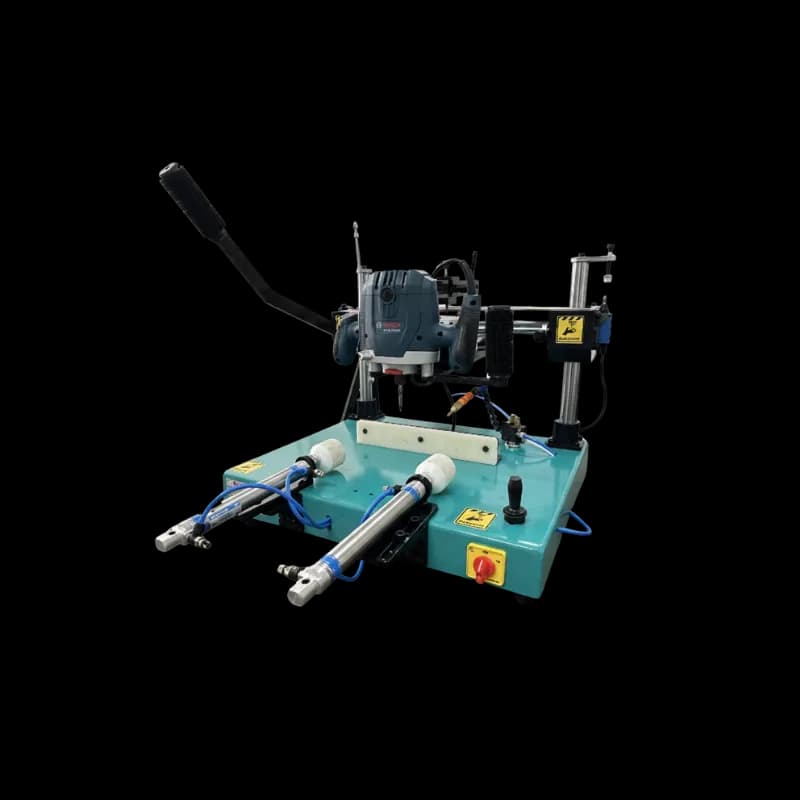
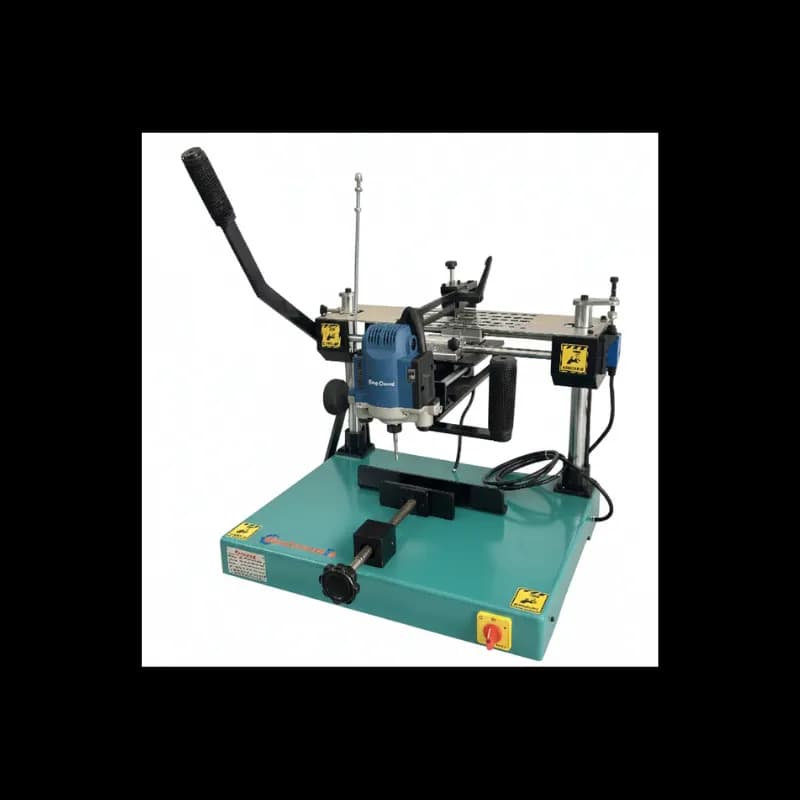
Setting up a uPVC window manufacturing unit in India requires a logical flow of machinery to prevent bottlenecks. The cutting station is the heart of the factory. To maximize the value of your automatic upvc window manufacturing plant cost India, the cutting machine should be positioned to feed directly into the Copy Router Machine and the drainage slot milling stations.
- Profile Loading: Use gravity-fed racks to move profiles to the double head miter saw for aluminium profiles.
- Optimization Software: Use cutting list software that integrates with the machine’s PLC to minimize off-cuts.
- Waste Management: Install an industrial vacuum extraction system to remove chips immediately, which prevents scratching on the profile surface and protects the operator's health.
- Power Stability: Delhi’s power grid can be unpredictable. Always use a 15kVA servo stabilizer to protect the sensitive PLC circuits of your upvc window manufacturing machinery.
For those starting out, a portable uPVC window making machine price list might look attractive, but for high-volume production, these lack the bed rigidity required for 3-meter or 6-meter profile lengths. A heavy-duty floor-mounted machine is essential for maintaining industrial aluminum door manufacturing equipment standards.
Common Mistakes and Maintenance Protocols
Many fabricators focus solely on the aluminium cutting machine price and ignore the long-term operational costs. One of the most common mistakes is using a 12 inch aluminium cutter machine for heavy architectural profiles; the smaller blade diameter limits the depth of cut and often results in multiple passes, which ruins the finish.
To maintain your automatic aluminium window production line price value, follow this maintenance schedule:
- Daily: Clean the induction sensors and check the pneumatic oil mist lubricator levels. Without proper lubrication, the TCT blades will overheat and lose their edge within 48 hours of heavy use.
- Weekly: Check the tension of the drive belts. A loose belt causes a drop in RPM, leading to jagged edges on uPVC windows.
- Monthly: Calibrate the 45-degree stop bolts using a precision machinist’s square. Even a 0.1-degree deviation results in a 1mm gap across a large window frame.
- Safety First: Ensure all machines meet Industrial profile cutting safety standards ISO standards, specifically regarding the safety hood which should automatically lock when the blades are spinning.
Frequently Asked Questions (FAQ)
What is the difference between a pneumatic and CNC double head cutter?
A pneumatic machine uses mechanical stops to set lengths, which is great for standard sizes. A CNC version allows the operator to upload a CSV file of dimensions, and the machine automatically moves the head to the exact position, which is essential for high-volume, varied-size projects common in Delhi’s residential sector.
Can I use the same machine for both aluminium and uPVC profiles?
Yes, but you must change the blade. Aluminium requires a high-tooth-count TCT blade with a negative rake angle and constant lubrication, while uPVC is typically cut dry with a different tooth geometry to prevent melting. Most modern head cutting machine models are designed to handle both with quick-change blade features.
Is it worth buying a used upvc windows machine in Delhi?
We generally advise against used machinery unless you have a trusted technician to inspect the linear guides. If the bed is warped or the motor bearings are shot, you will spend more on replacement parts and lost material than the cost of a new automatic double head cutting saw for aluminium profiles with a warranty.
How much space is required for a double head cutting machine setup?
You need at least 8 to 10 meters of linear space. The machine itself is roughly 4-5 meters long, and you need 'in-feed' and 'out-feed' clearance for 6-meter profile lengths. Proper shop floor planning is as important as the upvc machine price list you are comparing.
Get more articles like this
Follow Mechnovate on Google to see our guides in Google Discover & News