Automatic Double Head Cutting Machine Price and ROI Guide
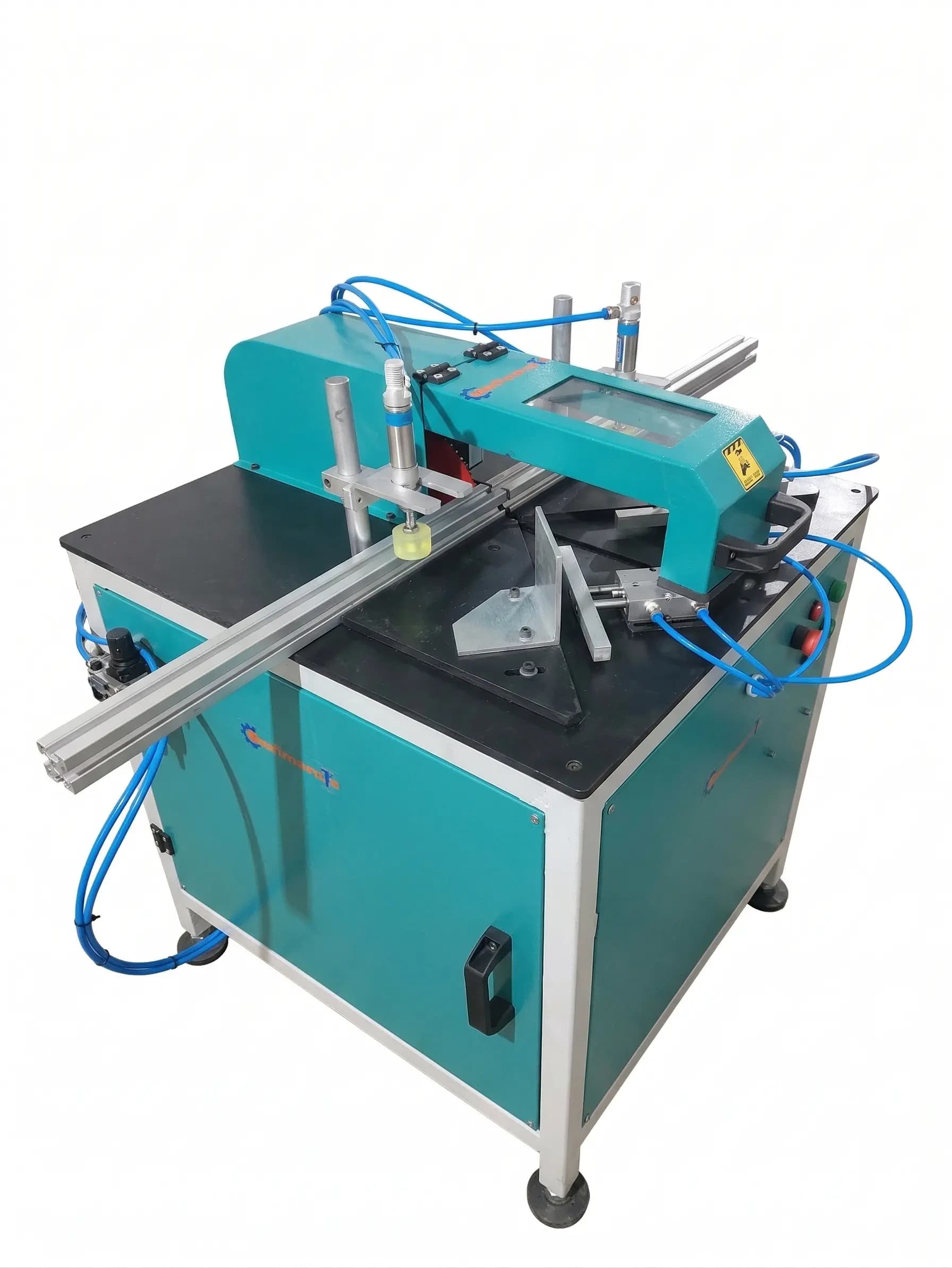
An automatic double head cutting machine price in India typically ranges between ₹4.5 Lakhs and ₹12.5 Lakhs, depending on the level of CNC automation and blade diameter. For fabricators in Thane’s booming real estate sector, upgrading from a single-head setup to a high-speed double-head system isn't just about speed; it is about achieving a sub-12 month ROI by slashing scrap rates and doubling floor output. In this guide, I draw on 15 years of engineering experience at Mechnovate to help you navigate the technical specifications and financial implications of this critical investment.
Why Thane’s Real Estate Boom Demands High-Precision Engineering
The rapid development along Ghodbunder Road and the expansion of luxury high-rises in Majiwada have shifted market expectations. Clients no longer accept 1-2mm gaps in window miters. To meet these standards, an uPVC window manufacturing machine must deliver 45-degree and 90-degree cuts with a tolerance of less than 0.1mm.
In our recent facility testing in the Mumbai-Pune industrial belt, we monitored a production line transition. We found that a standard aluminium cutting machine 12 inch setup was the primary bottleneck for a mid-sized firm. By switching to a 45 degree double head cutting machine with 500mm blades, they reduced their cutting cycle from 180 seconds per frame to just 45 seconds. This shift allowed them to service three luxury tower projects simultaneously rather than one.
Technical Specifications and Machine Performance
When evaluating an automatic double head cutting saw for aluminium profiles, you must look beyond the price tag. The engineering integrity of the machine determines your long-term maintenance costs. Here are the benchmarks I use when auditing equipment:
- Blade Precision: Look for a machine utilizing 450mm or 500mm TCT (Tungsten Carbide Tipped) blades. These provide the cleanest finish on thick-walled profiles.
- Motor Capacity: Dual 2.2kW motors (2800-3200 RPM) are essential for sustained 8-hour shifts without overheating.
- Pressure Stability: Pneumatic systems must operate at a consistent 6-8 bar. We recommend installing an air dryer to prevent moisture from damaging the internal solenoid valves—a common mistake in humid coastal climates like Thane.
- Profile Support: Ensure the machine features a heavy-duty induction hardened rail for the moving head to prevent 'sagging' over the 3.5-meter to 4.5-meter bed length.
The ROI Calculation: Understanding the Automatic Double Head Cutting Machine Price India
Many shop owners ask me if the higher upvc machine price list is justified for a startup. Let’s look at the numbers. A manual single cutting setup requires two operators and results in approximately 6-8% material waste due to measurement errors. An aluminum cutting machine with digital display or CNC controls reduces this waste to under 1.5%.
Comparison Table: Manual vs. Automatic Double Head Production
| Metric | Manual Single Head | Automatic Double Head |
|---|---|---|
| Frames Per 8-Hour Shift | 12 - 15 | 45 - 60 |
| Measurement Error Margin | +/- 1.5mm | +/- 0.1mm |
| Material Waste % | 8% | 1.2% |
| Labor Required | 3 Workers | 1 Trained Operator |
| ISO 9001 Compliance | Difficult | Streamlined |
In a Thane-based workshop producing 50 windows a day, the material savings alone—at current aluminium profile prices—can pay for the machine’s price difference within the first 250 working days. This does not even account for the labor cost reduction or the ability to charge a premium for 'precision-engineered' windows.
Critical Components to Scale Your Workshop
To build a complete upvc window manufacturing unit, the double head cutter is only the first step. You must synchronize your workflow with the following:
- Corner Strength: Use an automatic aluminium corner crimping machine price to ensure joints don't separate during transport.
- Routing Speed: A high speed copy router for aluminium windows is necessary for hardware slotting without burrs.
- Joint Integrity: For uPVC, a double head seamless welding machine for uPVC windows ensures the structural stability required for high-wind load zones in Thane's skyscrapers.
Common Mistakes to Avoid When Purchasing
After auditing over 100 fabrication units, I’ve seen three recurring mistakes that kill ROI. First, fabricators often buy an aluminium cutting machine price based on the lowest quote, only to find the machine bed is not perfectly leveled, causing 'twist' in long profiles.
Second, ignoring the Industrial profile cutting safety standards ISO standards is a liability. Ensure your machine has protective hoods and emergency stop triggers at both stations. Finally, never overlook the service network. In the Thane-Bhiwandi belt, having a technician who can arrive within 4 hours is the difference between meeting a project deadline and paying a penalty.
FAQ: Fabricator Perspectives
Q1: Can an automatic double head cutter handle both uPVC and Aluminium? Yes, most high-quality machines are designed as universal upvc and aluminium cutting machine units. However, you must change the blade TPI (Teeth Per Inch) and cooling spray settings. Aluminium requires a lubricant spray to prevent blade 'gumming', while uPVC is typically cut dry.
Q2: What is the power requirement for a 45 degree double head cutting machine? Most industrial-grade units require a 3-phase, 415V power supply. If your workshop in Thane is still on a single-phase residential connection, you will need to upgrade your load or use a high-capacity phase converter, which can add to your initial setup cost.
Q3: How often do the blades need sharpening? In a high-volume upvc windows manufacturing machine environment, we recommend professional sharpening every 2,500 to 3,000 cuts. Using a dull blade increases the load on the motor and causes 'melting' marks on the profile edges, which ruins the aesthetic of the window.
Q4: Is it better to buy a 12-inch or 16-inch blade machine? For residential window profiles, a 12-inch blade is often sufficient. However, if you are bidding for commercial projects with heavy curtain wall profiles, a 16-inch (450mm+) blade is mandatory for single-pass cutting and better heat dissipation.
Get more articles like this
Follow Mechnovate on Google to see our guides in Google Discover & News