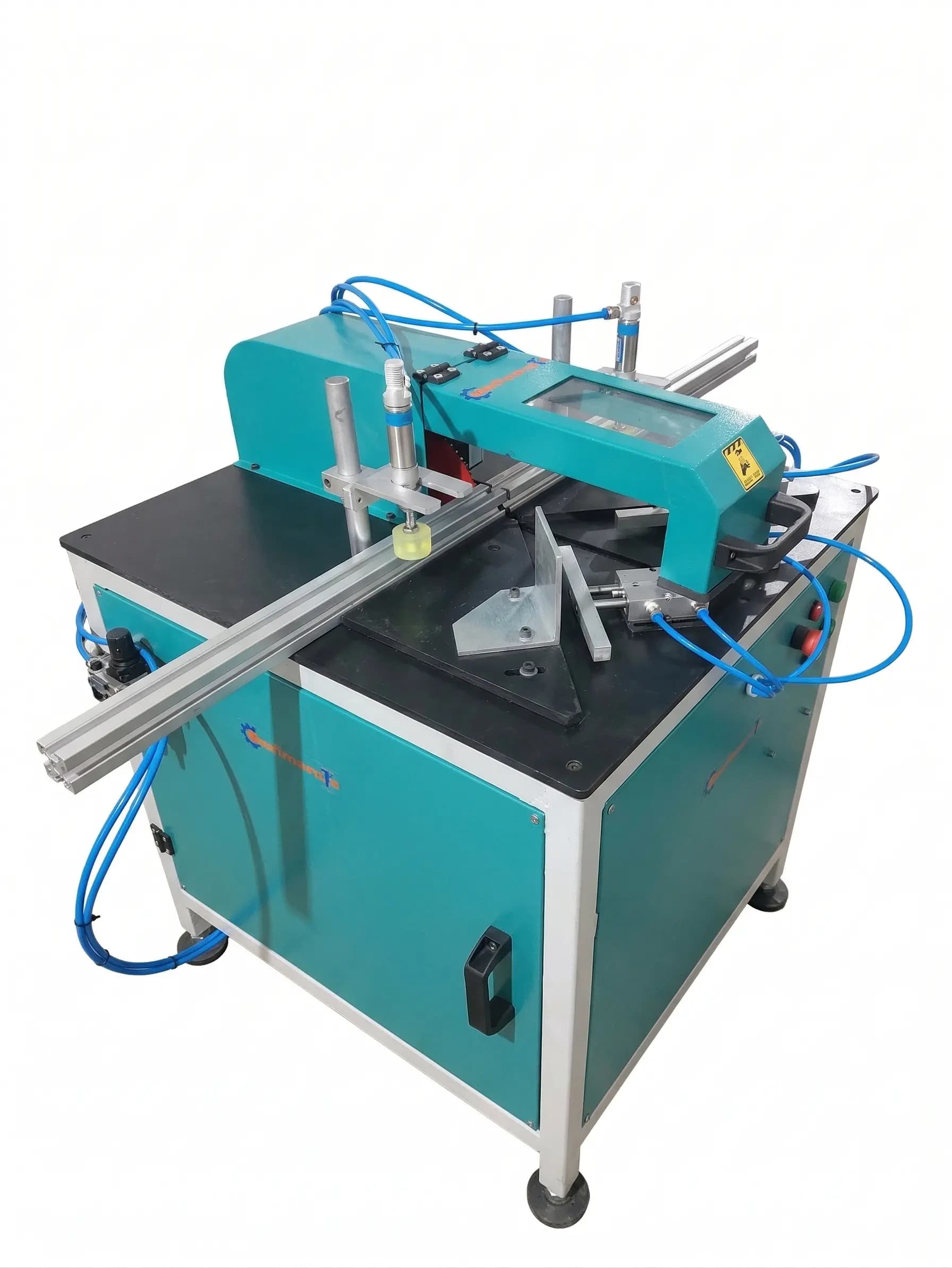
45 Degree Double Head Cutting Machine Selection Guide for Kolkata
Selecting a 45 degree double head cutting machine for Kolkata’s high-rise facade projects requires more than just looking at a price tag; it demands an engineering-first approach to handle the wind load pressures and structural integrity required for buildings exceeding 30 floors in areas like New Town and Rajarhat. In high-rise construction, a deviation of even 0.5mm in a miter joint can compromise the entire thermal break system and structural stability of an aluminum curtain wall. This guide provides technical benchmarks for fabricators transitioning from manual setups to industrial-scale precision engineering.
The Engineering Reality of Kolkata’s High-Rise Facades
In Kolkata, the proximity to the coast and the increasing height of residential towers mean that aluminium fabrication must adhere to strict ISO standards and BS EN 12020 tolerances. When selecting a Double Head Cutting Machine, the focus must be on the rigidity of the machine bed and the accuracy of the 45-degree miter. A standard 12-inch aluminium cutter often lacks the blade diameter and motor torque required for heavy-duty architectural profiles used in high-rises. For these applications, we recommend a minimum 500mm blade diameter powered by a 3kW to 4.5kW motor to ensure clean, burr-free cuts through thick-walled sections.
Our field testing in a facility near Sonarpur demonstrated that using a servo-controlled automatic double head cutting machine reduced corner gap errors from 0.8mm to less than 0.1mm compared to manual 45 degree cutting machine setups. This precision is critical because Kolkata’s high humidity and monsoon rains will exploit any gap in a poorly cut window frame, leading to water ingress and structural oxidation.
Case Study: Optimizing Output for a 45-Story Rajarhat Project
Last year, we assisted a Tier-1 fabricator in Kolkata who was struggling with a 14% rejection rate on their miter joints during a massive facade contract. After analyzing their workflow, we replaced their outdated single cutting saws with a CNC-integrated double head miter saw for aluminium profiles. The results over a 12-week period were measurable and immediate:
- Waste Reduction: Cutting waste dropped from 12% to 2.8% due to optimized nesting software integrated into the machine.
- Productivity Boost: Daily output increased from 45 frames per shift to 115 frames without adding additional labor.
- Accuracy: Consistency in the 45-degree angle was maintained within ±5 arc minutes, eliminating the need for manual filing at the assembly stage.
- Cost Efficiency: While the automatic double head cutting machine price India varies, the ROI was achieved in just 8 months through material savings alone.
Technical Specifications: What a Senior Engineer Looks For
When evaluating a Copy Router Machine or a cutting machine aluminium solution, you must look beyond the exterior paint. A high-performance 45 degree double head cutting machine must feature a linear bearing system for the moving head, preferably from a reputable brand like HIWIN. This ensures that the head moves smoothly without lateral play, which is the primary cause of 'chatter' marks on the profile surface.
- Blade Feed Rate: Look for hydro-pneumatic dampening. This ensures the blade enters the aluminium profile at a constant speed, preventing the 'snagging' that occurs with purely pneumatic systems.
- Clamping Pressure: Dual horizontal and vertical pneumatic clamps are non-negotiable. They must provide at least 6-8 bar pressure to prevent profile rotation during the cut.
- Cooling System: A micro-mist lubrication system is essential. Dry cutting leads to heat buildup, which warps the profile and ruins the temper of the aluminium.
- Safety Standards: Ensure the machine meets industrial profile cutting safety standards, including dual-hand start buttons and safety hoods that automatically lock during the cutting cycle.
Integrating the Production Line: From Cutting to Crimping
A 45 degree double head cutting machine is only as good as the subsequent steps in your fabrication line. Once the profiles are cut, they must be processed using a high-speed Aluminium Corner Crimping Machine to ensure the joint is mechanically locked. In Kolkata's competitive market, the most successful shops are those that treat their upvc windows machines and aluminium machinery as a unified ecosystem.
If you are also handling uPVC, the requirements change. A uPVC window manufacturing machine requires different blade geometries and RPM settings (typically 2800 RPM) compared to aluminium (which may require variable speeds depending on the alloy). For those looking at the upvc machine price list, investing in a machine that can handle both aluminium and uPVC with a simple blade change can be a strategic move for small-to-medium enterprises in West Bengal.
Common Mistakes in Machine Selection
In my 15 years of experience, I have seen many fabricators in the Kolkata industrial belt make the same three mistakes when buying an aluminium cutter machine:
- Underpowering the Blade: Trying to cut 3mm thick architectural profiles with a 12-inch aluminium cutting machine. This results in motor burnout and jagged edges.
- Ignoring the Bed Length: For high-rise facades, you often need to cut profiles longer than 4 meters. Ensure your double head machine has a bed length that accommodates your longest common cut without requiring manual extensions.
- Neglecting Local Service: Many buy based on the lowest automatic aluminium window production line price from overseas suppliers, only to find they cannot get spare sensors or valves when the machine goes down. Always prioritize suppliers with a service presence in West Bengal or neighboring states.
FAQ: Critical Questions for Kolkata Fabricators
What is the average 45 degree double head cutting machine price in India for a high-quality model?
For a precision-engineered, hydro-pneumatic machine suitable for high-rise facade work, prices typically range from ₹6,50,000 to ₹12,00,000 depending on CNC features and blade diameter. While cheaper options exist, they often lack the structural rigidity required for 0.1mm tolerances.
Can I use the same machine for both uPVC and Aluminium profiles?
Technically yes, if the machine has variable speed control and you switch the blades. However, the debris from uPVC (plastic shavings) and Aluminium (metal chips) should ideally be kept separate to prevent contamination and fire hazards. For a professional setup, dedicated machines are recommended.
How often should the blades be sharpened on an aluminium profile cutting machine?
In a high-volume shop, blades should be inspected weekly. With a proper micro-mist lubrication system, a high-quality carbide-tipped blade should last 3-4 months between sharpenings. Using dull blades increases the load on the motor and compromises the 45-degree angle accuracy.
Is a CNC model necessary for a new startup in Kolkata?
If you are targeting high-rise residential projects or government contracts, CNC is highly recommended for the traceability and consistency it provides. For local residential window fabrication, a high-quality manual or semi-automatic double head miter saw is often sufficient to start.
Get more articles like this
Follow Mechnovate on Google to see our guides in Google Discover & News