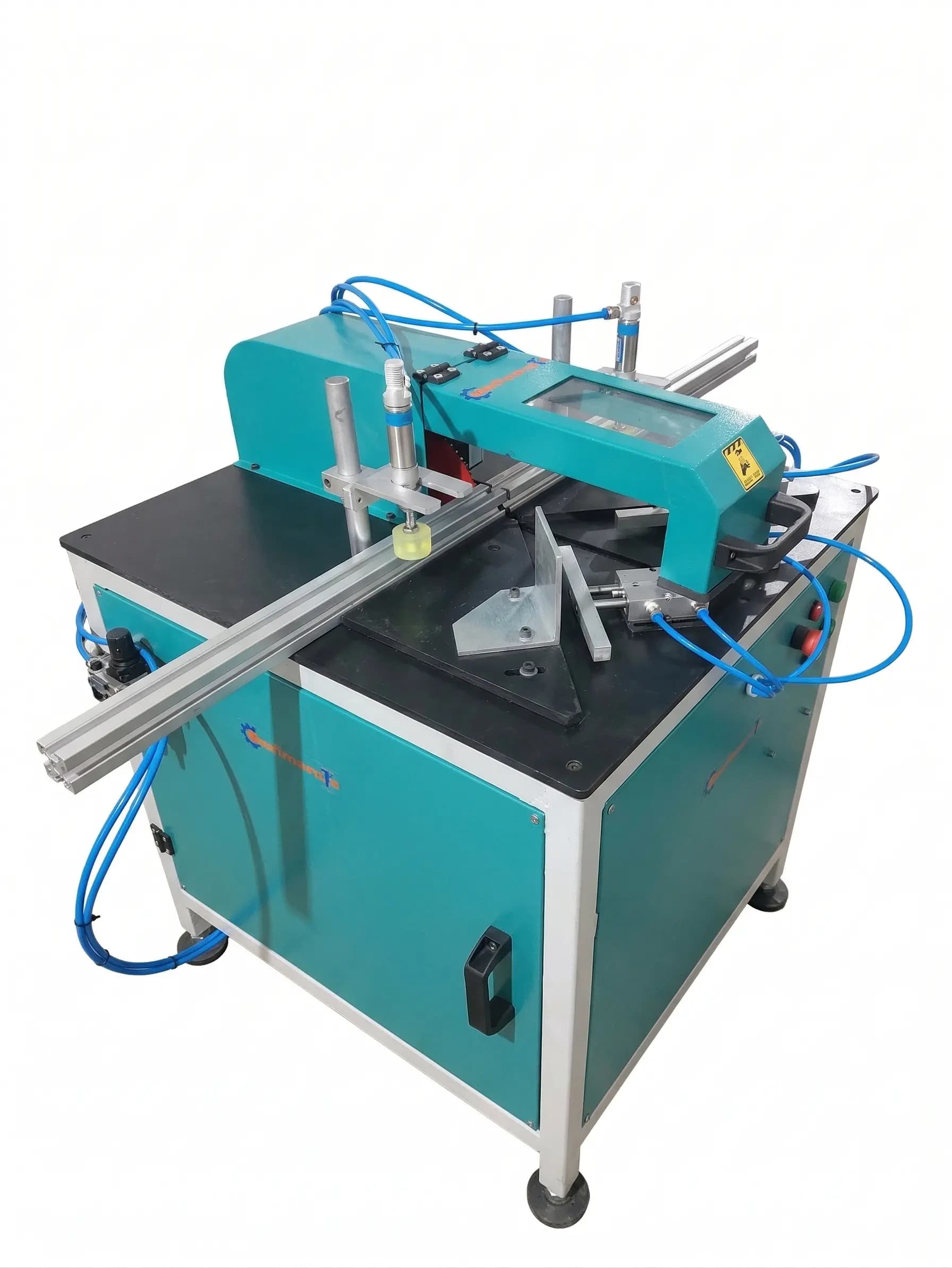
45 Degree Double Head Cutting Machine: Ending Jaipur's Profile Waste
Why Heat and Manual Cutting Are Destroying Your Margins in Jaipur
In Jaipur's extreme climate, where ambient workshop temperatures regularly exceed 45°C, aluminium profile wastage is rarely a result of poor labor—it is a result of physics. Aluminium has a high Coefficient of Linear Thermal Expansion ($23 \times 10^{-6} / K$). For a standard 2500mm outer frame profile, a temperature swing from a 25°C morning to a 45°C afternoon causes a physical expansion of over 1.15mm.
If your operators are using a 45 Degree Double Head Cutting Machine to cut both miters simultaneously, this expansion is uniform across the cut length. However, using a single-head aluminium cutter or manual saw leads to sequential cutting. By the time the second end is measured and cut, the profile temperature has changed, leading to 'miter gaps' that no aluminium corner crimping machine can fix. To eliminate wastage, you must transition to a high-precision aluminum cutting machine that locks in both angles instantly.
Case Study: Reducing Wastage from 12% to 3% in a Jaipur Workshop
Last summer, we audited a mid-sized fabrication unit in the Vishwakarma Industrial Area (VKI), Jaipur. They were producing 15-20 high-end thermal break windows daily using single-head manual saws. Their rejection rate due to light-leakage at the corners was staggering—nearly 12% of all profiles were scrapped.
We implemented a 6-week transition plan using a Mechnovate 45 Degree Double Head Cutting Machine with the following results:
- Waste Reduction: Scrap fell from 12% to 2.8% because the machine’s CNC-controlled length positioning eliminated human measurement errors.
- Output Increase: Production jumped from 20 frames to 55 frames per day without adding manpower.
- Precision: We achieved a length tolerance of ±0.1mm, adhering to ISO 9001 and BS EN 12020 standards.
The 'mismatch' error, common in manual aluminium fabrication, was eliminated because the two saw heads are mounted on a heavy-duty cast iron bed that absorbs the vibrations which typically cause 'blade walking' in cheaper upvc machinery.
Technical Specifications: The Engineering of Precision
When evaluating an automatic double head cutting machine price India, you must look beyond the sticker price. A machine capable of handling the high-gauge profiles used in Jaipur’s luxury villas requires specific engineering benchmarks:
- Blade Diameter: Minimum 450mm to 500mm hard alloy saw blades (WEMARO or similar quality) are required for clean cuts in 2.0mm+ wall thickness profiles.
- Motor Power: Dual 3.0kW high-speed motors operating at 2800-3200 RPM ensure the blade doesn't 'bog down' during the cut, which causes heat burrs.
- Feed System: Hydro-pneumatic damping cylinders provide a constant feed rate, preventing the 'snagging' effect seen in purely pneumatic systems.
- Cutting Range: The machine must support 45°, 90°, and intermediate angles (using a digital display) to handle complex architectural designs.
- Pressure Management: Dual-stage clamping (6-8 bar) is essential to hold the profile without deforming the powder-coated surface.
Managing Thermal Variance in Rajasthan’s Workshops
Beyond the aluminium profile cutting machine, your shop floor workflow must change. In Jaipur, we recommend the 'Batch Cutting Strategy'. Profiles should be stored in a temperature-controlled zone or at least under a reflective roof.
Using a degree cutting machine with an integrated cooling system—using an oil-mist sprayer rather than a flood coolant—is non-negotiable. Excess heat during the cut causes the aluminium to 'smear', leading to a rough edge that prevents a flush 45-degree join. If you are also running a uPVC window manufacturing machine, keep the lines separate, as aluminium dust can contaminate uPVC welding machine heater plates, leading to structural failures.
Common Mistakes to Avoid in Machine Selection
- Under-powering the Motor: Many fabricators buy a 12 inch aluminium cutter machine for heavy curtain wall profiles. This results in 'wavy' cuts because the motor lacks the torque to maintain RPM through thick material.
- Ignoring the Bed Rigidity: A double head cutting machine is only as good as its frame. If the machine uses thin-walled steel tubes instead of a reinforced cast-iron or heavy-channel bed, it will lose calibration within 6 months due to floor vibrations.
- Neglecting the Air Supply: An automatic aluminium window production line requires clean, dry air. In the dusty environments of Jaipur and Jodhpur, failing to use an air dryer and a 5-micron filter will destroy the pneumatic valves on your head cutting machine within a single season.
How to Optimize Your Production Line for 2024
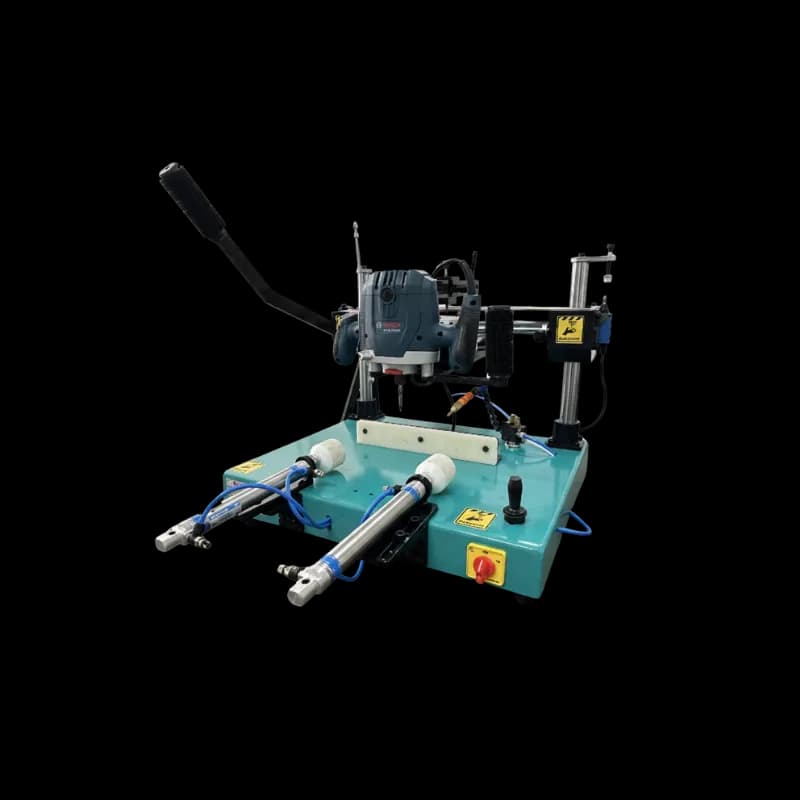
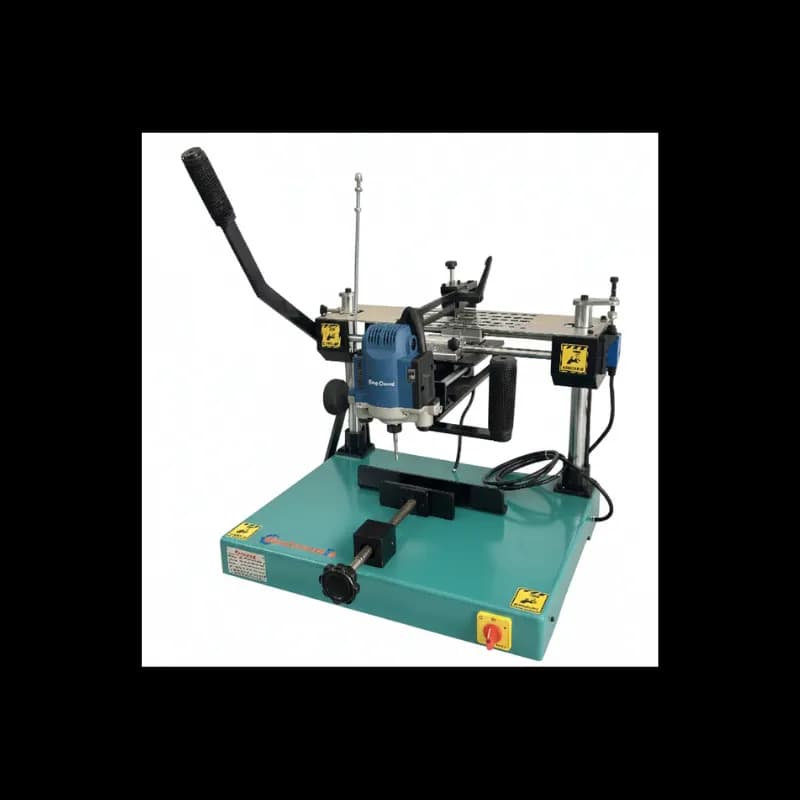
To compete with national brands, local Jaipur fabricators must move toward automation. Integrating a heavy duty aluminium profile end milling machine and a high speed copy router for aluminium windows alongside your double head cutter ensures that every slot and notch is perfectly aligned.
If you are a startup, the best uPVC window making machine for small business often starts with a single-head unit, but for aluminium, the dual-head system is the only way to ensure the quality levels required by architects in the C-Scheme or Malviya Nagar areas of Jaipur.
FAQ: Fabricator Concerns in the Rajasthan Market
Q: What is the average automatic double head cutting machine price in India for a high-end unit?
A: Prices range from ₹4.5 Lakhs for basic pneumatic models to ₹12+ Lakhs for CNC-controlled machines with automatic length positioning. For high-end aluminium, investing in the ₹7-9 Lakh range provides the best ROI through reduced wastage.
Q: Can I use the same machine for uPVC and Aluminium?
A: While a upvc window manufacturing machinery setup can technically cut aluminium with a blade change, the RPM requirements differ. Aluminium requires higher torque and specific cooling that upvc windows machines often lack.
Q: How often should the saw blades be sharpened?
A: In a high-volume shop, we recommend professional sharpening every 2,500 to 3,000 cuts. Using a dull blade increases the 'kickback' and ruins the 45-degree precision, leading to gaps in the final window assembly.
Get more articles like this
Follow Mechnovate on Google to see our guides in Google Discover & News